How Creators Can Build a Brand Partnership Pipeline
A brand partnership pipeline turns random brand deals into a steady flow: target lists, outreach, stages from prospect to paid, weekly pipeline habits, conversion between stages and how to keep enough deals in play without overcommitting.
Most creators experience brand income as weather. Three deals arrive in October, nothing in January, and every quiet month feels like the end. The creators whose income is steadier usually aren't bigger. They have a pipeline: a visible list of brands at different stages, from "haven't contacted yet" to "paid and ready to renew", and a weekly habit of moving them forward.
This is the pillar guide for Kudozz's deal operations section. It explains the pipeline as a system. For the tool you run it in, see creator CRM; for handling inbound enquiries, see how to manage brand collaboration leads; for finding brands in the first place, see how to find brands to collaborate with.
Quick answer
A brand partnership pipeline is a list of every brand opportunity you're working on, organised by stage: target, contacted, in conversation, proposal sent, negotiating, confirmed, in production, delivered, invoiced, paid and renewal. To build one, list 30 to 50 brands that fit your audience, add inbound enquiries as they arrive, move each brand through the stages with a dated next action, review it weekly, and track how many brands move from one stage to the next. The pipeline shows you early when future months look thin, so you can pitch before the gap arrives.
What should a creator include in a brand partnership pipeline?
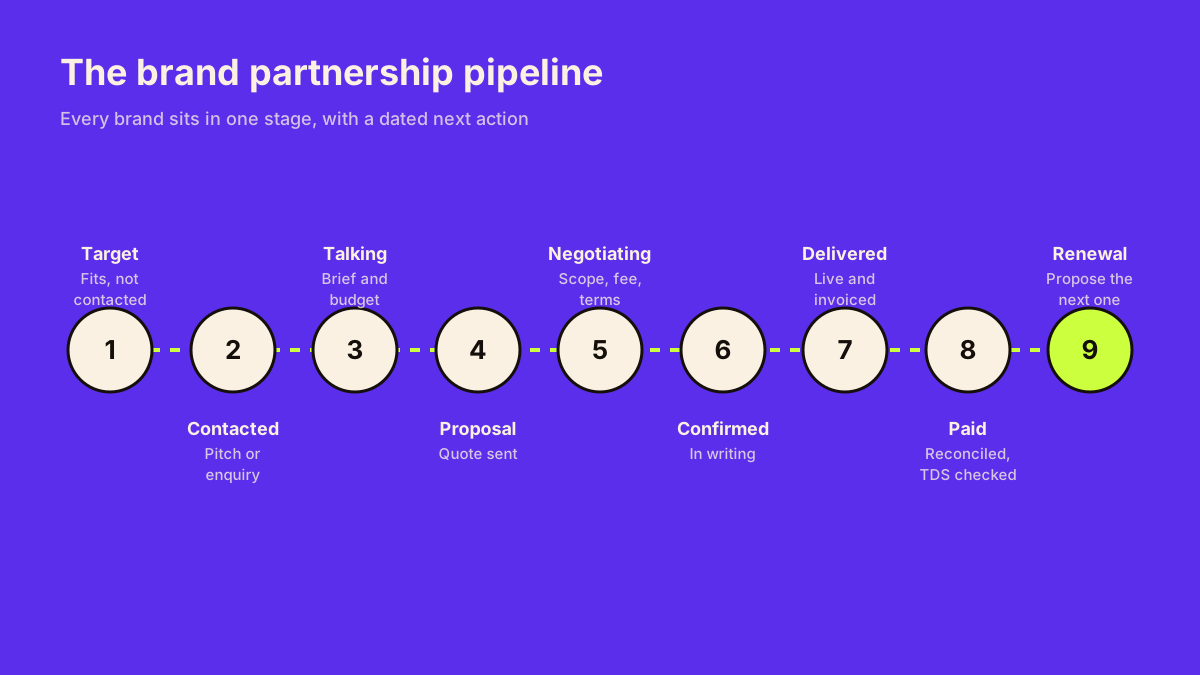
| Stage | Means | Next action |
|---|---|---|
| Target | A brand that fits, not yet contacted | Research contact; draft a specific pitch |
| Contacted | Pitch sent or enquiry received | Follow up after 5–7 working days |
| In conversation | The brand has replied with interest | Get the brief, budget range and timeline |
| Proposal sent | You've sent a proposal or quote | Follow up; answer questions |
| Negotiating | Scope, fee or terms under discussion | Agree terms in writing |
| Confirmed | Agreement signed or confirmed in writing | Kick-off; add dates to your calendar |
| In production | Content being made or approved | Hit draft and posting dates |
| Delivered and invoiced | Content live, invoice sent | Send report; track payment due date |
| Paid | Money received and reconciled | Check TDS; thank the brand |
| Renewal | Discuss what's next | Propose the next campaign |
| Lost or paused | Not now, with a reason | Note the reason; set a revisit date |
Keep a reason when a brand drops out ("budget", "timing", "not our audience"). Those reasons are the most useful data your pipeline produces.
Build the target list
A pipeline is only as good as the brands at the top of it. Build a target list of 30 to 50 brands in three rings:
- Ring 1: brands you already use and mention organically. Easiest yes, most credible content.
- Ring 2: brands in your niche that work with creators of your size (look at paid partnership labels and sponsored segments in your category).
- Ring 3: adjacent categories your audience buys from (a fitness creator's audience also buys groceries, apparel and apps).
For each, note why it fits: an audience overlap, a product you've used, a campaign pattern you've seen. How to find brands to collaborate with explains the research methods, and creator brand fit has a scorecard for judging each one.
Outbound and inbound in one pipeline
| Source | Where it enters | Typical first stage |
|---|---|---|
| Your pitches | Target list | Target → Contacted |
| Inbound emails and DMs | Lead triage | Contacted or In conversation |
| Platform tools (Creator Marketplace, YouTube Creator Partnerships) | Inquiry in the platform | In conversation |
| Agencies and networks | Brief shared with you | In conversation |
| Past clients | Renewal list | Renewal |
Treat them all the same once they're in: one list, one set of stages, one weekly review. Inbound leads still need qualifying; see how to manage brand collaboration leads.
Platform sources: Instagram Creator Marketplace and YouTube Creator Partnerships.
The weekly pipeline routine
1. Add new inbound leads and qualify them
2. Send 3–5 new pitches from your target list
3. Follow up on everything with a next action due this week
4. Update stages and next-action dates
5. Check the next 8 weeks: are enough deals confirmed or close?
6. Move stalled deals to "paused" with a revisit date
Consistency matters more than volume. Five good pitches every week for three months usually beat fifty sent in a panic after a quiet month. Brand collaboration email templates has pitch and follow-up wording.
Templates: brand collaboration email templates.
How many deals do you need in the pipeline?
Work backwards from your target. Use your own history for the conversion between stages; if you don't have history yet, track it for three months before relying on it.
Monthly goal: 3 confirmed paid deals
If ~1 in 3 proposals is confirmed → ~9 proposals a month
If ~1 in 2 conversations reaches a proposal → ~18 conversations
If ~1 in 4 pitches leads to a conversation → ~72 pitches a month (or fewer, as inbound grows)
These ratios are placeholders, not benchmarks; creators' rates vary widely by niche, audience and pitch quality. The value is in knowing your own.
Read the pipeline for problems
| Pattern | Likely problem | Fix |
|---|---|---|
| Many pitches, few replies | Weak targeting or generic pitches | Narrow the list; personalise the first line |
| Replies, but few proposals | Poor fit or unclear offer | Clarify your formats and audience in the pitch |
| Proposals, but few confirmed | Pricing, proof or timing | Add case studies; offer scope options |
| Confirmed, but late payments | Terms not agreed | Tighten payment terms upfront |
| Paid, but no renewals | No post-campaign rhythm | Report and propose the next step |
Proof that closes deals: creator case study.
Capacity: don't overfill the pipeline
A pipeline also tells you when to stop pitching. If the next eight weeks already hold as many deliverables as you can produce well, pause outbound and focus on delivery. Overcommitting leads to rushed content, missed deadlines and weaker renewals. Creator workflow covers production planning.
Delivery: creator workflow.
For brands: what a creator pipeline means for you
Brands benefit when creators run a pipeline: replies are faster, proposals are clearer and capacity is known upfront. When briefing creators, share your timeline early, give a budget range, and tell creators when a decision will be made. Brand teams running their own outreach can use Kudozz's guide to influencer outreach and campaign management for the other side of this process.
For brands: influencer campaign management.
From pitch to payment: track cycle time
A deal isn't finished when it's signed; it's finished when the money is in your account. Track the dates each deal enters key stages, and two numbers become visible: how long deals take to close, and how long you wait to be paid.
| Measure | From → to | What it tells you |
|---|---|---|
| Time to close | Contacted → confirmed | How far ahead you need to pitch to fill a month |
| Time to deliver | Confirmed → content live | Whether approvals or production slow you down |
| Time to cash | Content live → paid | Whether invoicing and follow-ups work |
| Pitch to payment | Contacted → paid | The full cycle to plan cash flow around |
If pitch to payment is often three months, a gap you see in October's pipeline is a cash gap in January. Use these numbers in creator revenue forecasting and creator cash flow management, and keep late payers on a schedule using how creators handle late brand payments.
Common mistakes
- Pitching only when income drops.
- Keeping the pipeline in your head or scattered across DMs.
- No next action or date on each deal.
- Never recording why deals were lost.
- Filling the pipeline beyond what you can deliver well.
Conclusion
A brand partnership pipeline turns brand income from weather into a system: a target list, clear stages, dated next actions, a weekly routine and honest stage-by-stage numbers. Run it in a simple CRM, review it every week, and let it tell you when to pitch and when to deliver.