Creator Reviews and AI Shopping Assistants: What Brands Can and Can't Influence
How AI shopping assistants such as ChatGPT shopping research, Google's AI features and Amazon's Rufus gather product information, what that means for creator reviews, practical steps that also help ordinary search, and the claims to be wary of.
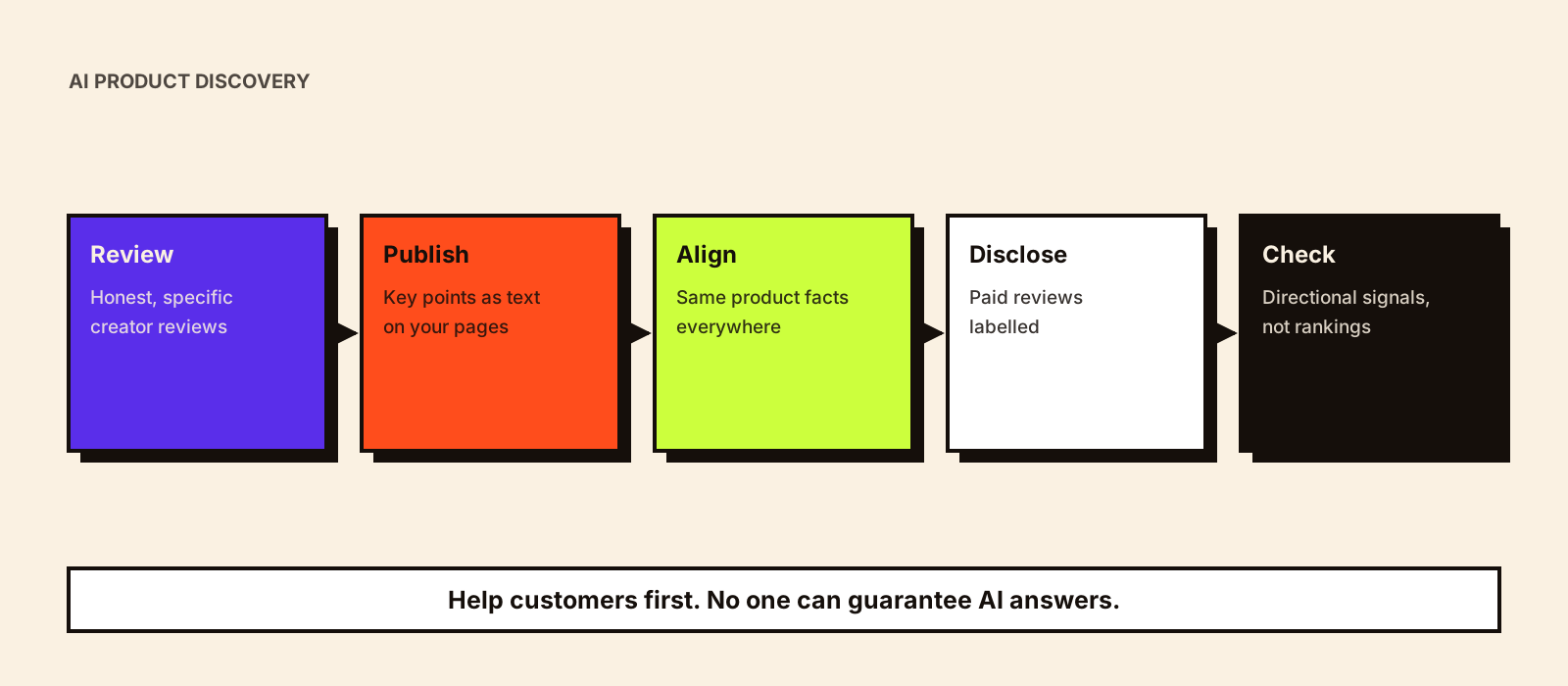
Shoppers increasingly ask an assistant rather than scroll a results page: 'Which mixer grinder is best for a small kitchen?' or 'Is this sunscreen good for oily skin?'. Brands want to know whether creator reviews feed those answers, and agencies are starting to sell 'AI visibility'. The honest position is that some of the mechanics are documented, much isn't, and the things that help are mostly the things that already help customers.
Quick answer
AI shopping assistants draw on product data, retailer pages, reviews and other public web content, and none of the major providers publishes a way to buy or engineer a recommendation. Creator content can help indirectly: detailed, honest reviews create more accurate public information about your product, and when you republish key points as text on your own pages (with permission), that information is easier for search systems to read. Treat any promise of guaranteed AI citations as a red flag.
What the platforms say
| Assistant | What's documented | Source |
|---|---|---|
| Google AI Overviews and AI Mode | No special optimization or schema is required; pages must be indexed and eligible for a snippet. Google advises keeping important content in text, structured data matching visible text, and Merchant Center data current. | Google Search Central, AI features and your website |
| ChatGPT shopping research | Announced 24 November 2025. OpenAI says results are organic, drawn from publicly available retail sites, and may contain mistakes about price and availability. | OpenAI announcement |
| Amazon Rufus (India) | Launched in beta on the Amazon.in app in August 2024; Amazon describes it as trained on its catalog and information from across the web. | Amazon India announcement |
| Gemini and AI Mode with Flipkart | In October 2026, reports described a limited test of buying selected Flipkart products from Gemini and AI Mode in India. Google hadn't published details. | Press report; unconfirmed |
Sources: Google's guide to AI features and your website, OpenAI's shopping research announcement, Amazon India's Rufus launch note and YourStory's report on the Flipkart test. Features change quickly, so check before planning around any of them.
Where creator content fits
There's no public evidence that an assistant ranks products by counting creator videos, and you should be skeptical of anyone who claims to know the weighting. What is reasonable to expect is that assistants summarize what's publicly written about a product, so the quality and accuracy of that information matters. Creator reviews contribute in three ways:
- They add specific, experience-based detail (who it suits, what it's like after a month, how it compares) that thin product pages lack.
- They generate questions and answers in comments and on retailer pages, which shape what's known about the product.
- Their key points can be republished as text on your product pages, FAQs and comparison guides, where search systems can read them.
Practical steps
| Step | Why it helps | Also helps |
|---|---|---|
| Brief creators for honest, specific reviews | Specific use cases and limitations make the information useful and credible | Conversion, returns |
| Add captions and transcripts to creator videos you host | Puts spoken information into text | Accessibility |
| Summarize creator insights on product pages (with permission) | Your page becomes the clearest source on the product | Product-page conversion |
| Keep product facts consistent everywhere | Contradictions between your site, marketplaces and creator scripts produce confused answers | Fewer complaints |
| Fix wrong claims early | Correct inaccurate creator content and FAQs before they spread | Compliance |
| Keep Merchant Center and marketplace listings current | Assistants and shopping surfaces read structured product data | Ordinary search and ads |
How to reuse creator content on product pages and in email is covered in UGC content for e-commerce, and review-led campaigns in YouTube product reviews.
Risks and rules
- Disclosure still applies. A paid review must carry a label such as 'Ad' or 'Collaboration' under ASCI's guidelines, however it's later summarized.
- Don't fake volume. Fabricated reviews, review swaps and undisclosed paid reviews risk consumer-protection action and marketplace penalties, and India's standard for online reviews (IS 19000:2022) expects paid reviews to be disclosed.
- Don't script identical talking points across many creators to flood the web. It reads as inauthentic to people and adds nothing useful.
- Assistants can be wrong. If one repeats an inaccurate claim about your product, correct the underlying public sources; there's usually no direct way to edit an answer.
Disclosure rules are in influencer marketing compliance.
Measuring it honestly
You can't yet measure AI visibility the way you measure search rankings. Some practical signals: referral traffic from AI assistants in your analytics (where the referrer is passed), branded search trends, questions customers mention in support chats ('ChatGPT said...'), and periodic manual checks of how assistants describe your product, logged with the date and prompt. Treat these as directional. Report them separately from campaign results, and don't attribute sales to an 'AI effect' without a test.
Questions to ask an agency selling AI visibility
- Which assistants and features does this cover, and what documentation supports the approach?
- What exactly will be created or changed, and is it useful to customers on its own?
- How will results be measured, and what would count as no effect?
- Does the plan involve paid reviews, and how will they be disclosed?
Common mistakes
- Buying 'guaranteed AI citations'.
- Creating dozens of near-identical review posts.
- Leaving key information only in video, with no text version.
- Inconsistent product claims across creators, marketplaces and your site.
- Counting manual prompt checks as hard performance data.
Conclusion
AI shopping assistants reward clear, accurate and widely available product information, as far as anyone outside these companies can tell. Creator reviews help when they're honest and specific, disclosed, and backed by text on your own pages. Plan creator content for customers first; whatever helps them is also the best bet for search and AI answers.