Influencer Marketing for Employer Branding and Recruitment: A Practical Guide
How companies can use creators and employees for employer branding and recruitment: when it fits, choosing between employee voices, career creators and campus creators, honest content about pay and work, disclosure, data, and measuring applications rather than views.
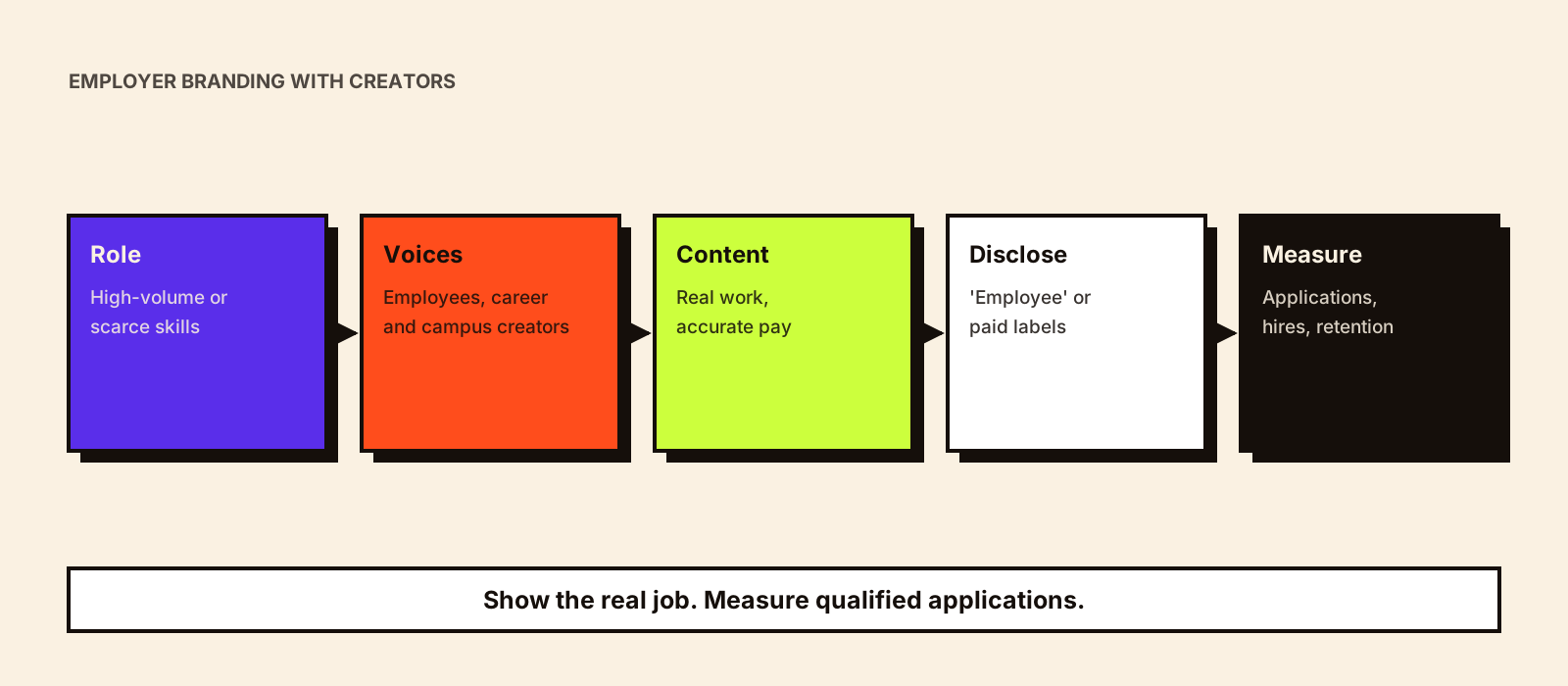
Candidates research employers the way customers research products: they watch day-in-the-life videos, read what employees say and look for honest views on pay and culture. Creators and employees can supply that content more credibly than a careers page. This guide is for companies hiring for themselves; if you sell HR or recruitment services, see influencer marketing for HR and recruitment companies.
Quick answer
Use creators for employer branding when you're hiring at volume, entering a new city, recruiting on campuses or competing for scarce skills. Combine employee voices (most credible about the work) with career creators (reach among job seekers) and campus creators (students). Show the real job, including its demands, never promise jobs or pay you can't guarantee, label employee and paid content, collect applications through your own process, and measure qualified applications and hires, not views.
When it fits
- High-volume hiring (retail, logistics, customer service, delivery) where awareness of openings is the bottleneck.
- Scarce skills (engineering, data, design) where candidates compare employers closely.
- Campus and early-career hiring, where students follow student and career creators.
- A new office or city where you're unknown as an employer.
- Repairing a reputation problem, but only once the underlying issue has been fixed.
Choosing voices
| Voice | Strength | Watch out for |
|---|---|---|
| Employees | Most credible on the actual work and team | Must be voluntary; label as 'Employee'; avoid confidential information |
| Career and job-search creators | Reach among active job seekers; explain roles and processes | Must understand the role; avoid hype about pay or growth |
| Industry creators (tech, design, finance) | Credibility with skilled candidates | Fees; they'll ask hard questions about the work |
| Campus and student creators | Reach on campuses and among recent graduates | Coordinate with placement cells; don't pressure students |
Running an employee program is covered in employee influencer marketing, and campus work in influencer marketing for colleges.
Content that works
| Format | What it answers |
|---|---|
| A day in the role | What the job actually involves, including the hard parts |
| Interview process explained | Stages, timelines, what's assessed, how to prepare |
| Team or office walkthrough | Where people work, who they work with |
| Growth stories | Real progressions, with the time they took |
| Questions answered | Shifts, travel, remote work, benefits, as stated in the offer |
Honesty and claims
Recruitment content is advertising, and misleading claims carry the same risks as product claims under the Consumer Protection Act and the CCPA's 2022 guidelines on misleading advertisements. Don't promise selection, placement or salaries; if pay ranges are mentioned, use the ranges you'll actually offer. Be accurate about shifts, travel and location. Give creators a fact sheet approved by HR and legal, and review content before it goes live.
Disclosure for employees and paid creators
ASCI's influencer guidelines treat an employment relationship as a material connection and list 'Employee' among the accepted labels, alongside 'Ad', 'Collaboration' and others for paid creators. The label should be upfront and in English or the language of the post. Employee posts about their employer need it even when unpaid.
Candidate data
Send candidates to your own careers page or applicant tracking system, which carries your privacy notice. Don't let creators collect CVs or phone numbers by DM or comment. Practical rules are in influencer marketing data privacy.
Measuring it
| Metric | How to track |
|---|---|
| Applications by source | A tracked link per creator to the job page, and a 'How did you hear about us?' field |
| Qualified applications | Share passing the first screen, by source |
| Hires and offer acceptance | From the applicant tracking system, by source |
| Early retention | Whether creator-sourced hires stay past probation |
| Cost per qualified applicant | Full campaign cost divided by qualified applications |
Hypothetical example
Hypothetical, for illustration only. A logistics company opening a warehouse in a new city needs 200 staff. It works with two local creators and five volunteer employees on day-in-the-role videos in the local language, with shift timings and pay ranges from the offer letter. Applications come through a tracked link to a short form. The company compares qualified applications and 90-day retention by source before planning the next site.
Common mistakes
- Showing only perks and none of the actual work.
- Promising salaries or growth that offers don't match.
- Pressuring employees to post.
- Collecting CVs through creators' DMs.
- Measuring views instead of qualified applications and hires.
Conclusion
Creators help employers when they show the real job to the right candidates. Combine employee voices with career and campus creators, keep claims accurate, disclose employee and paid content, route applications through your own systems, and judge the work on qualified applications, hires and retention.