How to Evaluate Your Influencer Marketing Agency's Performance Beyond Vanity Metrics
Once an agency is hired, judging it on reach and post counts says little. A scorecard for business results, measurement quality, creator quality, operations, compliance and strategic value, how to run a quarterly review, and when to fix the relationship or move on.
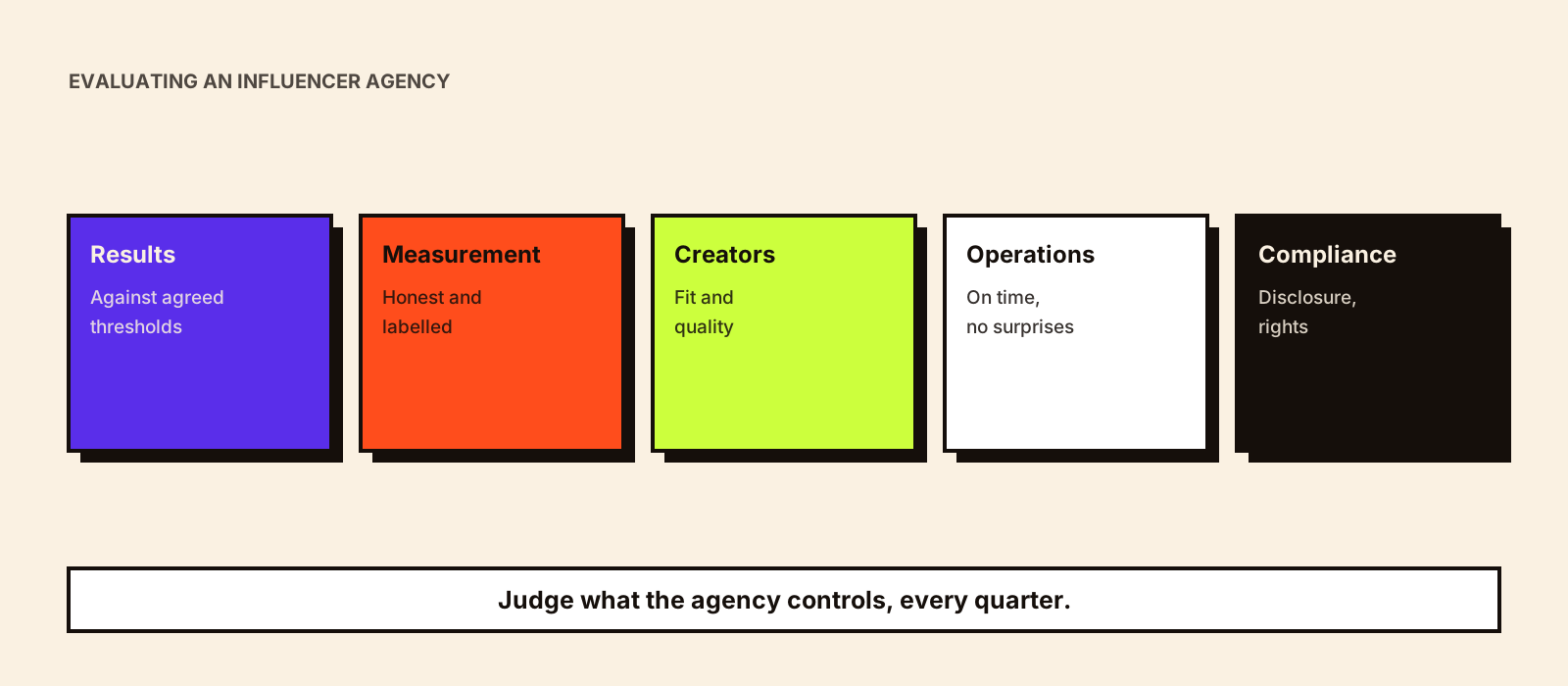
Agency reports often look impressive: millions of views, dozens of posts, glowing engagement. None of that tells you whether the agency is good at the job you hired it for. A fair review looks at what the agency controls, judges results against what was agreed, and checks how the work was done, not only what was reported.
Quick answer
Evaluate an influencer agency on six things: business results against the KPIs and thresholds agreed in advance, the quality and honesty of measurement, the quality of creators it brings, operational reliability (timelines, approvals, payments), compliance (disclosure, claims, rights), and strategic value (learning and recommendations). Review quarterly with a written scorecard, separate what the agency controls from what it doesn't, and agree fixes before deciding to change agencies.
Vanity metrics vs useful measures
| Vanity measure | Better question |
|---|---|
| Total reach or views | Reach in our target market and audience, at what cost per thousand? |
| Number of posts or creators | Did the creators fit, and did they deliver against the brief? |
| Average engagement rate | Did engagement lead to the outcome we agreed: clicks, orders, leads? |
| 'Earned media value' | What did we actually gain, measured the way finance would accept? |
| Positive comments | What did we learn about our customers and product? |
An agency scorecard
| Area | What good looks like | Evidence to ask for |
|---|---|---|
| Business results | Results against the primary KPI and threshold set before each campaign | Creator-level results, deduplicated, with the agreed definitions |
| Measurement quality | Honest labelling of measured vs estimated results; tracking set up before launch | Link and code setup, reporting method, any tests or holdouts |
| Creator quality | Creators chosen on audience fit and quality, with clear reasons | Shortlist rationale, audience data, rebooking decisions |
| Operations | Briefs, approvals and payments on time; few surprises | Timeline adherence, approval turnaround, creator payment dates |
| Compliance | Disclosure on every post; claims approved; rights recorded; licences checked where required | Post checks, rights register, licence records |
| Strategic value | Clear learnings and recommendations that change the next campaign | Post-mortems, test results, decision log |
Score each area as strong, adequate or weak, with the evidence. Results matter most, but an agency with good results and weak compliance or measurement is a risk you're carrying.
Separate what the agency controls
| Mostly agency-controlled | Mostly brand-controlled | Shared |
|---|---|---|
| Creator selection, briefs, timelines, compliance checks, reporting quality | Product, price, offer, stock, landing pages, approval speed on the brand side | Objectives, budget, creative direction, measurement setup |
Weak results caused by a slow brand approval process or an out-of-stock product aren't an agency failure. Agree in advance who owns what, and review against that.
A quarterly review agenda
- Results against plan, by campaign and creator, with measured and estimated results labelled.
- What worked, what didn't, and why, in the agency's words and yours.
- Scorecard, area by area, with evidence.
- Issues on both sides: brand delays, agency misses, creator problems.
- Next quarter: objectives, tests, budget and any changes to scope or team.
- Agreed actions with owners and dates, reviewed at the start of the next meeting.
What a good report contains is covered in how to create an influencer marketing report, and the decision log in scale, pause or stop.
Fix, re-scope or change agencies?
| Situation | Usually |
|---|---|
| Results below plan, but measurement honest and causes understood | Fix together: adjust creators, briefs or offers for a defined period |
| Good operations, weak strategy | Re-scope: keep execution, add strategic support elsewhere or in-house |
| Repeated compliance failures or misleading reporting | Change: trust and risk outweigh results |
| Needs have outgrown the agency (new markets, scale, in-house team) | Re-scope or move work in-house; see agency vs in-house |
If you're choosing a new agency, the agency checklist covers what to verify before signing, and influencer marketing agency vs in-house compares the models.
Common mistakes
- Judging the agency on reach and post counts.
- Changing KPIs after results arrive.
- Blaming the agency for brand-side problems.
- Ignoring compliance because results look good.
- Reviewing only when something goes wrong.
Conclusion
Judge an influencer agency on agreed results, honest measurement, creator quality, reliable operations, compliance and the learning it brings, not on vanity totals. Use a written scorecard, separate what each side controls, review every quarter, and fix problems together before deciding to move on.