Influencer Marketing for Fashion Brands in Dubai: From Creator Selection to Sales
How fashion brands can use creators in Dubai and the wider UAE: matching style and audience, planning around Ramadan, Eid and the cooler season, modest fashion done properly, styling formats that sell, and measuring sales after returns.
Dubai has one of the most visible fashion creator scenes in the region, which makes it easy to book someone with a beautiful feed and hard to know whether they'll sell your clothes. The creators who move product are the ones whose audience already dresses, shops and spends the way your customer does. Getting that match right matters more than the size of the account.
Quick answer
Fashion influencer marketing in Dubai works best when you match creators to a specific segment (luxury, contemporary, high-street, modest fashion, sportswear or menswear), time campaigns to the moments UAE shoppers actually buy, especially Ramadan and Eid collections and the cooler months, and use styling formats that show fit and versatility. Target audiences by city and language, give each creator a tracked link and code, and judge results on net sales after returns, not clicks. Creators need a UAE advertiser permit, including for gifted pieces.
Start with the segment, not the creator
| Segment | What the audience looks for | Creator profile |
|---|---|---|
| Luxury | Craft, exclusivity, occasions, how pieces are worn by people like them | Established style figures, often Arabic-speaking or Emirati for national audiences; restraint over hauls |
| Contemporary and premium | Versatility, quality for the price, workwear and evenings | Stylists and fashion creators with a consistent aesthetic |
| High-street and value | Trends, price, how to style for less | Haul and try-on creators, micro creators with high comment activity |
| Modest fashion | Coverage without compromise, fabric in heat, occasion wear | Creators who wear modest fashion daily, not as a one-off costume |
| Abayas and traditional wear | Fabric, cut, embellishment, occasion; often bought for Ramadan and Eid | Gulf creators and designers; Arabic content is often essential |
| Sportswear and athleisure | Performance in heat, community, everyday wear | Fitness and running creators, community leaders |
| Menswear | Fit, tailoring, grooming, kandura and casual crossover | Men's style creators; a smaller and less saturated pool |
Timing your drops to the UAE calendar
Northern-hemisphere 'spring/summer' and 'autumn/winter' don't map neatly onto the UAE. The fashion calendar is shaped more by religious occasions, heat and the tourist season.
| Period | What sells | Creator activity |
|---|---|---|
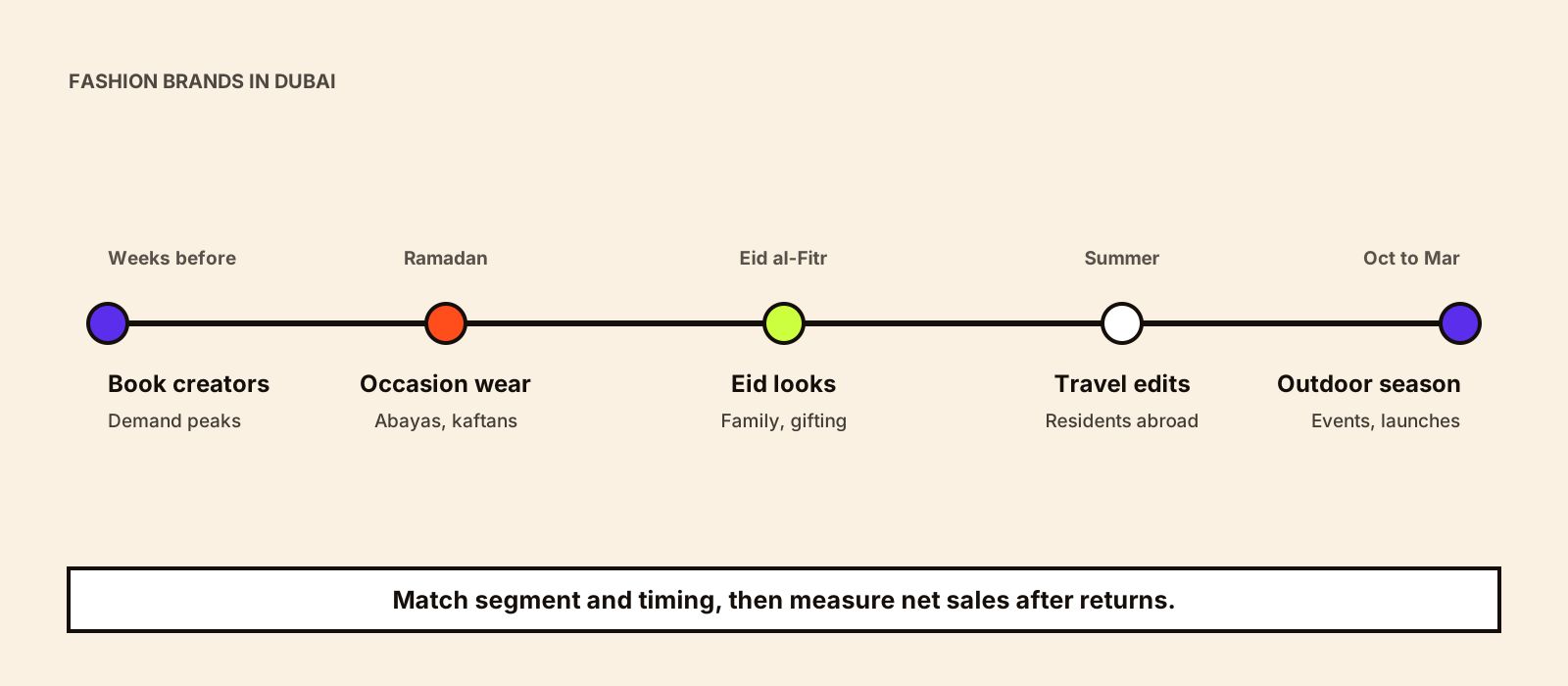
| Weeks before Ramadan | Ramadan collections, abayas, kaftans, modest occasion wear | Book creators early; demand and rates peak |
| Last part of Ramadan into Eid al-Fitr | Eid outfits, children's wear, gifting, accessories | Try-ons, 'Eid look' styling, family content |
| Eid al-Adha | A second occasion-wear moment | Shorter campaigns; travel and family themes |
| Summer (roughly June to August) | Travel wear, resort, lightweight fabrics; many residents are abroad | Lower local footfall; online and travel-led content |
| October to March | Outdoor season: layering for evenings, events, weddings, the Dubai Shopping Festival period | Events, store openings and launches |
Islamic dates move about 11 days earlier each year and depend on moon sighting, so confirm dates before locking content schedules. Our Ramadan influencer marketing guide covers the expected 2027 dates and planning lead times.
Modest fashion, done properly
- Work with creators for whom modest fashion is everyday dress, so styling advice is credible
- Show the details buyers care about: opacity, fabric weight, breathability, length, sleeve and neckline options, and how pieces layer
- Avoid treating modest collections as a seasonal gimmick released only for Ramadan
- Respect each creator's own boundaries on presentation; some won't show hair or certain fits, and the brief should accommodate that
- Use Arabic where the collection is aimed at Gulf audiences, and review copy with a native speaker
Styling formats that sell
| Format | Why it works | Tip |
|---|---|---|
| One piece, three ways | Shows versatility and justifies price | Pick pieces that genuinely style differently |
| Try-on with sizing notes | Answers fit questions that drive returns | Ask creators to state their height and size worn |
| Get ready with me for an occasion | Ties product to Eid, weddings, work or evenings | Plan around real occasions on the creator's calendar |
| Outfit of the week or capsule edit | Multiple products, higher order value | Give a curated selection rather than the whole catalog |
| In-store visit | Drives footfall and shows the full range | Combine with a store-specific offer to track visits |
| Fabric close-ups and heat tests | Answers 'will I be comfortable?' in UAE weather | Film outdoors, in real light |
Creators should have room to style pieces in their own way. A brief that dictates every outfit produces content that looks like a catalog and performs like one; creator-led campaigns explains how to give direction without a script.
Checking brand fit and local audience
- Aesthetic: would the piece look natural in the creator's last 20 posts?
- Price point: do they normally feature items your customer can afford, or far above or below?
- Audience location: what share of followers are in the UAE, and in which cities? A Dubai creator with a mostly Saudi or Egyptian audience suits regional reach, not a Dubai store launch
- Language: Arabic, English or both, and in which proportion?
- Competitor density: how many fashion brands have they promoted this quarter?
- Comment quality: are people asking about sizes, prices and where to buy?
Fine jewellery and watches have their own rules on what ads must state; see influencer marketing for watches and fine jewellery brands in the GCC.
Measuring sales, not just engagement
Fashion has high return rates, so gross orders flatter a campaign. Track per creator: clicks, orders, return rate and net revenue after returns. A creator whose audience buys three sizes to keep one can look like your top performer until the refunds arrive.
- Unique link with UTM parameters and a code per creator; for multi-brand retailers, ask for SKU-level sales during the campaign window
- Shoppable formats and in-app shopping where available in the UAE; confirm current features before planning around them
- Store-specific codes or a 'mention the creator' offer for in-store sales
- Net revenue after returns over a 30 to 45 day window, compared with your other channels
- Content you reuse in ads or on product pages has value of its own; record it
Discounts promoted by creators can require a promotion permit from Dubai's Department of Economy and Tourism or the equivalent department in other emirates, and the trader is responsible for misleading promotions run through influencers. Fuller e-commerce tracking is covered in influencer marketing for e-commerce brands in the UAE.
Common mistakes
- Booking creators for Ramadan collections after the season's demand has already peaked
- Choosing a creator for their aesthetic without checking where their audience lives
- Treating modest fashion as a costume for creators who don't usually wear it
- Measuring clicks and gross orders instead of net sales after returns
- Over-scripting styling, so every creator's post looks the same
Conclusion
Fashion creators in Dubai can sell remarkably well when the match is right: the right segment, the right moment in the calendar, content that answers fit and fabric questions, and measurement that counts what customers kept. Start smaller than you think, learn which creators' audiences actually buy, and build your bigger seasonal moments around them.