Influencer Marketing for Universities and Education Brands in the UAE
How universities, branch campuses, training institutes and education brands in the UAE can work with creators: the audiences they recruit, Dubai KHDA advertising approval and claims rules, creator types from students to counsellors, the admissions calendar, and measuring inquiries and applications.
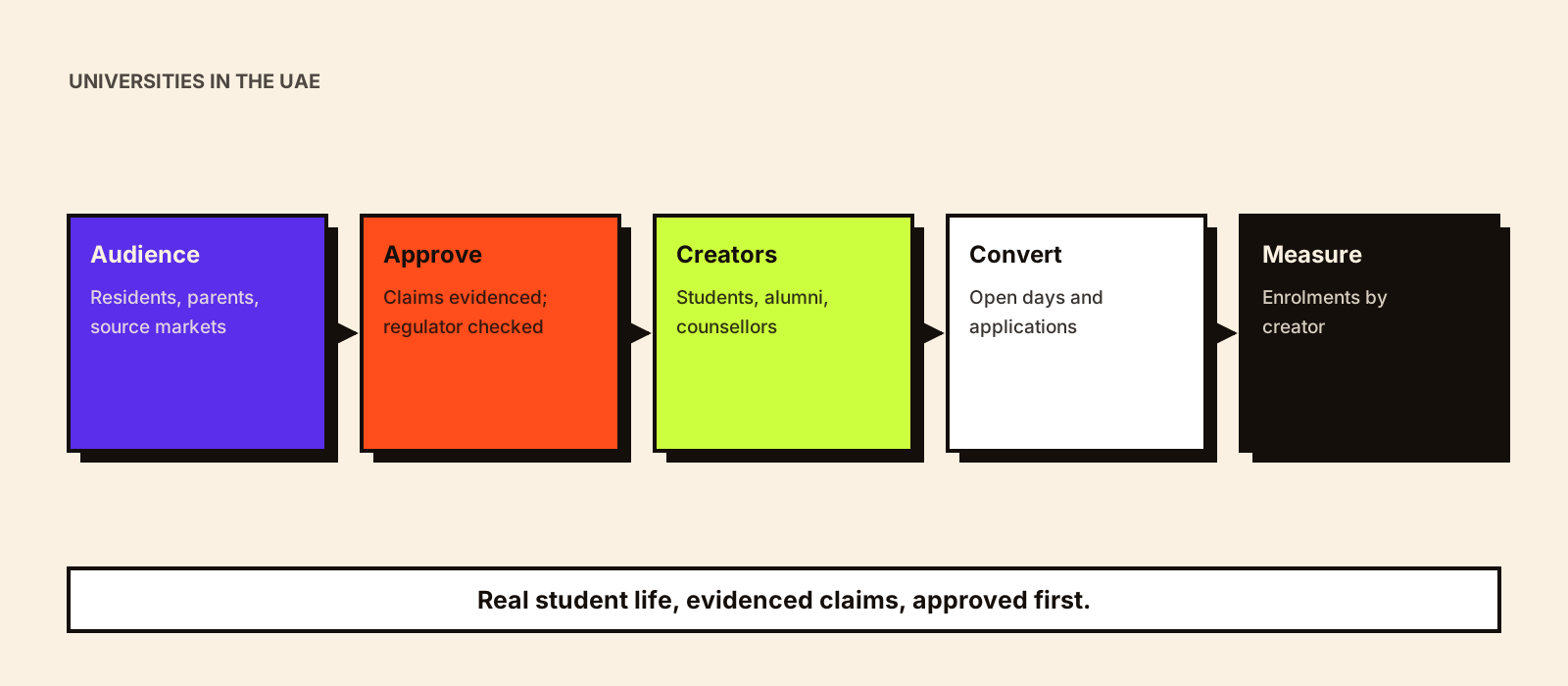
The UAE is a competitive higher-education market. Dubai alone hosts many international branch campuses, and universities recruit both from families living in the country and from students abroad. Creators can show what student life is actually like, which prospective students and parents trust more than a prospectus. But education advertising is regulated, claims about accreditation and rankings are scrutinised, and the person you need to persuade is often a parent. This guide is for universities, colleges, training institutes and education brands.
Quick answer
University influencer marketing in the UAE works when creators show real student life to the right audiences: resident families, international students in your main source markets, and parents. Use current students, alumni and education creators rather than generic lifestyle accounts, keep every claim about accreditation, rankings and outcomes accurate and evidenced, and check whether your licensing authority must approve the content first. In Dubai, KHDA requires education providers to get approval for advertising and marketing material before publishing. Measure inquiries, open-day registrations and applications by creator, and judge results on enrollments.
Who you're recruiting
| Audience | What they want to know | Creators who reach them |
|---|---|---|
| Resident students (Emirati and expatriate) | Courses, campus life, career outcomes, cost | Current students, alumni, UAE student creators |
| International students | Visas, accommodation, safety, part-time work, recognition at home | Students from the same country studying in the UAE; education creators in the source market |
| Parents | Accreditation, safety, fees, outcomes, how the degree is recognised | Parent creators, education counsellors, alumni parents |
| Working professionals | Part-time and executive programs, ROI, schedule | Alumni in industry, LinkedIn creators |
International recruitment often means working with creators in the source country and in that community within the UAE; our guide to reaching expat communities in the UAE covers the community side. Language choices for resident audiences are covered in Arabic vs English influencer campaigns in the UAE.
Advertising approval and claims
Reviewed 9 October 2026. Not legal advice. Education regulation differs by emirate and by type of institution. In Dubai, the Knowledge and Human Development Authority (KHDA) publishes guidelines for advertising and marketing which say all educational providers must get KHDA approval for advertisements and marketing material before they are published. KHDA's e-service for higher-education providers describes approvals as valid for three months. The guidelines file is dated 2011 and doesn't mention creators by name, but its scope covers websites, online advertising and promotional material generally, so ask KHDA how it applies to your creator content before you launch. Institutions licensed elsewhere should check with their own authority, such as ADEK in Abu Dhabi or the federal Ministry of Higher Education and Scientific Research.
Key points from KHDA's guidelines that affect creator content:
- Claims about awards, rankings, acknowledgements and collaborations need evidence, with dates
- Testimonials need evidence of permission, and can't be presented as absolute truth
- No claims of approval or endorsement by a public or private body unless properly authorised
- No raffles, draws or lifestyle giveaways to encourage students to register (scholarships and financial aid are excluded)
- Programs offered outside Dubai need a disclaimer saying so
- Non-credit-bearing programs not approved by KHDA must say they are not approved
- Content must respect Islamic principles, UAE national identity and local culture, and must not adversely target any community or nationality
Creators themselves also need the UAE advertiser permit, which Gulf News reports applies whether or not they are paid. Whether current students posting about their own university need one isn't addressed in the published guidance we found, so take advice before running a paid student ambassador program.
Creator types
| Creator | Strength | Plan for |
|---|---|---|
| Current students | Most credible for student life | Training, approvals, workload around exams, permit question |
| Alumni | Credible on outcomes and careers | Outcome claims must be accurate and typical, not exceptional |
| Faculty | Course depth and teaching style | Institutional approval; staff advocacy policy |
| Education creators and counsellors | Reach families comparing options | Independence; disclose paid relationships clearly |
| Creators in source markets | Trust in the home country | Local advertising rules in that country too |
Campus ambassador programs and the student versus parent split are covered in more depth in our guide for education institutes, written for Indian colleges but useful for program design.
Content that works
- A day in the life on campus, filmed by a student, not a production crew
- Course explainers: what a module involves, with a lecturer
- Honest answers to practical questions: accommodation, transport, part-time work rules, costs
- Alumni career stories with accurate, dated facts
- Live question-and-answer sessions before application deadlines
- Parent-focused content: safety, support services, how the degree is recognised at home
Timing
| Moment | Creator activity |
|---|---|
| Main and secondary intakes | Peak inquiry periods before each intake; check your own intake dates |
| Open days and campus tours | Invite creators; registrations through tracked links |
| Exam results in source markets | Families compare options after results; content on entry routes and deadlines |
| Scholarship deadlines | Explain eligibility accurately; avoid implying everyone qualifies |
| Ramadan | Lower-key, respectful content; adjust timing for lives and events |
Measuring results
| Stage | Metric | Calculation |
|---|---|---|
| Interest | Inquiries per creator | Form submissions through each creator's link |
| Engagement | Open-day or webinar registrations | Registrations by creator code or link |
| Application | Applications per creator and cost per application | Creator costs ÷ attributed applications |
| Outcome | Enrollments and cost per enrollment | Creator costs ÷ attributed enrollments |
| Quality | Application-to-enrollment rate by creator | Enrollments ÷ applications for each creator |
Admissions cycles are long, so report enrollments months after the campaign. Ask your admissions team to record the source on each application, and compare creators on enrollment quality, not inquiry volume alone.
Online courses and professional certifications
Online course platforms, bootcamps and certification providers recruit working professionals who want a promotion, a career change or a credential employers recognize. Creators in the target profession, such as finance, project management, data or design, are more persuasive than education generalists, because they can say how the qualification is actually used. The main risks are claims about recognition, accreditation and job outcomes.
- State exactly what the credential is and who issues it; don't imply accreditation or government recognition you don't hold
- Outcome claims (salary rises, job offers) need evidence and must reflect typical results
- Training institutes in Dubai have their own KHDA advertisement approval service; check whether it applies to you
- Online-only providers based abroad should check the rules in each market they recruit in
- Measure trial lessons, enrolments and completion, not just sign-ups
KHDA's service for training institutes is listed as approving training institutes' advertisements.
Common mistakes
- Publishing creator content without checking whether it needs prior approval
- Unverified ranking or accreditation claims in creator scripts
- Giveaways to drive applications, which KHDA's guidelines don't permit in Dubai
- Lifestyle creators with no student or parent audience
- Measuring inquiries instead of enrollments
Conclusion
Education is a high-trust purchase. Creators help when they show real student life to the families making the decision, with claims your institution can prove and content your regulator has cleared where required. Plan around your intakes, track every creator to applications and enrollments, and invest in the students and alumni whose voices are most credible.