Influencer Marketing for Music Releases: Building Discovery Around a New Song
For a new song, the best creator content uses the track. How to plan creators around a release, choose them by genre and language, clear rights, disclose paid posts, avoid stream manipulation and measure how far the sound spreads.
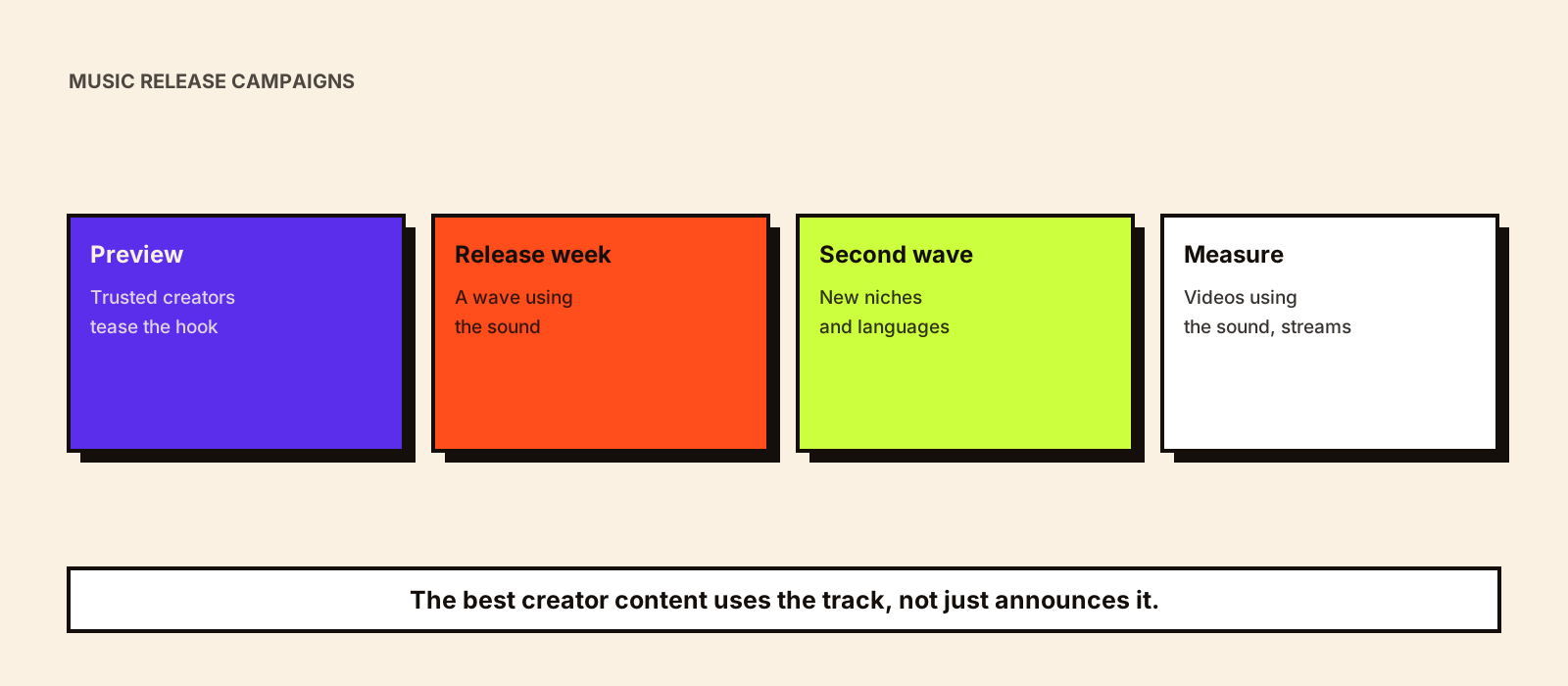
For a new song, the most valuable thing a creator can do is use it. A track that becomes the sound behind thousands of Reels and Shorts reaches people no playlist pitch would, and listeners often go looking for the full song afterwards. Planning creator activity for a release is less about one big post and more about getting the right creators to use the audio at the right time.
Quick answer
Influencer marketing for a music release works best when creators use the track in their own content, not just announce it. Seed a short, recognisable part of the song with creators whose audiences fit the genre and language before or on release day, give them a simple idea (a dance, transition, lip-sync or story format) without scripting them, and keep paid creators clearly disclosed. Make sure the audio is properly available and cleared for the platforms and uses you plan, never buy streams, and measure creator videos using the sound, saves and streams of the full track over the following weeks.
Plan around the release
| Phase | Creator activity | What to prepare |
|---|---|---|
| Before release (1-3 weeks) | A few trusted creators preview the hook; behind-the-scenes or 'guess the song' content | Clear audio snippet; release date; embargo terms for anything unreleased |
| Release week | A wave of creators using the sound with a simple concept; the artist joining or reacting | The audio live on each platform; a short creative note; disclosure terms |
| Weeks 2-6 | Second wave in new niches or languages; duets, remixes, covers where rights allow | Results from wave 1; which concept spread on its own |
| Ongoing | Lyric, story and fan-community content; live sessions | A small budget to back what's growing organically |
Choosing creators
- Match genre and language first. Punjabi, Tamil, Telugu, Bhojpuri and other regional music each have their own creator communities.
- Dance and choreography creators for tracks with a hook that suits movement; storytellers and lifestyle creators for emotional or narrative songs.
- Include a mix: a few larger creators for visibility and many smaller ones whose use of the sound looks organic.
- Check that each creator's past music collaborations led to other people using the sound, not just views on their own post.
Rights and platform rules
Clear who controls the recording and composition, and what creators are allowed to do with them, before the campaign: use in short videos, edits, remixes and paid promotion can each need permission. Platform music libraries are licensed for specific uses; Meta, for example, describes its licensed library as intended for personal use and limits it for some business accounts, so check what's available to each account and agree how branded or paid posts will use the track. Rules and availability change by platform and country, so confirm current terms with the label or distributor.
Disclosure and authenticity
- Paid creator posts promoting a song are advertising and need a clear label, the same as any product.
- Don't ask creators to pretend they discovered the track by chance if they were paid.
- Never buy streams or guaranteed playlist placements. Spotify, for example, says services that sell streams violate its terms and can lead to removed tracks and withheld royalties, as set out in Spotify's guidance on artificial streaming.
Spotify's policy is in its artist support article on artificial streaming.
Measuring a release campaign
| Metric | Where to find it | Note |
|---|---|---|
| Videos using the sound | The audio page on Instagram and YouTube Shorts | The best signal that the track is spreading beyond paid creators |
| Creator post reach and saves | Creator insights | Compare against each creator's usual levels |
| Streams and saves of the full track | Streaming platform artist dashboards | Watch the weeks after each wave |
| Searches for the song or artist | Platform search, Google Search Console for the artist's site | A sign people heard it somewhere and looked it up |
| Listener growth by city or language | Artist dashboards | Shows whether regional creators reached new audiences |
Common mistakes
- Paying creators to post about the song rather than use it.
- Over-scripting a dance or trend so it looks like an ad.
- Launching creator content before the track is live on the platforms people use.
- Treating view counts on paid posts as success when nobody else picks up the sound.
- Using unofficial or uncleared audio in paid posts.
Conclusion
A creator-led release succeeds when the song becomes something people want to use. Pick creators by genre and language, give them a simple idea, clear the rights, disclose paid posts and measure how far the sound travels. For entertainment launches more broadly, see influencer marketing for OTT, film and entertainment, or talk to Kudozz about planning a release through its product launch service.