Restaurant Influencer Marketing in Dubai: How to Drive Reservations and Footfall
How Dubai restaurants and cafes can work with food creators: choosing creators whose audience lives nearby, running hosted visits fairly, agreeing deliverables, and tracking reservations, delivery orders and footfall, including what not to promote.
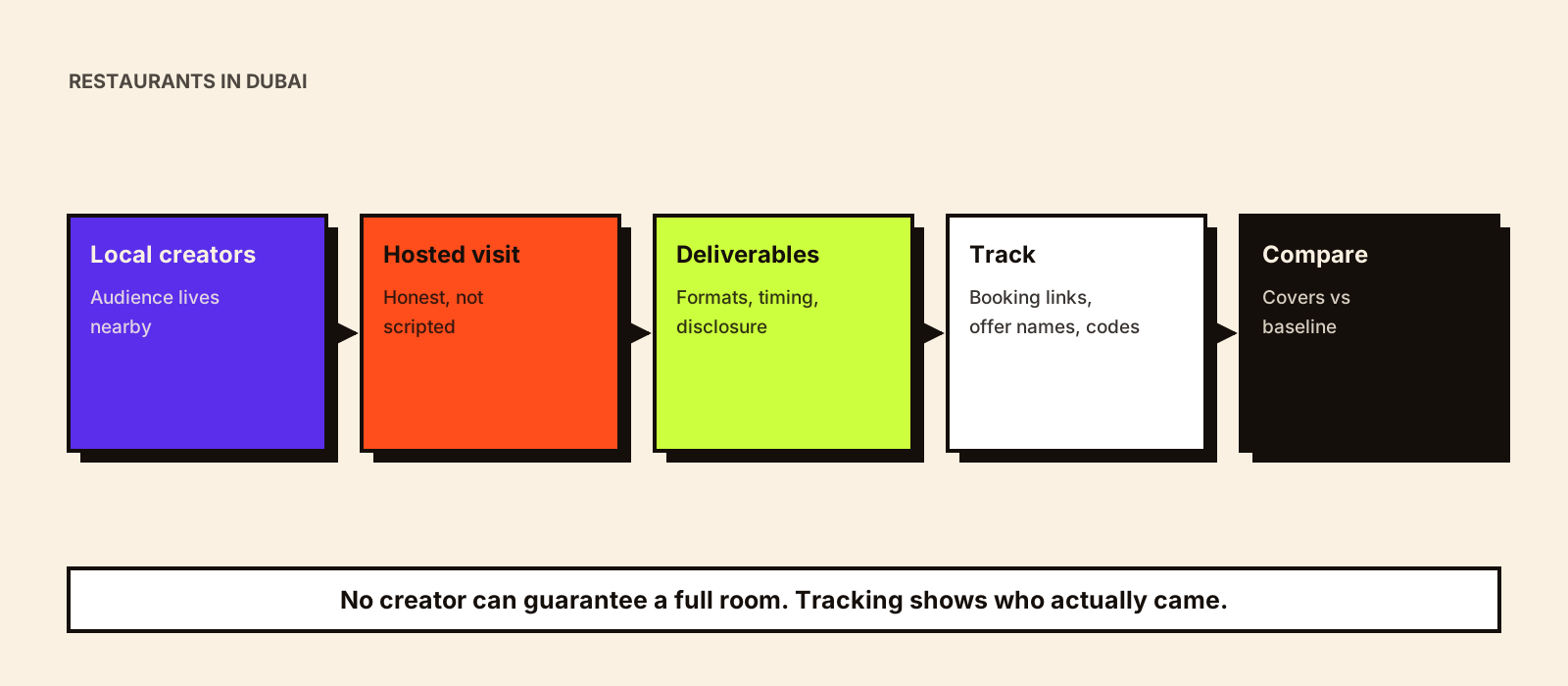
Dubai's restaurant scene moves fast: new openings every week, brunches competing for the same Fridays and Saturdays, and diners who check Instagram and TikTok before booking. Food creators can fill tables, but only if their followers live close enough to come, and only if you can tell which visits came from them. No creator can guarantee bookings. A well-planned campaign makes them more likely and shows you what worked.
Quick answer
Restaurant influencer marketing in Dubai works when you pick creators whose audience is in the neighborhoods and communities you serve, invite them for a hosted visit with clear expectations rather than a demand for a positive review, agree deliverables and disclosure in writing, and track results with creator-specific booking links, offer names or codes, and covers compared with a baseline. Creators need a UAE advertiser permit, including for hosted meals. Discounts may need a promotion permit, and alcohol can't be promoted.
Decide what you need the campaign to do
| Objective | Creator approach | Main measure |
|---|---|---|
| Opening awareness | A wave of creators in the first weeks, mixing food specialists and local lifestyle creators | Reach in Dubai, saves, booking-page visits |
| Filling quiet days or dayparts | Creators who feature specific offers, such as weekday lunch or late evenings | Covers on those days vs baseline |
| Brunch or event bookings | Creators who attend and film the experience; content posted before the next date | Bookings via tracked links |
| Delivery orders | Creators who order in and review at home; delivery app codes | Code redemptions and orders by area |
| Tourist visits | Creators with audiences in your visitor source markets, plus travel creators | Bookings from overseas numbers; hotel concierge referrals |
| Community regulars | Creators from the cuisine's home community, in their language | Repeat visits, mentions on arrival |
If visitors make up a large share of your covers, the planning overlaps with hotels and attractions: creators are chosen by where their audience travels from. That approach is covered in influencer marketing for travel brands in the UAE.
Local relevance beats follower count
A creator with a million followers spread across the Arab world may bring fewer diners than a creator with 20,000 followers who mostly live in Dubai Marina or JLT. Dubai is spread out and traffic shapes behavior, so neighborhood matters.
- Ask for audience location by city and, if possible, for Dubai vs Sharjah vs Abu Dhabi
- Prefer creators who cover your area or cuisine regularly; their audience comes to them for exactly this
- Match cuisine communities: a Kerala restaurant, a Lebanese grill and a Japanese omakase counter each have their own creators and languages
- Check what else they've featured recently; ten restaurant reviews a week dilutes any single one
- Look at comments: are people tagging friends and asking where it is and how to book?
Running hosted visits fairly
Most restaurant creator work starts with an invitation. How you handle it affects both the content and your reputation.
- State clearly what's included: the menu, number of guests, drinks policy and any limits
- Say whether posting is expected. An invitation with no obligation and a paid post with agreed deliverables are different arrangements; don't blur them
- Never require a positive review. Ask for honest content, and invite feedback privately if something went wrong
- Brief the floor team: who's coming, the dishes to feature and that service should be normal, not staged
- Tell creators about filming etiquette: other guests' privacy, staff filming consent and any kitchen areas that are off limits
- Hosted meals are still a commercial benefit, so the creator needs an advertiser permit and should disclose the invitation
Agreeing deliverables
| Item | Agree upfront |
|---|---|
| Formats | For example one Reel or TikTok video plus a Story set with a booking link |
| Timing | Posting window, ideally within days of the visit and before the next relevant weekend or event |
| Must-includes | Location, how to book, the dishes or offer to feature, disclosure |
| Language | Arabic, English or another language, and subtitles |
| Review | Whether you see content before it goes live, limited to factual accuracy (prices, address, offer terms) |
| Usage | Whether you can repost it or run it as an ad, for how long |
| Fee | Hosted-only, fee plus hosting, or fee for paid deliverables |
Tracking reservations, orders and footfall
Restaurants have the hardest tracking problem in creator marketing: most diners never click a link. Combine several methods.
| Method | How | Limit |
|---|---|---|
| Tracked booking links | A UTM-tagged link per creator to your booking page or reservation platform | Diners who phone, walk in or book later |
| Creator-specific offer or name | 'Mention [creator] for a complimentary dessert'; staff record mentions | Relies on staff and diners remembering |
| Delivery app codes | A promo code per creator on the delivery platforms you use | Only covers delivery orders |
| Reservation notes | Ask 'how did you hear about us?' when booking and log the answer | Self-reported; small numbers |
| Covers vs baseline | Compare covers by day and daypart with the same period before, adjusted for seasonality | Other activity and weather affect it |
| Search and map views | Branded search and map listing views during the campaign window | Doesn't prove a visit |
Set the baseline before the first creator visits. A campaign in October and a baseline from August will look brilliant for reasons that have nothing to do with creators, because many residents are away in summer. Treat tracked bookings as the minimum effect and baseline lift as the broader estimate.
Offers, permits and what you can't promote
- Discounts, giveaways and prize draws promoted by creators may need a promotion permit from Dubai's Department of Economy and Tourism; in a 2021 case, the trader was fined for a misleading promotion run through an influencer
- Alcohol can't be promoted in advertising in the UAE, even by licensed venues. Keep creator content focused on food, atmosphere and service
- During Ramadan, focus on iftar and suhoor offerings and be respectful about filming and timing; see the Ramadan guide
- Don't overstate: 'best in Dubai' claims and invented awards are misleading; let creators give their own opinion
- Prices and offer terms in content must match what diners are charged
The promotion permit rules and the 2021 influencer case are summarized by Khaleej Times; check current requirements with DET. More on permits and disclosure is in our UAE influencer marketing guide.
An opening campaign, step by step
- Six weeks before: finalize menu, prices and booking system; set up tracked links and offer codes
- Four weeks before: shortlist creators by audience location and cuisine fit; confirm permits
- Soft opening: host a small group of creators across a few nights so the kitchen isn't overwhelmed
- Opening weeks: stagger posts so they don't all land on the same day
- After four to six weeks: compare covers and bookings with targets; invite back the creators whose audiences came, and consider regular arrangements
Coffee shops and café chains
Cafés differ from restaurants in a few ways that change the creator plan. Visits are frequent and habitual, so the goal is often a regular rather than a one-off booking; branches serve local neighborhoods, so city-wide reach is wasted on a single location; and specialty coffee has its own knowledgeable community of creators.
- Specialty coffee creators for credibility on beans, roasting and brewing; lifestyle creators for atmosphere and work-friendly spaces
- Branch-level creators: people who live or work near each location
- Content for real moments: the morning commute, working from a café, late evenings in Ramadan
- Loyalty-app sign-ups and first-visit offers with creator codes, so repeat visits can be tracked
- For chains, a central creator framework with local execution
Multi-branch chains and franchised café brands can use the governance model in franchise influencer marketing in the GCC.
Common mistakes
- Inviting famous regional accounts whose audiences don't live in Dubai
- Hosting everyone in the same week, then having nothing for month two
- Expecting a positive review in exchange for a meal
- No baseline, so nobody can tell whether covers rose
- Promoting a discount without checking whether it needs a permit
Conclusion
The restaurants that get real value from creators treat them like a local media plan: the right neighborhoods and communities, honest hosted visits, clear deliverables and a way to count who came. Nobody can promise a full room, but with tracking in place you'll quickly learn which creators' audiences actually book, and you can keep working with them.