Influencer Marketing for Franchise and Multi-Location Brands in the GCC
How franchisors, master franchisees and multi-location operators in the GCC can run creator campaigns: who decides what, a central framework with local execution, licensing and permits by country, choosing creators for each location, measuring by outlet, and protecting the brand.
Many restaurant, retail, fitness and service brands in the Gulf operate through franchises: an international brand grants rights to a regional or master franchisee, who may run outlets in several countries or sub-franchise them. Creator marketing in this structure raises questions a single-brand plan doesn't: who approves creators, whose budget pays, what each outlet can do on its own, and how one country's campaign affects another. This guide is for franchisors, master franchisees and operators of multi-location brands.
Quick answer
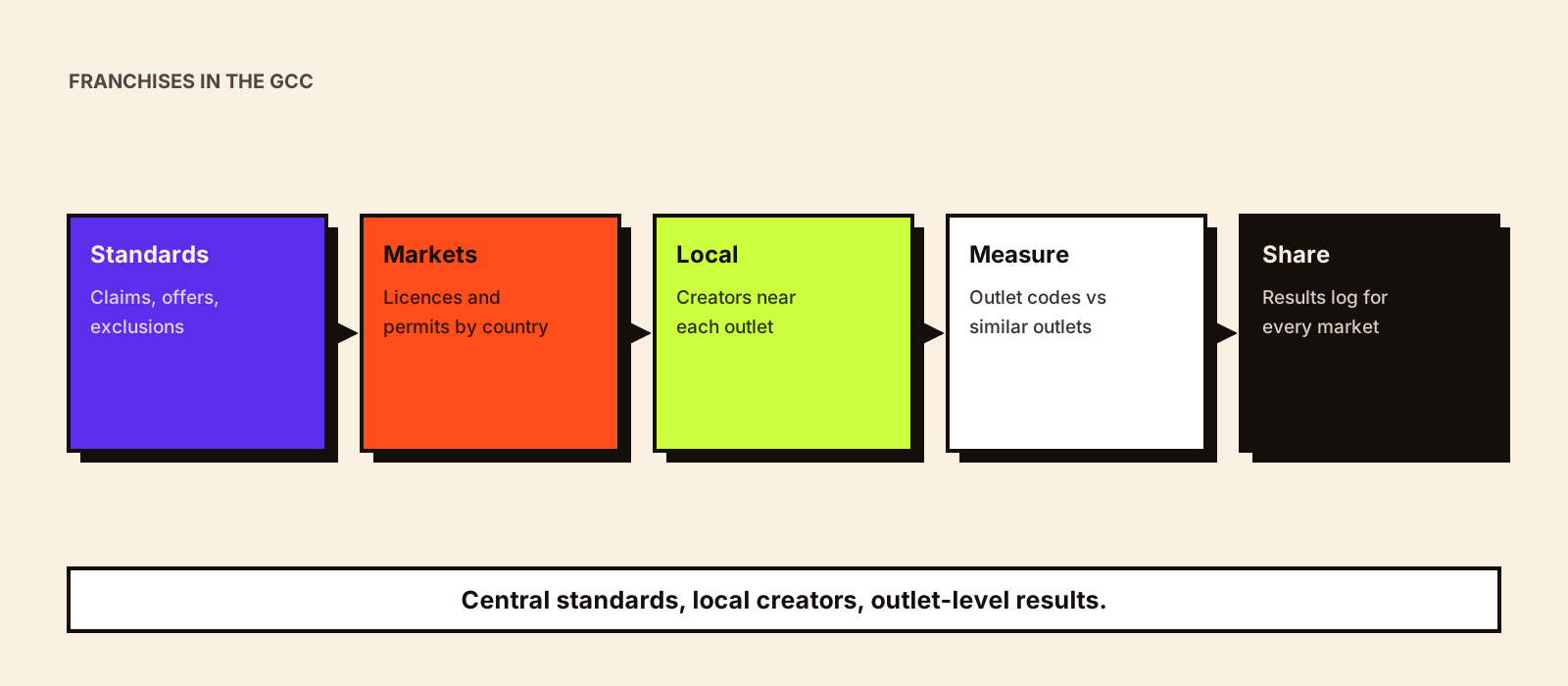
Franchise and multi-location brands in the GCC get the best results from a central creator framework with local execution: the brand owner sets standards, approved claims and approval rules; each country team handles licensing, permits and language; and each outlet works with local creators whose audiences live nearby. Give every outlet its own code or booking link, compare featured outlets with similar outlets that weren't featured, and decide in the franchise agreement or marketing policy who funds, approves and owns creator content.
Who decides what
| Decision | Brand owner (franchisor) | Master franchisee / country operator | Outlet |
|---|---|---|---|
| Brand standards and claims | Sets them | Applies them | Follows them |
| Creator approval | Approves categories and exclusions | Approves creators for its markets | Proposes local creators |
| Budget | May fund global campaigns | Funds regional campaigns, often from a marketing fund | Funds local activity if allowed |
| Licensing and permits | Not usually | Checks creator licences and promotion permits per country | Follows the process |
| Content rights | May want rights for global use | Negotiates rights by territory | Uses approved content |
| Measurement | Wants comparable data | Reports by market | Records codes and visits |
Write these roles down before the first campaign. Governance more broadly is covered in influencer marketing governance.
A central framework, local execution
- A creator playbook: objectives by outlet type, creator criteria, exclusions, disclosure rules
- An approved-claims library: menu or product facts, prices, offers and health or nutrition claims that have been checked
- A pre-approved offer list: discounts and promotions with the permits already in place, by country
- A shortlist process: local teams propose creators; the country team checks licences, audience and brand safety
- An approval service level: for example, two working days for local content, so outlets don't go around the process
- A shared results log so every market learns which creators and formats work
Rules differ by country
Reviewed 9 October 2026. A franchise operating in several Gulf states needs a separate compliance check in each. Creator licensing exists in the UAE (advertiser permit), Saudi Arabia (Mawthooq) and Oman, Kuwait's new media law introduces influencer licences from around April 2027, Qatar has proposed a framework, and Bahrain has no influencer-specific licence. Discounts and contests need permits in several markets, including Saudi Arabia and Dubai. Country details are in the GCC influencer marketing playbook and the country guides it links to.
Choosing creators for each location
- Audience near the outlet: for a single location, followers in the same city or district matter more than national reach
- Several local creators for a chain, rather than one national name for every outlet
- Language by neighborhood: the communities around each outlet may differ
- No conflicts between outlets: avoid two franchisees booking the same creator with competing offers
- A shared exclusion list across markets for creators the brand won't work with
For food outlets, restaurant influencer marketing in Dubai covers hosted visits and staggered posting; for stores, retail influencer marketing in the GCC covers footfall and in-store sales.
Measuring by outlet
| Method | How | Note |
|---|---|---|
| Outlet-specific codes | One code per creator per outlet | Staff must record codes at the till |
| Booking or ordering links | Tracked links to the outlet's booking or delivery page | Delivery apps may limit tracking detail |
| Featured vs similar outlets | Sales or covers at featured outlets compared with similar ones not featured | Choose comparison outlets before launch |
| New-outlet launch curve | Sales in the first weeks against previous openings | Openings differ in location and season |
Watch for cannibalization: a creator pushing one outlet may pull customers from another nearby. Report the area total, not just the featured outlet.
Opening a new location
- Two to three weeks before: local creators preview the opening; check permits for any opening offer
- Opening week: hosted visits spread over several days to avoid one crowded day
- First month: follow-up content from creators who visited, with outlet-specific codes
- After: add the outlet's results to the shared log for the next opening
Content rights across franchisees
If a creator shoots for an outlet in Riyadh, can the Dubai franchisee use the content? Only if the contract says so. Define the territory, the parties allowed to use the content and the duration in every creator agreement, and make sure the franchise agreement says who owns campaign assets. The clauses to include are in influencer usage rights.
Common mistakes
- Outlets booking creators directly without licence or permit checks
- The same creator promoting competing offers for two franchisees
- A national creator for a single-outlet opening
- No outlet-level codes, so results can't be compared
- Content shot in one country reused in another without the rights
Conclusion
Franchise creator marketing works when the structure is clear: the brand sets the standards, country teams handle the rules, and outlets work with creators their neighbors already follow. Measure each outlet, share what works across markets, and settle funding, approvals and rights before the first campaign rather than after the first dispute.