Influencer Marketing for Retail Brands in the GCC: A Practical Campaign Framework
A framework for retailers with stores in the UAE, Saudi Arabia and other GCC markets: creator-led product discovery, mall and store visits, the seasonal retail calendar, promotion permits by country, attributing footfall and in-store sales, creator codes and reusing content in store.
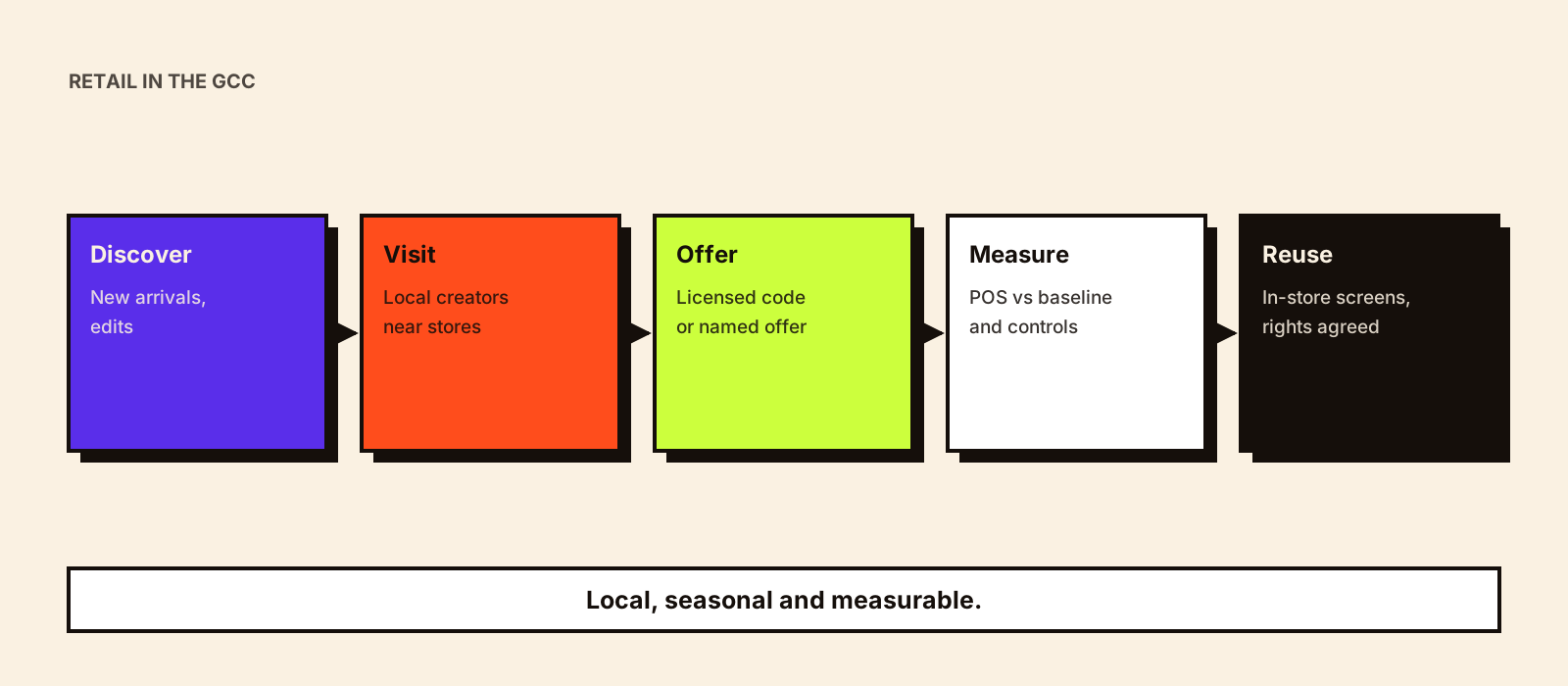
Shopping in the Gulf is still heavily physical: malls are social destinations, and big seasonal sales draw crowds. At the same time, most shoppers check products on their phones first. For retailers with stores, creators can connect the two, but only if the campaign is built around getting people into stores and counting them when they arrive. This guide is for physical and omnichannel retailers; online-only brands should start with the e-commerce guides linked below.
Quick answer
A GCC retail influencer campaign works when creators whose audiences live near your stores show products and the in-store experience, around the moments people shop: Ramadan and Eid, back to school, national days, major shopping festivals and year-end sales. Give each creator a store-redeemable code or named offer, compare point-of-sale data for featured products and stores against a baseline, check the promotion permit rules in each country before announcing discounts, and agree rights to reuse creator content on in-store screens and in-mall media.
What creators do for retailers
| Role | Creator content | Measure |
|---|---|---|
| Product discovery | New arrivals, hauls, 'what I'd buy' edits | Saves, link clicks, product page views |
| Store visits | Walkthroughs of a new store or department; services in store | Code redemptions, footfall against baseline |
| Seasonal traffic | Gift guides, Eid edits, back-to-school lists | Seasonal sales of featured lines vs last year |
| Launch events | Store openings, collaborations, in-store events | Attendance, local reach, event-period sales |
| Loyalty and app sign-ups | Showing how the app or loyalty scheme works | Sign-ups with creator codes |
The retail calendar
| Moment | Markets | Planning note |
|---|---|---|
| Ramadan and Eid al-Fitr | All GCC | The biggest retail moment for many categories; book creators early; dates depend on moon sighting |
| Eid al-Adha | All GCC | A second gifting and family moment |
| Back to school | All GCC | Late summer; family and stationery, electronics, fashion |
| National days | Each country has its own | Respectful national themes; sales events in some markets |
| Shopping festivals | For example the Dubai Shopping Festival and Dubai Summer Surprises | Dates and formats vary by year; confirm with organizers |
| Year-end sales (often branded as 'White Friday' or 11.11) | Mostly online-led, with store tie-ins | Coordinate online and in-store offers |
| Entertainment seasons | For example in Saudi cities | Footfall around events and venues |
Ramadan and Eid planning is covered in detail in Ramadan influencer marketing in the UAE, and it applies broadly across Gulf markets.
Choosing creators for stores
- Audience by city: a Riyadh store needs Riyadh audiences, not Saudi-wide reach
- Creators who already shop and film in malls and stores comfortably
- Language per community: Arabic for nationals, other languages for expatriate shoppers
- Snapchat and Instagram Stories for local, day-to-day visits; TikTok for launches and events
- Several local creators rather than one national name for multi-store chains
Promotion permits by country
Reviewed 9 October 2026. Retailers announcing discounts, contests or giveaways through creators need to check promotion rules in each country. In Saudi Arabia, discounts and contests need a Ministry of Commerce licence before they run. In Dubai, promotional offers need a permit from the Department of Economy and Tourism, and a 2021 case showed the trader is held responsible for misleading promotions run through influencers. Bahrain's Ministry of Industry and Commerce licenses promotional and discount campaigns, and Kuwait's new media law will require permits for draws and giveaways once it applies. Check other markets with their commerce ministries.
Sources and details are in Saudi influencer advertising rules, the UAE influencer marketing guide and the Bahrain section of the GCC playbook.
Attributing footfall and in-store sales
| Method | How | Limitation |
|---|---|---|
| Store-redeemable code or named offer | 'Mention [creator] at checkout' or a code scanned at POS | Not everyone uses it; staff must record it |
| POS data for featured products | Sales of featured lines in featured stores vs baseline and control stores | Other promotions and seasonality interfere |
| Store-level footfall | Footfall counters or mall data where available | Shows visits, not purchases |
| Loyalty or app sign-ups with codes | Sign-ups attributed to creators | Only captures members |
| Click-and-collect links | Tracked links to reserve online and collect in store | Only a share of shoppers use it |
Pick control stores that weren't featured and compare like with like. Treat code redemptions as the minimum effect and store-level lift as the broader estimate.
Reusing creator content in store
- Agree rights for in-store screens, window displays and mall media before the shoot
- Define territory if content will run in stores in several countries
- Plan formats: vertical for social, horizontal or square for screens
- Respect expiry dates; take content down when rights end
Online-only or omnichannel?
If most of your sales are online, the landing page, code and delivery mechanics matter more than store visits; see influencer marketing for e-commerce brands in the UAE and influencer marketing for e-commerce brands in Saudi Arabia.
Store openings, launches and pop-ups
A store opening, product launch or pop-up compresses the whole campaign into a few days, so the order of work matters more than usual. Malls set their own rules for activations and filming, so agree access with the mall's marketing team before inviting creators, and check promotion permits before any opening offer is announced.
- One to two weeks before: local creators preview the location and dates; hold back offer details until the permit is in place
- Opening days: spread hosted creator visits across several days rather than one crowded launch night
- Pop-ups: give the pop-up its own code or QR link so sales can be separated from nearby stores
- After: follow-up posts from creators who visited, and the content reused in store within the agreed rights
Launch sequencing is covered in influencer marketing for new product launches, launch events in Dubai in our events and exhibitions playbook, openings across a franchise network in franchise influencer marketing in the GCC, and limited releases in creator-led product drops in the GCC.
Home décor and furniture retailers
Furniture and home décor are considered purchases: people compare for weeks, visit showrooms and worry about size, delivery and assembly. Moving home is the trigger, and many Gulf residents move often, so creators who document real homes, from new apartments to family villas, are more persuasive than styled product shots.
- Room makeovers and 'before we moved in' series filmed over several weeks
- Showroom visits that show scale, materials and the buying process, with a booking or design-consultation link
- Practical content: measuring, delivery, assembly, how pieces cope with heat, sand and air conditioning
- Seasonal moments: new-home season, Ramadan and Eid hosting, year-end sales
- Measure design consultations, showroom visits with creator codes and orders of featured pieces over a longer window
Common mistakes
- National creators for a single-store opening
- Announcing a discount before the permit or licence is in place
- No store-redeemable code, so visits can't be counted
- Comparing a Ramadan campaign with an ordinary month
- Reusing creator content on screens without the rights
Conclusion
Retail creator campaigns in the GCC succeed when they're local, seasonal and measurable: creators whose audiences live near your stores, timed to the moments people shop, with licensed offers and a way to count who came in. Build that once, and every season gets easier to plan.