Creator-Led Product Drops in the GCC: From Launch Teasers to Sales Analysis
How brands in the UAE, Saudi Arabia and the GCC can run limited product drops with creators: choosing the drop model, sizing stock to demand signals, teaser sequencing, raffle and draw permits, launch-day coordination with site and delivery, and analyzing sell-through and repeat demand rather than just sell-out speed.
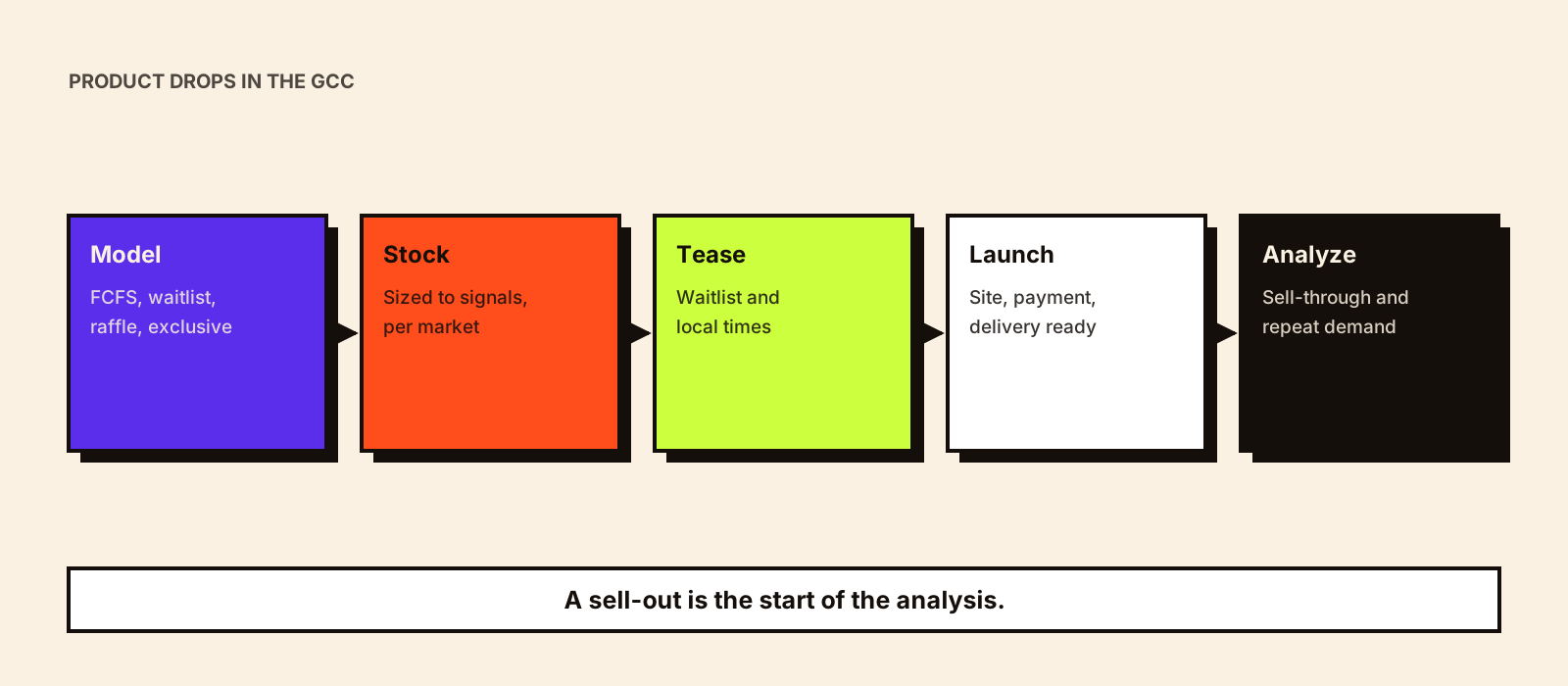
A product drop is a limited release at a set time: a creator collaboration, a limited flavour, a sneaker or fashion capsule, a fragrance edition. Done well, it creates anticipation and sells out. Done badly, the site crashes, stock runs out in minutes for the wrong customers, or half the stock sits unsold. This guide is for brands planning creator-led drops in the UAE, Saudi Arabia and other GCC markets. General launch planning is in our product launch guide; this page focuses on the mechanics specific to drops.
Quick answer
A creator-led drop in the GCC works when the drop model, stock and timing are set from demand signals (waitlist sign-ups, teaser engagement, past drops), creators tease in a planned sequence with a waitlist link, launch day is coordinated across site, payment and delivery, and any raffle or draw has the required permit. Judge the drop on sell-through, margin, new customers and repeat demand, not just how fast it sold out.
Choose the drop model
| Model | How it works | Best for | Watch out for |
|---|---|---|---|
| First come, first served | Sales open at a set time | Small capsules, strong demand | Bots, site load, unhappy fans |
| Waitlist or pre-order | Customers register; stock sized to demand | Uncertain demand, made-to-order | Delivery delays |
| Raffle or draw | Entrants win the right to buy | Very high demand, fairness | Permits; transparent draw |
| Creator-exclusive window | The creator's audience gets early access with a code | Proving creator impact | Code sharing |
| In-store drop | Release at a store or pop-up | Community and atmosphere | Queues, crowd safety, mall rules |
Size stock to demand signals
- Waitlist sign-ups and their conversion on past drops
- Teaser engagement compared with previous launches
- The creator's past collaboration results, if they'll share them
- Size and color splits from your own sales history, by country
- A reserve for each market rather than one regional pool, so one country doesn't take all the stock
Teaser sequence
| When | Creator content |
|---|---|
| Two to three weeks out | Hint at the collaboration; waitlist link |
| One week out | Reveal the product; how the drop works (time, model, limits) |
| Day before | Reminder with the exact time in each country's local time |
| Drop hour | Live or Stories: 'it's open', link and code |
| After | Unboxing, styling and restock news if any |
Raffles, draws and permits
Reviewed 9 October 2026. Not legal advice. Raffles and prize draws are regulated in several GCC markets. In Dubai, Al Tamimi's 2020 note says a company running a draw as a promotion needs a promotion permit, and the Department of Economy and Tourism handles retail promotion and raffle participation through its services portal. In Saudi Arabia, the Ministry of Commerce has referred businesses for running competitions and discounts without a licence. Confirm the current requirement before announcing a raffle-based drop, and keep the draw process transparent.
Launch-day coordination
- Load-test the site or app; use a queue page if needed
- Limit per-customer quantities and block obvious bots
- Payment options for each market; decide whether cash on delivery is offered for drops (it raises cancellation risk)
- Delivery promise by country and city, stated before purchase
- Customer service briefed on sizes, limits and restocks
- A creator contact on the day for live problems
Analyzing the drop
| Metric | Calculation | Why it matters |
|---|---|---|
| Sell-through | Units sold ÷ units available, by size, color and country | Shows whether stock matched demand |
| Time to sell out | Minutes or hours to 100% sell-through | Very fast can mean stock was too small |
| Waitlist conversion | Buyers ÷ waitlist sign-ups | Calibrates the next drop's stock |
| Unmet demand | Waitlist or traffic after sell-out | Estimates what a restock could sell |
| New customers | First-time buyers ÷ all buyers | Whether the creator brought new people |
| Cancellations and returns | By payment method and country | COD and size issues hurt margin |
| Repeat purchase | Drop buyers who buy again in 60–90 days | Long-term value of the drop |
| Margin | Revenue − product, creator, fulfilment and returns costs | A sell-out can still lose money |
Turning what you learn into the next product decision is covered in using influencer campaign insights to improve your next product launch, and broader launch planning in influencer marketing for new product launches.
When the drop is a product made with the creator rather than a launch they promote, the deal and control questions are covered in co-branded creator products.
Common mistakes
- Celebrating a five-minute sell-out that left most of the demand unserved
- One regional stock pool that one market empties
- Drop times announced without local time zones
- A raffle without the required permit
- No plan for cash-on-delivery cancellations
Conclusion
Creator-led drops create real excitement in the Gulf, but the excitement only pays when stock, site, payment and delivery are ready for it. Choose the model, size stock to signals, sequence the teasers, permit any draw, and analyse sell-through and repeat demand so the next drop is better than the last.