Should You Hire a UGC Agency or Work Directly With Creators?
How to choose between hiring UGC creators directly, using a self-serve UGC platform or working with a UGC agency: what each costs you in money and time, where each breaks down, and the questions to ask before you commit.
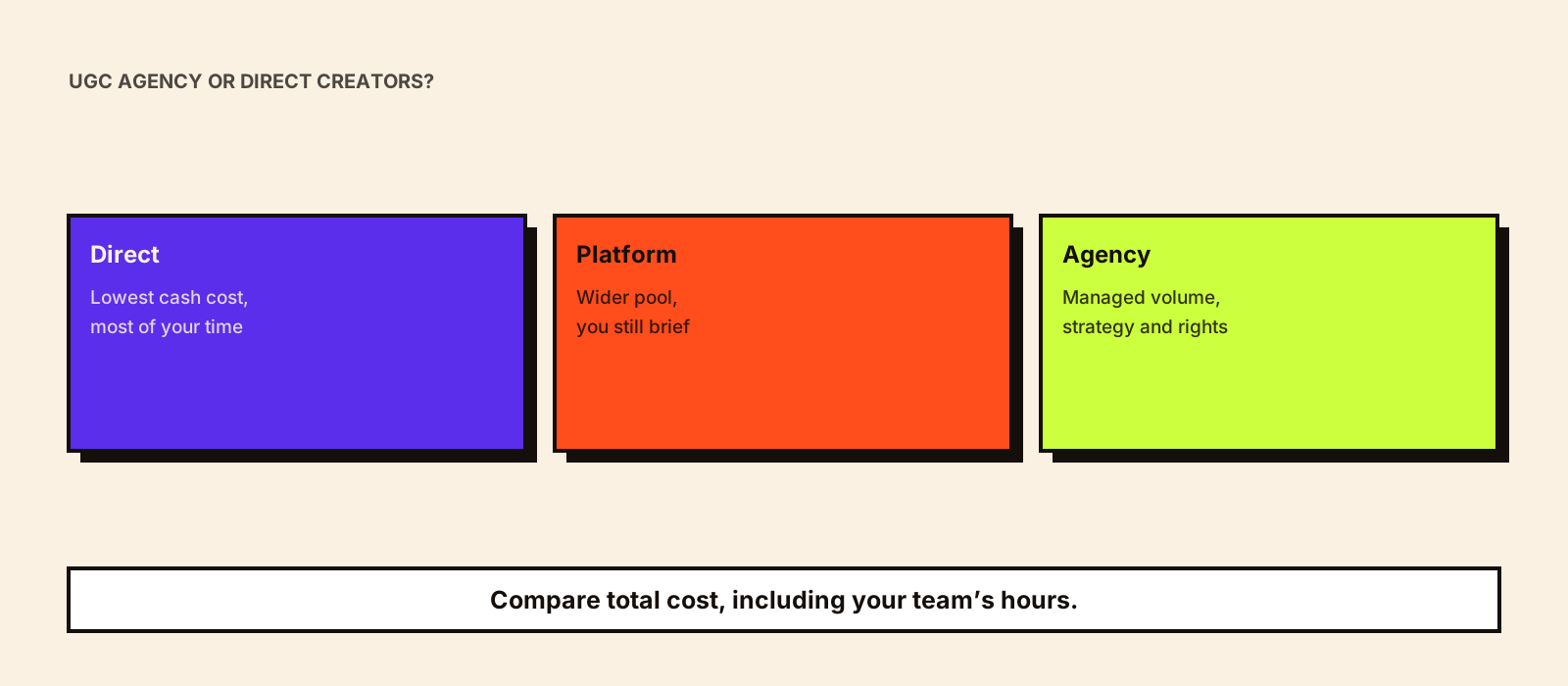
Hiring a UGC creator directly looks cheaper on the invoice, and often is. What the invoice doesn't show is the time spent finding creators, writing briefs, chasing drafts, fixing audio, sorting rights paperwork and paying a dozen people. Whether an agency is worth it depends on how much of that work you have the hours and skills to do well.
Quick answer
Work directly with UGC creators when you need a modest volume of content, have someone who can brief, review and manage rights, and want the lowest cash cost and closest creator relationships. Use a self-serve UGC platform when you want a wider pool and simple payments but can still brief and review yourself. Use a UGC agency when you need volume or variety quickly, run paid social at a scale where creative supply is the bottleneck, work in several markets or languages, or don't have the time to manage creators. Many brands mix them: an agency for big production cycles, and a few direct creator relationships for steady work.
The three options compared
| Direct creators | Self-serve UGC platform | UGC agency | |
|---|---|---|---|
| Cash cost per asset | Usually lowest | Creator fee plus platform fee or subscription | Creator fee plus agency fee |
| Your time | Highest: sourcing, briefing, review, rights, payments | Medium: you still brief and review | Lowest: you approve the plan and final content |
| Creator pool | Whoever you find | The platform's network | The agency's roster plus sourcing |
| Quality control | Depends on your review | Depends on your review | Agency reviews before you see drafts |
| Creative strategy | Yours | Yours | Usually included: hooks, angles, test plans |
| Rights and contracts | Your templates | Platform terms (check them) | Agency contracts with creators (check they pass rights to you) |
| Speed to volume | Slow to start | Fast for simple briefs | Fast once briefed |
| Best for | Small, steady needs; close relationships | Simple product content at moderate volume | Volume, variety, multi-market or no in-house capacity |
The hidden costs of going direct
- Sourcing and vetting: reviewing portfolios, test clips and references for every new creator.
- Briefing and feedback: writing briefs, answering questions, consolidating comments.
- Reshoots: drafts with poor audio, wrong product use or off-brief messages.
- Editing: cutting raw footage into ad versions, if creators deliver unedited clips.
- Paperwork: contracts, usage rights, invoices, tax details and payments for each creator.
- Tracking: who has which product, which drafts are due, which rights expire when.
Put an honest hourly value on that time before comparing quotes. Influencer marketing agency vs in-house has a worksheet for comparing a year of work both ways, and how much UGC content costs explains what drives creator fees.
When each option fits
| Situation | Usually best fit |
|---|---|
| First test: a handful of videos for one product | Direct creators or a platform |
| Steady monthly need from a few reliable creators | Direct relationships, possibly managed by an agency |
| Paid social at a scale where new creative is the constraint | Agency, or an in-house creative lead with direct creators |
| Several markets or languages at once | Agency with native reviewers, or local partners |
| Regulated categories (health, finance, skincare claims) | Agency or in-house lead with claims review in the process |
| No one in the team who can brief and review creative | Agency |
Questions to ask a UGC agency or platform
- Who are your creators, how are they vetted, and can we see unedited samples, not just a showreel?
- Is your fee separate from creator fees, and what's included: strategy, hooks, editing, revisions, testing support?
- What usage rights do we get, for which channels, for how long, and do your creator contracts actually grant them to us?
- Do we receive raw footage as well as edits, and who owns the files?
- How do you handle claims, disclosure and music licensing?
- What happens if a video misses the brief?
- Can you produce in the languages and markets we need, with native review?
Comparing UGC partners in the UAE has its own guide, UGC agencies in Dubai. If you go direct, how to find and hire UGC creators covers sourcing and vetting, and the UGC production workflow covers running the work.
Red flags
- Guaranteed performance numbers for ads that haven't run yet.
- Usage rights described vaguely ('full rights') without channels and duration in writing.
- No access to raw files, so you can't re-edit later.
- Creator contracts you can't see or that don't pass rights through to you.
- Creators presented as 'real customers' in content you'll run as ads.
Conclusion
Go direct when volume is modest and you have someone to manage creators well; use a platform for simple briefs at moderate volume; use an agency when volume, variety, markets or missing capacity make management the real cost. Whichever you choose, get usage rights, raw files and claims handling in writing.