How to Make Authentic UGC Videos That Don't Feel Like Ads
Why so much UGC still looks like an ad, and how to brief, film and edit creator videos that feel genuine: real use, specific detail, the creator's own words, honest caveats and light editing, without misleading anyone about who made it.
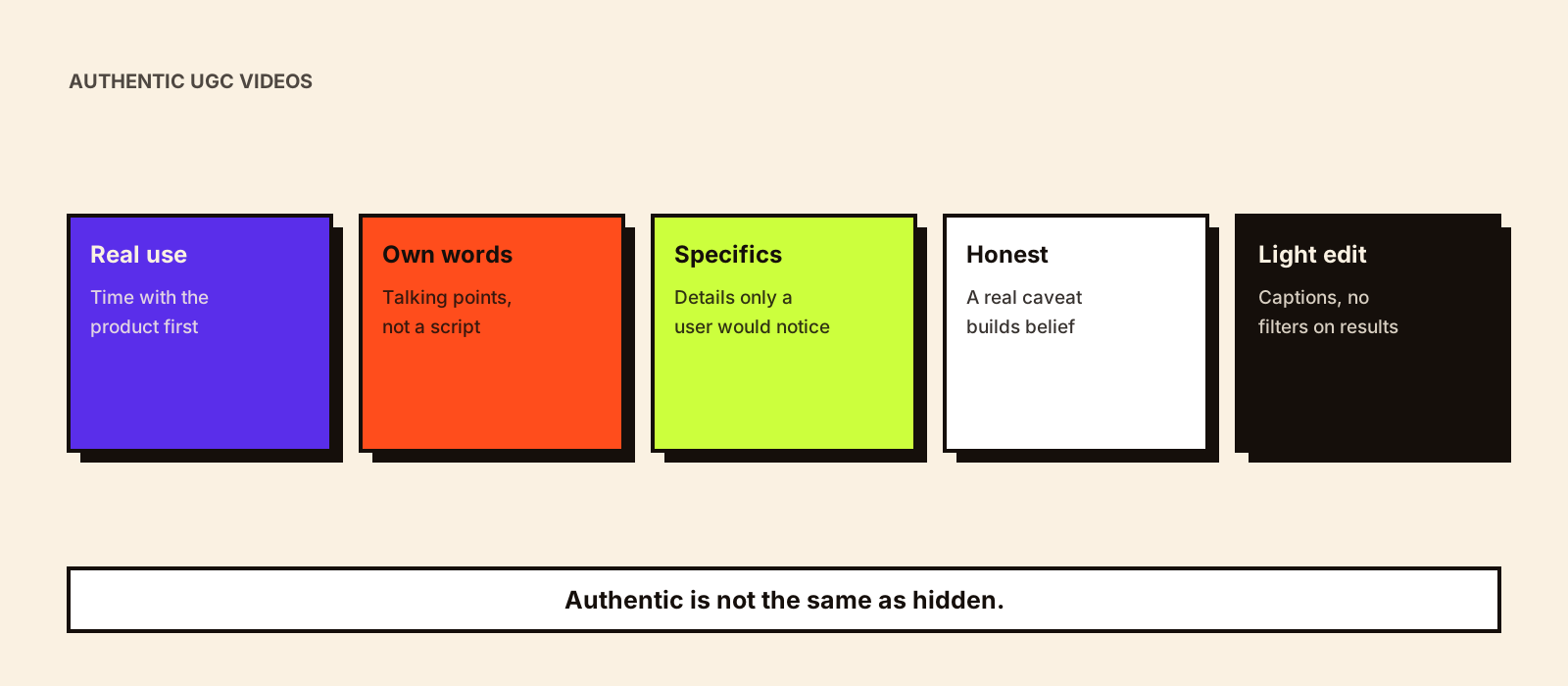
Audiences recognise the template within a second: a perfectly lit face, 'Okay, you guys, I'm obsessed', a product held up to the lens, a list of features read off a card. It's labelled UGC, but it has every signal of an ad, and people scroll past it like one. Authentic-feeling UGC isn't about lower quality. It's about removing the signals that say 'script', and keeping the ones that say 'someone actually used this'.
Quick answer
To make UGC that doesn't feel like an ad, give creators real time with the product before filming, brief them with talking points instead of a script, ask for specific details only a real user would notice, let them mention a genuine limitation, film in their own environment, and edit lightly with captions rather than heavy effects. Authentic doesn't mean hidden: when content is paid, disclose it where the rules require, and never present a paid creator as an independent customer.
What makes UGC feel like an ad
| Ad signal | What to do instead |
|---|---|
| Word-for-word script and brand jargon | Talking points; the creator explains it in their own words |
| Generic praise ('amazing', 'game-changer') | Specific detail: texture, sound, how long it lasted, what surprised them |
| Product shown before any context | A real moment or problem first, then the product |
| Studio lighting and a staged set | The creator's own bathroom, kitchen, desk or car, lit well enough to see |
| Feature lists | One or two benefits shown in use |
| Every claim at full volume | An honest caveat ('it took a week before I noticed') |
| Heavy filters and effects | Natural footage; captions for clarity |
| The same hook as every other creator | Different angles per creator |
Before filming: give the product time
The most reliable source of authentic detail is real use. Ship product early enough for creators to use it as intended (days for a gadget, longer for skincare or supplements) before they film. Ask them to note what they noticed first, what surprised them and what they'd tell a friend. Those notes become the talking points, and they're harder to fake than anything a brand can write.
Brief for honesty, not a performance
- Give the objective, the audience and two or three things that must come across; leave the wording to the creator.
- Provide the approved claims list and the things they mustn't say, so honesty doesn't turn into an unapproved claim.
- Offer hook directions, not hook lines, and let them choose the one that sounds like them.
- Allow, or ask for, one honest limitation or 'who this isn't for'. It makes the rest more believable.
- Ask for two or three takes with different openings rather than one perfect take.
A full template is in how to create a UGC brief, and opening lines are covered in UGC ad hooks.
Filming: real setting, real use
- Film where the product is actually used, with ordinary objects in shot.
- Show hands using the product, close enough to see texture, fit or result.
- Natural light near a window usually beats a ring light for believability; audio must still be clear.
- Hold shots long enough to see what's happening, rather than rapid cuts on every word.
- Keep a few unplanned moments: a laugh, a correction, a second try.
Editing: lighter than you think
Edit for clarity, not polish. Trim pauses, add accurate captions (many people watch without sound), keep the creator's voice and pacing, and avoid stock transitions and effects that make it look produced. Never use filters or edits that change how the product performs: in the UK, the ASA has ruled that filters exaggerating a cosmetic product's effect are misleading, and the same principle of not exaggerating results applies everywhere.
Authentic is not the same as hidden
UGC feels genuine because of how it's made, not because viewers think nobody was paid. When a creator posts on their own account, the content needs disclosure under rules such as ASCI's influencer guidelines in India. When the brand runs it as an ad from its own account, it's already the brand's advertising, but it must not imply that a paid creator is an independent customer, invent experiences, or show results the product doesn't deliver. Customer testimonials and trust has the detail.
An authenticity checklist before approval
- Does it sound like the creator talking, or like copy being read?
- Is there at least one specific detail a real user would mention?
- Is the product shown in real use, in a real setting?
- Are all claims on the approved list, and is any result shown realistic?
- No filters or edits that change how the product looks or performs?
- Would this creator plausibly use this product?
- Is disclosure correct for where it will run?
Common mistakes
- Filming the day the product arrives.
- Rewriting the creator's lines into brand copy during review.
- Picking creators for looks or production value rather than fit with the customer.
- Removing every caveat, so the video reads as a sales pitch.
- Using 'authentic' as a reason to skip disclosure or substantiation.
Conclusion
Authentic UGC comes from real use, the creator's own words, specific detail, honest limits and light editing. Brief for those things, review for them, and keep the content honest about who made it and what the product does.