How to Use Customer Testimonials and UGC Without Losing Customer Trust
How brands can use customer testimonials, reviews and reposted UGC without misleading anyone: getting permission, keeping evidence, labelling incentivised content, not passing off paid creators as customers, fair selection, and the rules in India, the UK, Australia, Singapore and the UAE.
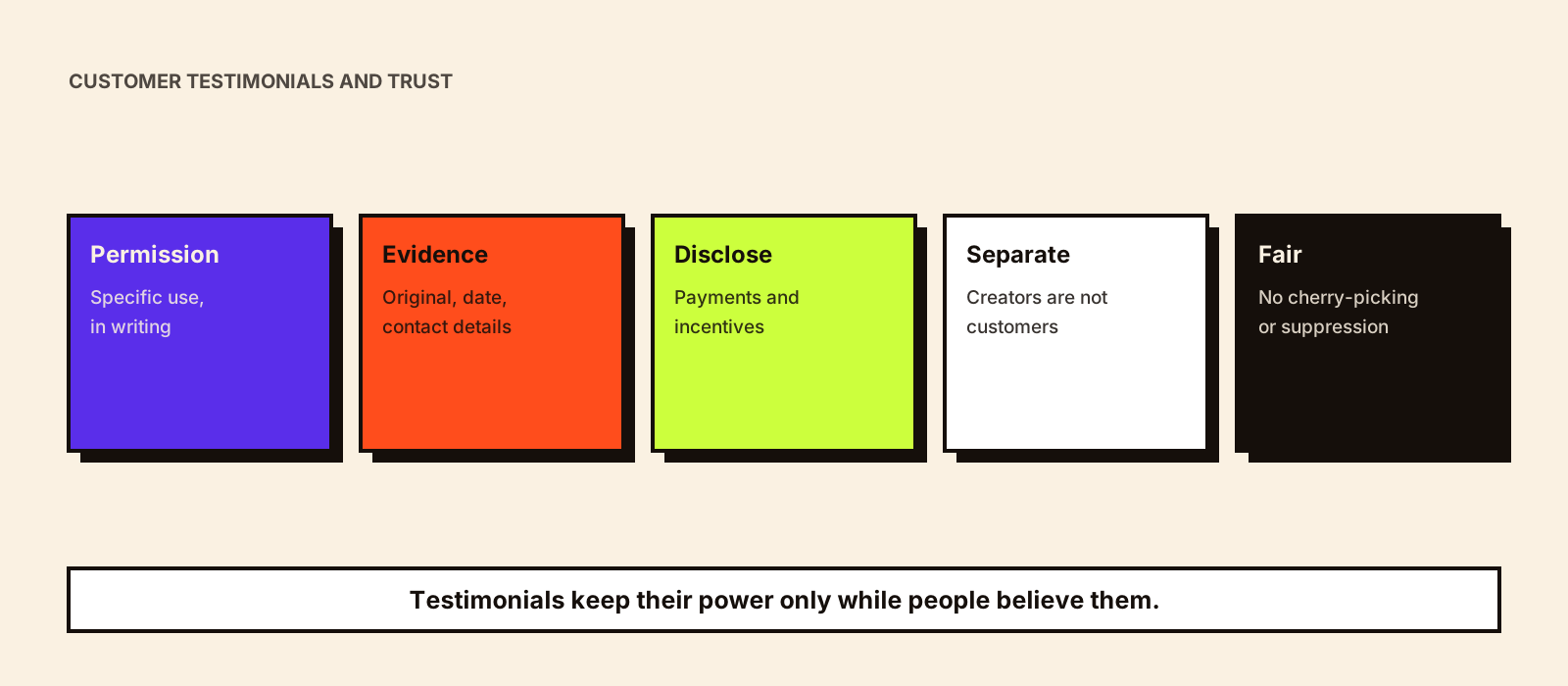
A real customer saying the product changed their morning is the most persuasive content a brand can show. That's exactly why regulators watch it closely, and why audiences punish brands caught faking it. Trust is lost in a few predictable ways: using content without permission, editing it to say something new, hiding that a reviewer was paid or gifted, or presenting a hired creator as an ordinary customer.
Quick answer
To use customer testimonials and UGC without losing trust: get written permission for each specific use, keep evidence that every testimonial is genuine and who gave it, don't edit content in ways that change its meaning, disclose any payment, free product or incentive behind a review or testimonial, never present paid creators as independent customers, don't cherry-pick or suppress reviews in a misleading way, keep results typical and substantiated, and handle customers' personal data properly. Check the specific rules in each market you advertise in.
Three kinds of 'customer' content
| Type | What it is | Main trust risk |
|---|---|---|
| Organic customer content | Posts and reviews customers made on their own | Using it without permission, or beyond what was agreed |
| Incentivised customer content | Reviews or videos from customers who got a discount, free product or entry into a draw | Hiding the incentive |
| Commissioned creator content | Paid UGC creators filming in a customer style | Presenting it as an independent customer's experience |
Permission: specific and in writing
- Ask for permission for each use: reposting on your social account, your website, emails and paid ads are different uses.
- Say how long you'll use it and in which markets, and whether you'll edit or caption it.
- Keep the permission in writing (a reply to a clear request is better than a 'sure' in a comment).
- Credit the customer the way they prefer, or not at all if they'd rather stay anonymous.
- Agree how they can ask you to stop using it, and honour it.
- Take extra care with children, people in the background and anything personal or sensitive.
Usage terms are covered in UGC usage rights. Customer content also involves personal data; India's DPDP framework and similar laws elsewhere apply, as explained in influencer marketing data privacy.
Evidence: keep the original
Keep the original review or video, the date, the customer's contact details and the permission. In the UK, the CAP Code requires advertisers to hold documentary evidence that a testimonial is genuine and to hold contact details for the person who gave it, and ASA rulings have found testimonials misleading where that evidence wasn't held. It's good practice everywhere: if you can't show a testimonial is real, don't use it.
Edit without changing the meaning
Trimming for length and adding captions is fine; stitching sentences together to create a claim the customer didn't make is not. Don't add product claims the customer didn't make, don't remove a caveat that changes the overall impression, and don't use AI to alter what someone said or how they look. If you need a specific claim, substantiate it in your own copy.
Incentives and paid creators
- If a reviewer got a discount, free product or prize entry, say so alongside the review.
- Don't make incentives conditional on a positive review.
- Paid UGC creators can appear in your ads, but the ad must not claim or imply they're independent customers unless they genuinely bought and used the product independently.
- Creators posting on their own accounts must disclose the relationship, for example under ASCI's influencer guidelines in India.
Selection: fair, not cherry-picked
Featuring your best reviews is normal; giving a misleading overall picture is not. Don't suppress or delay negative reviews on review systems you run, don't present a handful of exceptional results as typical, and show a review's date where it matters (a product may have changed). Before-and-after content should be genuine, unfiltered and representative of what most customers can expect.
The rules by market
| Market | Key rules and guidance (check current versions) |
|---|---|
| India | Consumer Protection Act, 2019 and the CCPA's 2022 guidelines on misleading advertisements and endorsements (endorsers should have used the product); ASCI's code and influencer guidelines; BIS standard IS 19000:2022 on online consumer reviews (reported as voluntary) |
| United Kingdom | The DMCC Act 2024 bans fake reviews and concealed incentivised reviews from 6 April 2025 (CMA guidance CMA208); CAP Code rules on testimonials and evidence |
| Australia | Australian Consumer Law on misleading conduct; ACCC guidance on online reviews and on influencer testimonials |
| Singapore | Consumer Protection (Fair Trading) Act and ASAS guidance |
| UAE and Saudi Arabia | Consumer protection and media content standards apply; take local advice before using testimonials in regulated sectors such as health and finance |
Sources: the CCPA's 2022 guidelines, the BIS conformity scheme for online reviews, the CMA's fake reviews guidance, the ACCC's online reviews guidance and ACCC guidance on influencer testimonials, and ASAS on the CPFTA. This is general information, not legal advice.
A testimonial checklist
- Written permission for this specific use, duration and market.
- Original content, date and contact details on file.
- Edits don't change meaning or add claims.
- Any incentive or payment disclosed.
- No paid creator presented as an independent customer.
- Results shown are typical and substantiated; no filters exaggerating them.
- Personal data handled under your privacy notice; removal requests honoured.
Turning happy customers into ongoing advocates is covered in customer advocacy programs.
Conclusion
Customer testimonials keep their power only while people believe them. Ask permission for each use, keep the evidence, edit honestly, disclose incentives, keep paid creators clearly separate from customers and present a fair picture. Those habits also keep you on the right side of the rules in each market.