UGC Ad Hooks: How to Test Opening Lines, Angles and Creative Variations
How to write UGC ad hooks that stop the scroll: hooks vs angles vs variations, ten hook types, writing hooks from customer language, the visual, spoken and text layers of an opening, testing hooks on the same body, and a hook library template.
In a feed, the first moments decide whether the rest of the ad gets seen at all. That's why hooks get so much attention in UGC, and also why so many accounts test the wrong thing: twenty versions of 'You need this!' instead of a few genuinely different reasons someone might care.
Quick answer
A UGC ad hook is the opening of the video (what's seen, said and written on screen in the first moments) designed to make the right person keep watching. Start from angles (the reason a customer cares), write several hooks per angle using customers' own language, make the visual, spoken and on-screen text work together, and test hooks on the same body so you know the opening caused the difference. Keep claims in hooks as substantiated as anywhere else, and keep a hook library so winning patterns are reused rather than rediscovered.
Angles, hooks and variations
| Term | What it is | Example (skincare, hypothetical) |
|---|---|---|
| Angle | The reason someone would care | Saves time in a morning routine |
| Hook | The opening that delivers the angle | 'I cut my morning routine to two steps' |
| Variation | A small change to a hook or edit | Same line, different first shot or on-screen text |
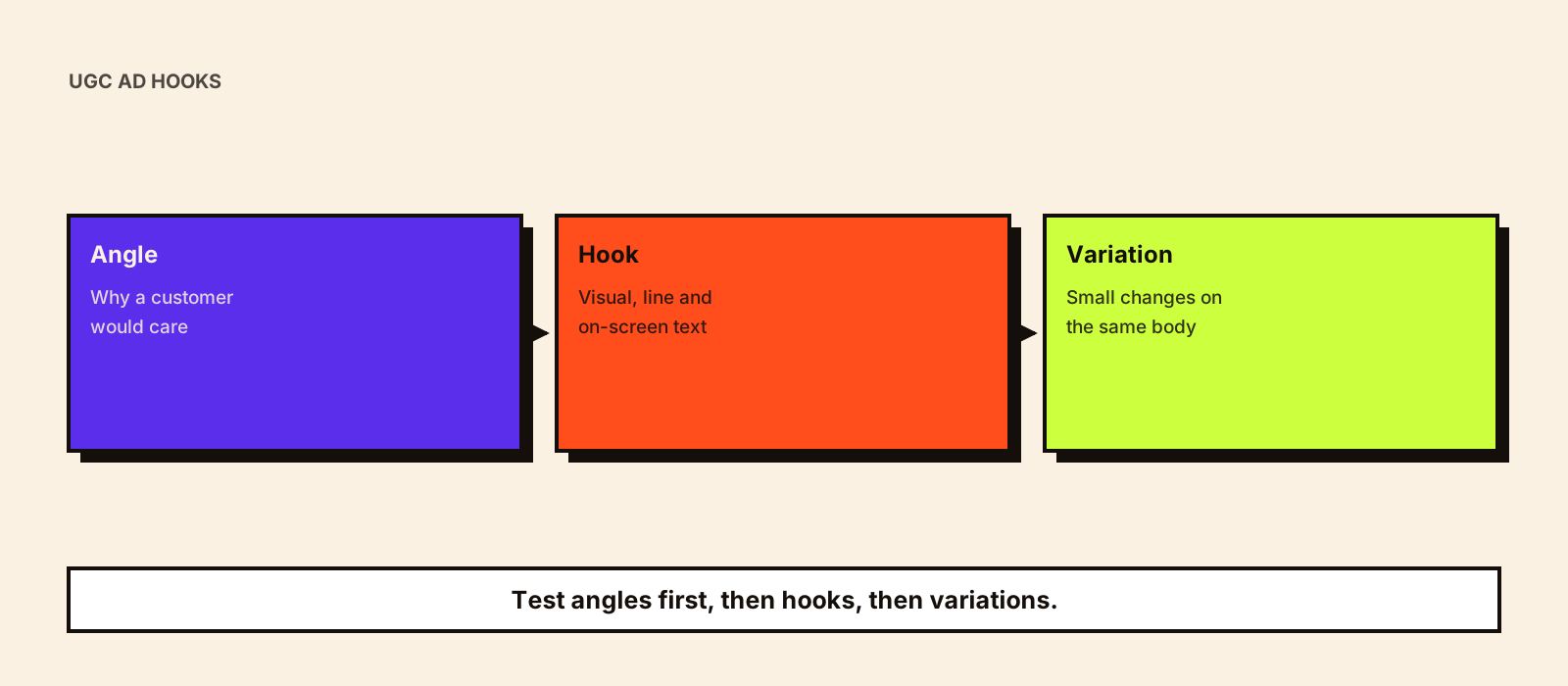
Test angles first, because a new angle can change results far more than a reworded line. Once an angle works, test hooks within it; once a hook works, test variations.
Ten hook types
| Hook type | How it opens | Watch out for |
|---|---|---|
| Problem call-out | Names a specific frustration the viewer has | Too vague to recognise |
| Result first | Shows the outcome, then explains | Results must be typical and substantiated |
| Demonstration first | The product working in the first shot | Needs a clear visual |
| Question | Asks something the target viewer answers 'yes' to | Questions nobody asks themselves |
| Myth or mistake | 'Stop doing X' or 'X is a myth' | Disparaging competitors; unsupported claims |
| POV or scenario | Puts the viewer in a familiar moment | Scenarios that don't match the customer |
| Confession or story | 'I didn't expect this to work' | Must be true for the creator |
| Comparison | Before and after, or this vs that | Fair, verifiable comparisons only |
| Social proof | Reviews, repeat purchase, word of mouth | Real and current evidence only |
| Unboxing or first look | Curiosity about what's inside | Can feel generic in crowded categories |
Write hooks from customer language
The best raw material for hooks is what customers already say: reviews, support tickets, comments, sales calls and returns reasons. Pull out the exact phrases people use for the problem and the result, group them into angles, and give creators those phrases as starting points to say in their own words. How to turn reviews and objections into briefs is covered in customer insights for influencer briefs.
The three layers of an opening
- Visual: the first frame and movement. A hand, a product in use or a surprising image often matters before any word is heard.
- Spoken: the first line in the creator's voice.
- On-screen text: a short line that works without sound, positioned clear of the platform's interface.
The three should say the same thing in different ways, not compete. Captions matter because plenty of people watch without sound.
How to test hooks
- Keep the body of the video identical and change only the opening, so differences come from the hook.
- Ask creators to film several openings in the same session; it's cheaper than reshooting.
- Test a few genuinely different hooks rather than many near-identical lines.
- Decide in advance how much spend or how many impressions you'll allow before judging.
- Read early-attention metrics (views in the first seconds as a share of impressions) alongside clicks and cost per result; a hook that stops the scroll but attracts the wrong people isn't a winner.
- Record every test in a hook library so results accumulate.
The full test design, including what to test after hooks and when to scale, is in UGC for paid social: how to test and scale creator ads.
A hook library template
Hook ID | Angle | Hook type | Spoken line | On-screen text | First visual | Creator | Product | Market and language | Date tested | Spend or impressions | Early-attention rate | CTR | Cost per result | Decision (scale / iterate / retire) | Notes
Keep hooks honest
A hook is part of the ad, so it needs the same substantiation as the rest. Bold result claims, 'clinically proven', 'best in India' or before-and-after openings need evidence; comparisons must be fair; and creators shouldn't claim experiences they haven't had. In India, the misleading-advertisement guidelines issued under the Consumer Protection Act in 2022 expect endorsers to have actually used what they endorse.
Common mistakes
- Testing reworded versions of one idea instead of different angles.
- Changing the hook and the body at the same time.
- Judging hooks on attention alone, not on who clicks and buys.
- Copying a competitor's viral hook without the product or proof to back it.
- No record of past tests, so the same hooks get tested again.
Conclusion
Good UGC hooks start from real customer angles, use customers' own language, make the first visual, line and caption work together, and are tested on the same body with results recorded. Keep them as honest as the rest of the ad, and the library you build becomes one of your most valuable creative assets.