Influencer Marketing for Ayurveda, Nutraceutical and Supplement Brands in India
Ayurvedic medicines, nutraceuticals and health supplements sit under different rulebooks in India, and creators are now expected to check health claims themselves. Which rules apply, which claims to keep out of briefs, which creators can give technical advice and how to run a campaign that sells without overclaiming.
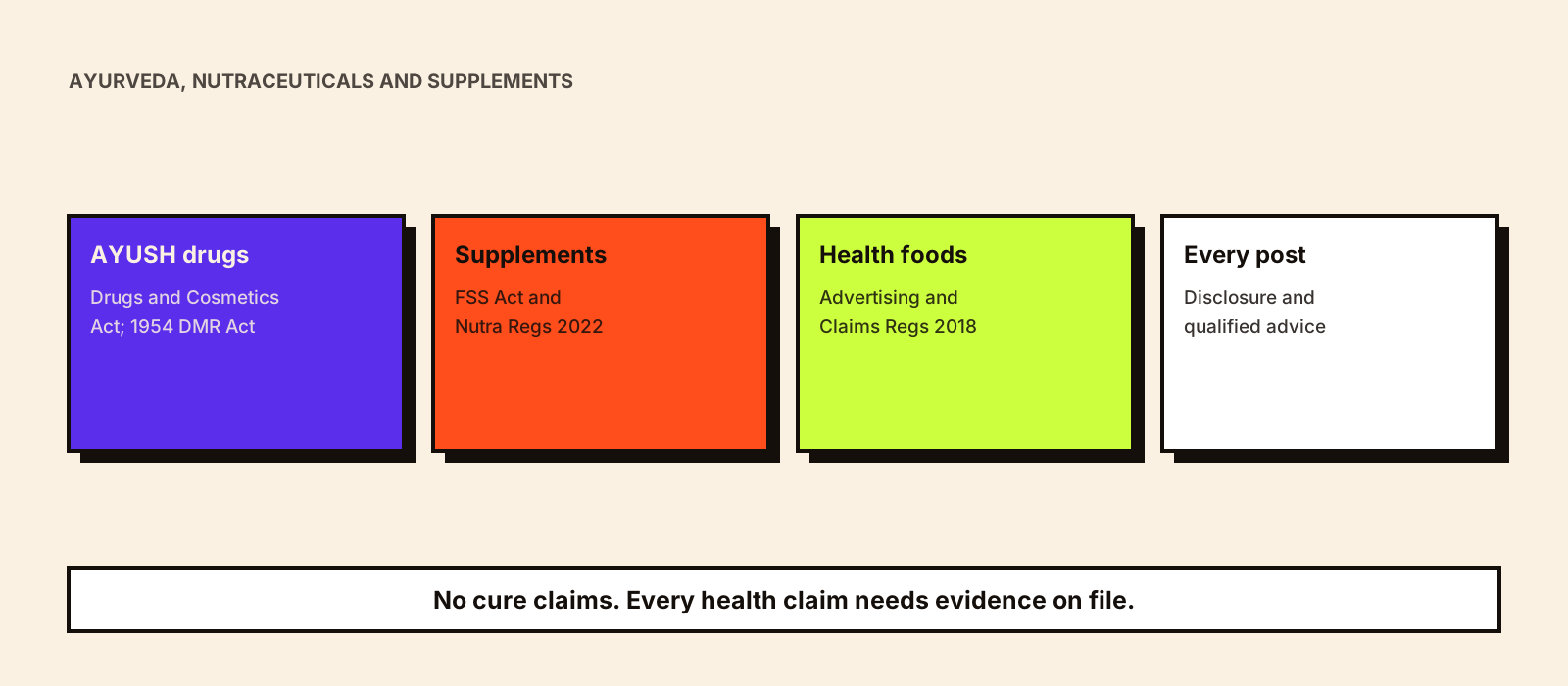
Ayurveda, protein, gummies, herbal teas and supplements are some of the most creator-friendly categories in India: they have daily routines to show, visible rituals and loyal communities. They're also among the most heavily regulated, and the regulators have started talking to creators directly rather than only to brands.
Quick answer
First work out which rulebook your product falls under: AYUSH medicines (Ayurveda, Siddha, Unani, Homoeopathy) are drugs under the Drugs and Cosmetics Act, while health supplements and nutraceuticals are foods regulated by FSSAI. Under both, creators must not claim to treat or cure diseases, and every health claim needs evidence the brand can produce. Use qualified creators, such as doctors, dietitians or nutritionists who state their credentials, for technical advice, and lifestyle creators for routines and taste. Give creators a claims sheet with approved wording, require clear disclosure and review content before it goes live. This is general guidance, not legal advice.
Which rulebook applies to your product
| Product type | Main rules | What it means for creator content |
|---|---|---|
| Ayurvedic, Siddha, Unani or Homoeopathic medicine (licensed as an AYUSH drug) | Drugs and Cosmetics Act, 1940 and its Rules; Drugs and Magic Remedies (Objectionable Advertisements) Act, 1954 | No claims to diagnose, cure, mitigate, treat or prevent the diseases and conditions the 1954 Act lists; no 'miracle' or 'magic' framing |
| Health supplement or nutraceutical | Food Safety and Standards Act, 2006; FSS (Health Supplements, Nutraceuticals, Food for Special Dietary Use…) Regulations, 2022; FSS (Advertising and Claims) Regulations, 2018 | It's a food, not a medicine: no disease-treatment claims, and nutrition or health claims must match what the regulations allow and what the brand can substantiate |
| Herbal or Ayurvedic food or beverage (teas, chyawanprash-style foods, functional drinks) | FSS Act and the Advertising and Claims Regulations; sometimes Ayurveda Aahara rules | Same claims discipline as other foods; check how the product is actually licensed before writing the brief |
| Every category | Consumer Protection Act, 2019 and the CCPA's 2022 misleading-advertisement and endorsement guidelines; ASCI Code and influencer guidelines | Clear disclosure of the brand relationship, and endorsers are expected to have used the product and to avoid misleading claims |
How a product is licensed decides which column you're in, and the same ingredient can sit in either one. Ask your regulatory team for the licence category before briefing anyone.
For allopathic prescription and over-the-counter medicines, see influencer marketing for pharmaceutical companies in India.
What changed recently
State pre-approval for AYUSH ads (Rule 170)
Rule 170 of the Drugs and Cosmetics Rules used to require state licensing authority approval before Ayurvedic, Siddha and Unani medicines were advertised. The Ministry of AYUSH omitted it by notification on 1 July 2024, and the Supreme Court stayed that omission in August 2024 during the misleading-medical-advertisements case. On 11 August 2025 the Court closed the case and vacated its interim order, which, as reported by Bar and Bench, means the pre-approval requirement is no longer in force. The rest of the law still applies: misleading or disease-cure advertising remains prohibited.
Guidance aimed at creators and celebrities
- August 2023: the Department of Consumer Affairs issued additional guidelines for health and wellness celebrities and influencers. Creators who present themselves as health experts must make clear their content isn't a substitute for professional medical advice, and certified professionals must disclose their credentials when promoting products or making health claims.
- April 2025: ASCI revised its health and finance influencer addendum. Qualifications are required, and must be declared, where a creator gives technical health or nutrition information or advice; general or public-service messaging doesn't need them.
- 13 August 2026: FSSAI warned celebrities and influencers about misleading health and nutrition claims for foods, beverages and supplements. It asked them to check claims such as 'boosts immunity' against scientific evidence before endorsing, citing the FSS Act and the Advertising and Claims Regulations.
The direction is clear: creators are expected to check claims themselves, so a brand that can't hand over evidence will find careful creators declining the brief. Sources: Department of Consumer Affairs guidance (August 2023), ASCI's April 2025 update and FSSAI's 2026 advisory.
Claims to keep out of creator briefs
| Avoid | Why | Safer direction |
|---|---|---|
| 'Cures', 'treats', 'reverses' or 'controls' a disease | Disease-treatment claims are prohibited for foods and restricted for AYUSH medicines under the 1954 Act | Describe the product, its ingredients and how the creator uses it |
| 'Boosts immunity', 'detox', 'burns fat' | Specifically flagged by FSSAI as needing scientific substantiation | Use only approved, substantiated wording from the claims sheet |
| Before-and-after weight or skin results | Implies a guaranteed outcome and is hard to substantiate for an individual | Routine and experience content; results language only if the brand holds evidence |
| '100% natural', 'no side effects', 'safe for everyone' | Absolute claims the brand usually can't prove | Specific, checkable statements, such as which ingredients are included |
| 'Replaces your medicine' or advice to stop treatment | Puts audience health at risk | Encourage viewers to speak to a doctor about their condition |
Traditional texts and ingredient heritage are a legitimate story, but they don't substantiate a modern health claim by themselves. Keep 'used in Ayurveda for centuries' separate from any claim about what the product does for the viewer.
Choosing creators
| Creator type | Good for | Watch for |
|---|---|---|
| Doctors, BAMS practitioners, registered dietitians and nutritionists | Ingredient education, how to use the product, who it's not for | Qualifications stated on the post; professional conduct rules; no diagnosis in comments |
| Fitness coaches and athletes | Protein and sports nutrition in a real training routine | Coaching certificates aren't nutrition qualifications for technical advice |
| Lifestyle, wellness and family creators | Morning rituals, taste, packaging, habit-building | Keep them to experience and routine, not technical claims |
| Regional-language home and cooking creators | Herbal foods and household staples in tier 2 and 3 markets | Translate the claims sheet properly; claims must stay identical across languages |
For working with qualified professionals generally, see expert creator marketing; for the wider health category, including ASCI's qualification rule, see influencer marketing for healthcare and wellness brands.
Content that works within the rules
- Routine content: when and how the creator takes the product, shown over a few weeks rather than one post.
- Ingredient explainers from qualified creators, sticking to what the brand can evidence.
- Taste tests, preparation and recipes for powders, teas and foods.
- Sourcing and manufacturing visits, which build trust without making a health claim.
- Honest 'who this isn't for' segments, such as pregnancy, medication or allergies, which build credibility.
The claims sheet: brief template
Product: [name]  |  Licence category: [AYUSH drug / health supplement / nutraceutical / food]

Approved claims (use this wording or a close paraphrase reviewed by us):
1. [claim]  -  evidence held: [study, label approval or regulation reference]
2. [claim]  -  evidence held: [ ]

Do not say:
- That the product cures, treats or prevents any disease or condition
- [specific phrases legal has ruled out, e.g. 'boosts immunity', 'detox']
- Before-and-after outcomes unless listed above

Required in every post:
- Disclosure label at the start (e.g. 'Ad' or 'Collaboration'; 'Free gift' if product only)
- Credentials stated if you give technical advice
- 'Consult your doctor' line for [conditions, pregnancy, medication]

Review: send the draft script or caption to [name] by [date]; we reply within [x] working days.
Comments: don't answer medical questions; reply with [approved response] and refer to a doctor.
Approval and monitoring
Review scripts or captions before filming where you can, and the final edit before posting. Check comments for the first few days: audiences ask creators medical questions, and an off-the-cuff reply can create a claim the post itself avoided. Keep a record of what was approved and when. For a broader pre-launch check, see influencer campaign compliance in India.
Measuring the campaign
Supplement and Ayurveda purchases are often repeat purchases, so judge creators on new customers and reorders, not just first orders. Track codes and links on your own site, use marketplace sales data for Amazon, Flipkart or quick-commerce listings, and compare against a baseline period. Selling mainly through marketplaces is covered in influencer marketing for Amazon and Flipkart sellers.
Compliance checklist
- Licence category confirmed: AYUSH drug, health supplement, nutraceutical or food.
- Claims sheet approved by your regulatory or legal team, with the evidence for each claim on file.
- Technical advice given only by creators with relevant qualifications, declared on the post.
- No disease-treatment, cure or guaranteed-result claims anywhere: script, caption, overlay or comments.
- Disclosure label at the start of each post, in the post's language.
- Creator has actually used the product.
- Draft and final content reviewed, and comment moderation planned.
This page summarises rules as reported in October 2026 and isn't legal advice. Health-product advertising law in India is changing quickly, so confirm the current position with qualified counsel before a campaign goes live.
Conclusion
Creators can sell Ayurveda and supplements well by showing routine, taste and trust rather than promising outcomes. Start from the licence category, give creators claims you can prove, use qualified voices for technical advice and review before anything goes live. Kudozz finds and vets qualified and lifestyle creators for health categories through its creator discovery service.