Influencer Marketing for Pharmaceutical Companies in India: What's Allowed
What pharmaceutical companies in India can and can't do with creators: prescription-drug advertising limits, the 1954 Act, Schedule J, the CDSCO's 2026 GLP-1 advisory, UCPMP 2024, realistic uses and review processes.
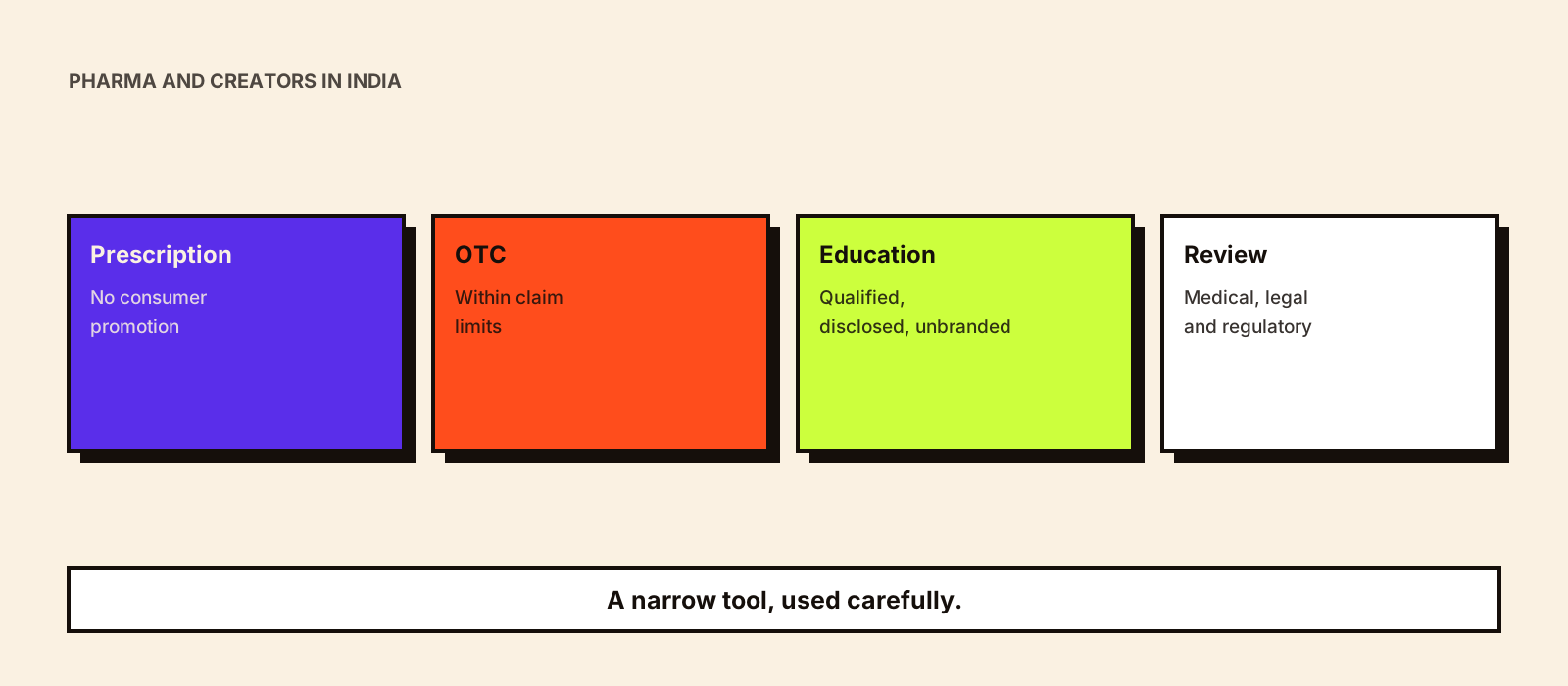
Pharmaceutical companies ask about influencer marketing more often than they can actually use it. In India, most of what makes creator content persuasive, such as naming a medicine, describing results or showing a before-and-after, is restricted or prohibited for drugs. What remains is narrower but still useful: consumer health products sold over the counter, careful health education, and corporate and employer content. This guide sets out where the lines are.
Quick answer
Pharmaceutical brands in India should not use creators to promote prescription medicines to the public: prescription drugs cannot be freely advertised to the public without prior central government approval, and the Drugs and Magic Remedies (Objectionable Advertisements) Act, 1954 prohibits advertisements for drugs claiming to diagnose, cure, treat or prevent listed diseases. In March 2026 the CDSCO issued an advisory addressing direct, surrogate and influencer-led advertising of GLP-1 weight-loss drugs. Creator work is realistic for over-the-counter consumer health products within claim limits, unbranded health education that isn't disguised promotion, and corporate or employer content, all with medical, legal and regulatory review. This is general guidance, not legal advice.
What the rules say
| Rule | What it means for creator content |
|---|---|
| Prescription drugs (Schedules H, H1 and X) cannot be freely advertised to the public without central government approval | No creator posts promoting, naming or implying a prescription medicine to consumers |
| Drugs and Magic Remedies (Objectionable Advertisements) Act, 1954 | No content suggesting a drug diagnoses, cures, mitigates, treats or prevents the diseases and conditions the Act and its rules list; no misleading impressions of a drug's character |
| Drugs and Cosmetics Rules: Rule 106 and Schedule J | No content conveying that a medicine or device prevents or cures the diseases listed in Schedule J |
| CDSCO advisory, March 2026 (GLP-1 receptor agonists) | Reported to address direct, surrogate and influencer-led advertising of weight-loss drugs; treat 'educational' weight-loss content near these products as high risk |
| Uniform Code for Pharmaceutical Marketing Practices, 2024 (Department of Pharmaceuticals) | Promotion must match approved uses; claims and comparisons substantiated; material must not disguise its real nature; restrictions on using healthcare professionals' names or photographs |
Sources for these points are summarised in legal guides such as the CMS expert guide to advertising medicines in India and Conventus Law's analysis of the GLP-1 advisory. Whether UCPMP 2024 is binding has been described differently by commentators, so check the current position with counsel. Penalties under the Drugs and Cosmetics Act and the 1954 Act can include imprisonment and fines.
What's realistic, by product type
| Product or activity | Creator role | Main risk |
|---|---|---|
| Prescription medicines | None to consumers, including surrogate or 'awareness' content that points to a specific drug | Breaching the prescription-drug and 1954 Act restrictions |
| Over-the-counter medicines | Possible within advertising rules: correct use, reading the label, when to see a doctor | Cure or prevention claims; exaggerated speed or effect |
| Consumer health and wellness products that aren't drugs | As for personal-care or nutraceutical brands, with substantiated claims | Products drifting into drug-like claims |
| Unbranded health awareness | Qualified doctors explaining a condition in general terms, with clear disclosure of sponsorship | Content that steers viewers towards one treatment; disguised promotion |
| Medical devices | Only within the device's approved use and claims | Treatment and outcome claims |
| Corporate, employer and manufacturing content | Employees and creators showing the company, its people and facilities | Mentioning products in passing |
What creators must never do
- Name, show or hint at a prescription medicine, including by brand colours, packaging or 'ask your doctor about…' prompts.
- Describe dosages, results or personal experience of a drug.
- Show before-and-after weight, skin or symptom changes linked to a medicine.
- Claim a product cures, prevents or treats a listed disease.
- Use a doctor's name or photograph to promote a product in ways the marketing code restricts.
- Answer viewers' medical questions in comments or DMs.
Working with doctors and other professionals
Qualified doctors and pharmacists can explain health topics credibly, and ASCI expects creators giving technical health information to hold and declare relevant qualifications; see who can give health advice. Registered medical practitioners are also bound by their own professional conduct rules, which limit endorsing products and self-promotion, so check what they can do before engaging them. Paid health education must be disclosed as sponsored, and the brand shouldn't script clinical content.
Process: review, monitoring and safety reports
- Put every brief, script and final cut through medical, legal and regulatory review before posting.
- Keep a claims sheet of approved statements for OTC and consumer health products, and nothing else.
- Moderate comments, and route any mention of a possible side effect or adverse event to your pharmacovigilance team within the timelines your process sets.
- Don't collect health information through creator links or contests; health data is sensitive personal data.
- Keep records of approvals, posts and comment handling for audit.
Approval workflows are covered in the creator content approval process, and health data handling in influencer marketing and data privacy.
Measuring permitted campaigns
| Goal | What to measure |
|---|---|
| OTC product awareness | Reach in the target audience, brand recall, retail and pharmacy sales by region |
| Health education | Completion and saves of educational content, visits to approved information pages |
| Employer brand | Applications and careers-page visits |
Common mistakes
- Treating 'awareness' content as a workaround for prescription promotion.
- Letting lifestyle creators talk about medicines.
- Skipping medical, legal and regulatory review for 'just a Story'.
- Ignoring side-effect mentions in comments.
- Copying overseas pharma influencer tactics that India's rules don't allow.
Conclusion
For pharmaceutical companies in India, creator marketing is a narrow tool: no prescription promotion, no cure claims and no disguised promotion, but real scope for OTC products, honest health education and employer content, all reviewed before posting. For traditional medicine and supplements, see influencer marketing for Ayurveda and nutraceutical brands. Kudozz plans compliance-first creator programmes through its campaign strategy service.