Creator Campaign Operations: How Agencies Manage Campaigns at Scale
The operating system behind running many creator campaigns at once: the eleven-stage campaign journey, stage gates, an operating model with clear owners, the master campaign tracker, multi-campaign project management, SLAs, a weekly operating rhythm and the metrics that show operations are healthy.
Running one creator campaign well is a matter of care. Running twelve at once, with forty creators, six brand approvers and three platforms, is a matter of systems. The failures at scale are rarely dramatic; they're a missed disclosure, a draft stuck with an approver on leave, a creator paid late because nobody owned the invoice.
This is the pillar guide for Kudozz's campaign operations section, written for agencies and in-house teams running several campaigns in parallel. The step-by-step workflow for a single campaign is covered in how influencer campaign management works.
Quick answer
Creator campaign operations is the system that lets a team run many campaigns reliably: one standard campaign journey (brief, creator selection, planning, resourcing, capacity check, execution, quality assurance, escalation, reporting, post-mortem, knowledge capture), stage gates that must be passed before work moves on, a named owner for every campaign and stage, a master tracker covering all campaigns and creators, agreed response times, a weekly operating rhythm, and a few metrics such as on-time delivery, QA issues caught before go-live, approval turnaround and creator payment timeliness.
The campaign journey
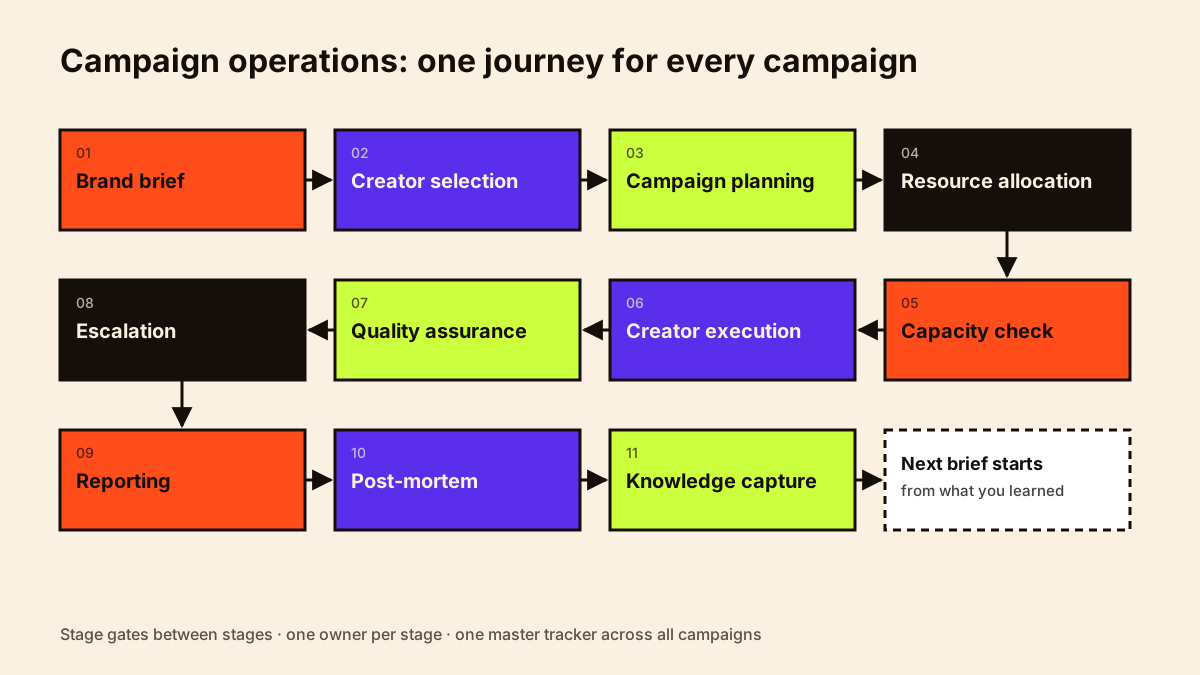
| Stage | Output | Guide |
|---|---|---|
| 1. Brand brief | Written brief with objective, KPI, audience, budget, dates, usage | Influencer campaign brief |
| 2. Creator selection | Shortlist with reasons, availability and conflicts checked | How to vet influencers |
| 3. Campaign planning | Timeline, deliverables per creator, approval path | Influencer campaign management |
| 4. Resource allocation | Named team owners; creators confirmed | Creator campaign capacity planning |
| 5. Capacity check | Confirmation the team can carry it on time | Creator campaign capacity planning |
| 6. Creator execution | Contracts, briefs, drafts, revisions | How to brief influencers |
| 7. Quality assurance | Deliverables checked before and after go-live | Creator campaign quality assurance |
| 8. Escalation | Problems handled by severity with clear owners | Creator campaign escalation |
| 9. Reporting | Results against the agreed objective | Influencer marketing report |
| 10. Post-mortem | What worked, what didn't, actions | Creator campaign post-mortem |
| 11. Knowledge capture | Playbooks, creator notes, benchmarks updated | Creator campaign post-mortem |
Guides for each stage: influencer campaign brief, how to vet influencers, creator campaign capacity planning, how to brief influencers, creator campaign quality assurance, creator campaign escalation, influencer marketing report and creator campaign post-mortem.
Stage gates
A stage gate is a short checklist that must be complete before a campaign moves to the next stage. Gates stop problems travelling downstream, where they cost more to fix.
| Gate | Must be true before moving on |
|---|---|
| Brief → selection | Objective, KPI, budget range, dates, usage and approvers confirmed in writing |
| Selection → contracting | Client approved the shortlist; availability, exclusivities and conflicts checked |
| Contracting → production | Terms confirmed with every creator; briefs sent; tracking links or codes ready |
| Production → go-live | Every deliverable passed QA and client approval |
| Go-live → reporting | Live links, screenshots and disclosure verified; data collection dates set |
| Reporting → close | Report delivered; creators paid or payment scheduled; post-mortem booked |
The operating model: who owns what
| Role | Owns | Across campaigns |
|---|---|---|
| Account lead | Client relationship, scope, reporting story | Several clients |
| Campaign manager | Timeline, creators, approvals, go-live | Several concurrent campaigns |
| Talent or creator coordinator | Creator communication, contracts, payments status | Many creators |
| QA reviewer | Pre- and post-live checks | All campaigns |
| Operations lead | Master tracker, capacity, escalations, process | The whole book of work |
In a small agency one person holds several roles; the point is that each responsibility has exactly one named owner per campaign. As volume grows, many agencies organise into pods: a small team that owns a group of clients end to end. Role structure for creator management agencies is covered in creator agency operations.
The master campaign tracker
Managing several campaigns means seeing all of them at once. Keep one tracker with a row per creator deliverable, not one spreadsheet per campaign, so you can filter by campaign, creator, owner, stage or due date.
Campaign | Client | Owner | Creator | Platform | Deliverable | Stage | Draft due | Approval due | Go-live date |
QA status | Disclosure checked | Live link | Usage end date | Creator fee | Invoice status | Creator paid | Issues | Next action
A downloadable starting point, built for creators but easy to extend, is the creator campaign tracker in creator campaign documentation.
Project management across campaigns
- Plan backwards from go-live dates, with buffer for revisions and approvals.
- Stagger campaign milestones so the same approver or QA reviewer isn't hit by five deadlines on one day.
- Track dependencies: product shipped to creators, tracking links issued, client legal review.
- Use views, not copies: a calendar of go-lives, a board by stage, a list of overdue items.
- Hold creator and client deadlines in the same system so conflicts show up early.
The same principles at creator scale are in creator project management.
Service levels
| Commitment | Example to agree (illustrative) |
|---|---|
| Reply to client messages | Within one working day |
| Shortlist after brief is confirmed | An agreed number of working days |
| Feedback on creator drafts | Within an agreed window, so creators aren't left waiting |
| Client approval turnaround | Written into the contract, with what happens if it's missed |
| Creator payment after brand pays | An agreed number of days, communicated to creators |
| Report after campaign closes | An agreed number of working days |
The weekly operating rhythm
Monday (30 min)   All-campaign stand-up: what goes live this week, what's blocked, capacity check
Daily (10 min)    Overdue items from the tracker; escalations
Wednesday         QA review block for the week's go-lives
Friday (30 min)   Look-ahead: next two weeks' go-lives, approvals and payments; update clients
Operations metrics
| Metric | What it tells you |
|---|---|
| On-time go-live rate | Reliability as clients experience it |
| QA issues caught before go-live vs after | Whether checks are working |
| Average revision rounds per deliverable | Brief and creator-selection quality |
| Client approval turnaround | Where delays really come from |
| Escalations by severity | Recurring problem types |
| Days from brand payment to creator payment | Trust with creators |
| Team utilisation | Whether capacity matches workload |
Common mistakes
- One spreadsheet per campaign, so no one sees the whole book of work.
- Shared ownership, which means no ownership.
- Skipping gates when a client is in a hurry.
- Every campaign run slightly differently.
- Measuring only campaign results, never operational reliability.
Conclusion
Campaign operations is what lets creator marketing scale without losing quality. Use one journey for every campaign, gates between stages, one owner per responsibility, a master tracker, agreed service levels and a weekly rhythm, and measure reliability as carefully as results. Capacity, quality assurance, escalation and post-mortems each have their own guide in this section.