Creator Course Business: How to Build and Sell an Online Course
The creator course business end to end: course formats (self-paced, cohort, mini-course), the education journey from problem to retention, validation, building a course people finish, platforms and payments in India, support, refunds and when a course isn't the right product.
A course is one of the most discussed creator products and one of the most misunderstood. Done well, it turns expertise into a structured learning experience people finish and recommend. Done badly, it's a folder of recorded lectures that people buy on impulse, never finish and quietly regret. The difference is less about production quality and more about choosing the right problem, the right format and the right support.
This is the pillar guide for Kudozz's courses and workshops section. Choosing a topic is covered in how to choose a course topic; pricing in creator course pricing; launching in creator course launch.
Quick answer
A creator course business sells structured learning that takes students from a problem to a result. Choose a specific outcome your audience needs and you can teach, validate demand with a workshop or pre-sale, pick a format (self-paced, cohort-based or mini-course), build lessons around actions rather than lectures, choose a platform with UPI payments and good student experience, support students so they finish, state a clear refund policy, and use results and feedback to improve. Audience size alone doesn't decide success; fit, trust and outcomes do.
The education journey
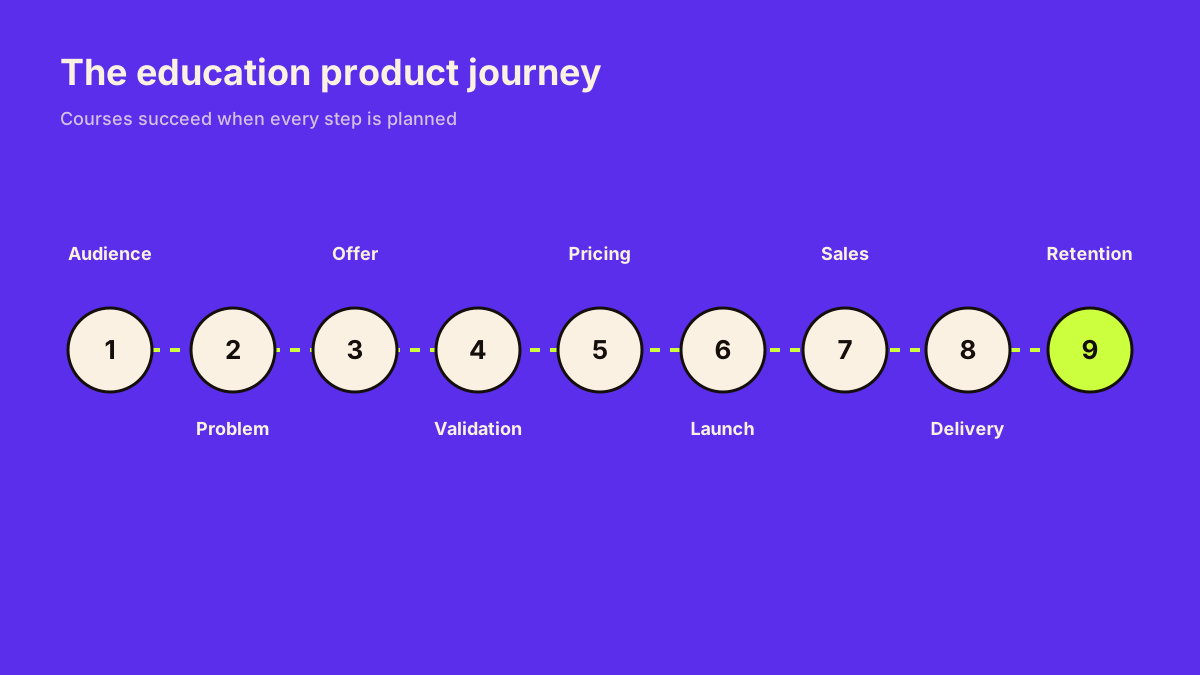
| Step | Question | Guide |
|---|---|---|
| Audience and problem | What do people struggle to learn? | How to choose a course topic |
| Offer | Course, workshop, cohort or coaching? | This guide |
| Validation | Will people pay? | Creator digital product validation |
| Pricing | What's it worth to them? | Creator course pricing |
| Launch | How will they hear about it? | Creator course launch |
| Delivery | Will they finish? | This guide |
| Retention | What's next for them? | Offer ladder |
Validation: creator digital product validation.
Course formats
| Format | How it works | Best for |
|---|---|---|
| Mini-course | 1–2 hours, one focused skill | First product, low price |
| Self-paced course | Recorded lessons, learn anytime | Evergreen skills, scale |
| Cohort-based course | Live sessions with a group over weeks | Accountability, higher completion |
| Hybrid | Recorded lessons plus live Q&A | Balance of scale and support |
Many creators start with a live workshop or cohort, then turn the refined material into a self-paced course.
Workshops: creator workshops.
Build a course people finish
- Start from the outcome; work backwards to the fewest lessons needed.
- Short lessons with one action each.
- Worksheets, templates and examples students use as they go.
- Checkpoints and small wins early.
- A community or Q&A for questions.
- Updates when the topic changes.
Platforms and payments
Choose a platform based on student experience on mobile, UPI and card payments, video hosting, community features, fees, and whether you can access student emails. Some creators use their own website with a course plugin. Compare fees and control carefully. Creator checkout covers reducing friction at payment.
Checkout: creator checkout experience.
Support and refunds
Budget time for student questions, especially in the first cohorts. State your refund policy clearly before purchase; consumer protection rules in India expect clear information on refunds and grievance handling. A fair refund policy also builds trust.
When a course isn't the right product
| Situation | Better option |
|---|---|
| Problem needs personal diagnosis | Coaching or consulting |
| Topic changes monthly | Membership or newsletter |
| Audience wants a quick tool | Template or toolkit |
| You haven't taught it live yet | Workshop first |
Alternatives: creator coaching business and how creators can sell templates, guides and toolkits.
Examples
| Creator | Course (illustrative) |
|---|---|
| Finance educator | "Your first year of investing" cohort (educational, not personalised advice) |
| Designer | Self-paced Figma course for freelancers |
| Photographer | Mobile product photography mini-course for D2C sellers |
| Regional-language teacher | Spoken English course in Hindi for job seekers |
| Creator coach | 6-week YouTube starter cohort |
Common mistakes
- Recording everything before anyone pays.
- Long lectures without actions.
- No support, so students stall.
- Unclear refund policy.
- Promising income or career outcomes.
Conclusion
A creator course business sells results, not recordings. Choose a specific outcome, validate it, pick the right format, build for completion, support students, be clear about refunds and improve with every cohort.