The Creator Economy Value Chain: How Money Moves Between Brands, Creators and Platforms
How money moves through the creator economy: the five money flows (brand, platform, audience, commerce and creator-owned business), the players at each layer from advertisers and agencies to platforms, managers and creators, where value and margin sit, and the business models companies build around creators.
When a brand pays for a creator's video, the money rarely goes straight from one to the other. It may pass through a media agency, an influencer marketing agency, a platform, a talent manager and a payment provider, each taking a role and sometimes a share. Understanding that chain explains who has power in the creator economy, where margins sit, and which businesses can be built around creators.
Quick answer
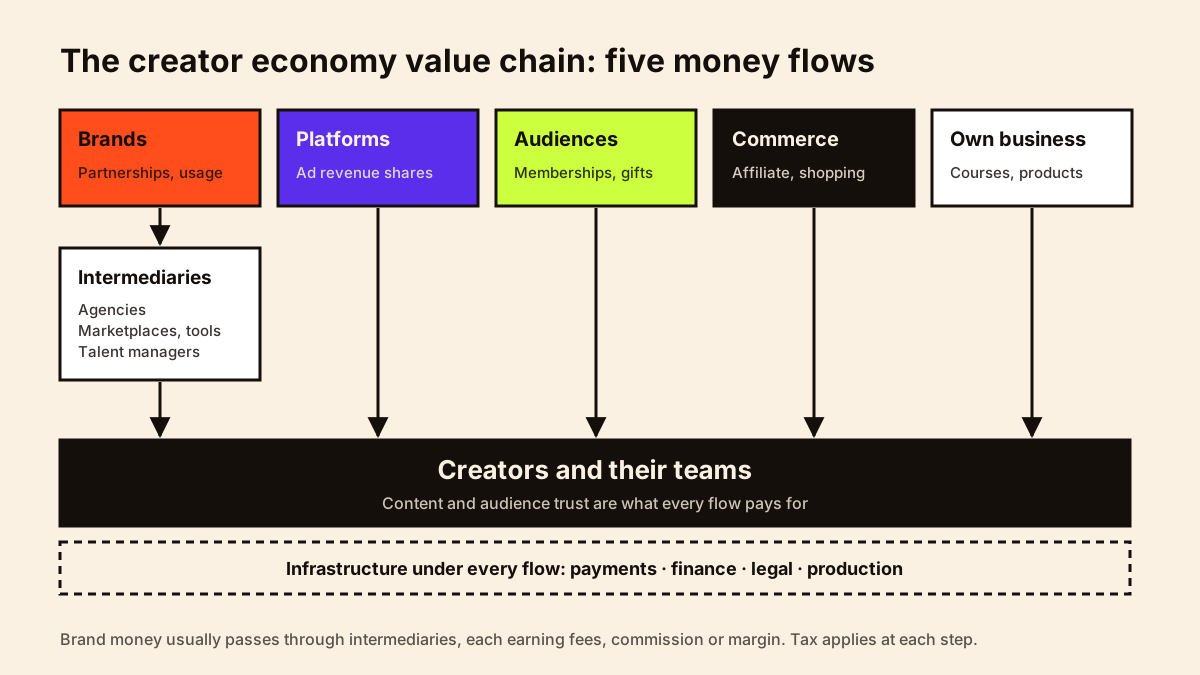
The creator economy value chain has five money flows into creators: brands paying for partnerships (often through agencies, marketplaces and talent managers), platforms sharing ad and subscription revenue, audiences paying directly (memberships, gifts, subscriptions), commerce (affiliate commissions and creator products), and creator-owned businesses (courses, services, brands). Around these flows sit businesses with distinct models: agencies earn fees or commission, marketplaces and tools earn transaction fees or subscriptions, platforms earn advertising, and infrastructure providers earn on payments and services. Value concentrates wherever a player controls audience attention, trusted relationships or the transaction itself.
The value chain
| Layer | Players | Role | How they earn |
|---|---|---|---|
| Demand | Brands and advertisers | Fund partnerships and ads | Sales and brand value from the work |
| Planning and buying | Media agencies, influencer marketing agencies | Strategy, creator selection, campaign management | Fees, retainers, commission or margin |
| Matching and tools | Marketplaces, discovery and campaign software | Discovery, matching, workflow, payments | Transaction fees, subscriptions |
| Distribution | Social and video platforms | Audience attention and ad inventory | Advertising, shares of creator monetization |
| Representation | Talent managers and management agencies | Deals, negotiation, career support | Commission on creator income |
| Creation | Creators and their teams, studios | Content and audience trust | Fees, revenue shares, sales |
| Infrastructure | Payments, finance, legal, production services | Moving money, compliance, production | Processing fees, service fees |
| Audience | Viewers, fans, customers | Attention, purchases, direct support | Entertainment, information, products |
The five money flows
1. Brand money
Brands pay for sponsored content, usage rights, ambassadorships and UGC. The route varies: direct to the creator, through an influencer marketing agency, through a marketplace, or via a talent manager who takes commission from the creator's side. On platforms with partnership ad tools, brands also pay the platform to amplify creator content. Brand-side costs are covered in influencer marketing cost in India.
2. Platform money
Platforms earn from advertising and share some revenue with eligible creators through programs such as YouTube's Partner Program. Terms, eligibility and availability differ by platform and country, and platforms change them. The creator's view is in YouTube creator monetization.
3. Audience money
Audiences pay creators directly through memberships, subscriptions, gifts and paid communities, usually with the platform or a payment provider taking a share. See creator memberships.
4. Commerce money
Retailers and brands pay affiliate commission when creator recommendations lead to sales, and platforms increasingly build shopping into content. See creator commerce in India.
5. Creator-owned business money
Creators sell their own courses, products, services and brands. Here the creator captures most of the value, and intermediaries are service providers rather than gatekeepers. See creator business model.
Business models built around creators
| Company type | Customer | Revenue model | Kudozz guide |
|---|---|---|---|
| Influencer marketing agency | Brands | Fees, retainers, margin on campaigns | How to choose an influencer marketing agency |
| Talent management agency | Creators | Commission on creator deals | Creator management agency business model |
| Creator marketplace | Brands and creators | Transaction fees, subscriptions | Creator marketplace business model |
| Discovery and campaign software | Brands and agencies | Subscriptions | Creator discovery platform |
| Production studio | Brands and creators | Project fees, retainers | Creator studio business model |
| Multi-channel network | Creators | Share of platform revenue for services | Creator manager vs agency |
| Creator-led brand | Consumers | Product sales | Creator commerce in India |
| Creator tools and fintech | Creators | Subscriptions, fees on payments or financing | Creator tech stack |
| Education and community platforms | Creators and audiences | Share of course or membership sales | Creator course business |
Guides: how to choose an influencer marketing agency, creator management agency business model, creator marketplace business model, creator discovery platform, creator studio business model, creator manager vs agency, creator tech stack and creator course business.
Where value and margin sit
- Attention: platforms control distribution, so they set the terms for platform monetization and ad amplification.
- Trust: creators with loyal audiences can charge more and build their own businesses.
- Relationships: agencies and managers who reliably connect good brands with good creators earn for that reliability.
- The transaction: whoever processes the deal can charge a fee, but must add enough value to stop both sides going direct.
- Data: first-party performance data improves matching and pricing, and is increasingly controlled by platforms.
An example flow (illustrative)
Brand budget for the campaign
 → Influencer marketing agency: management fee (brand side)
 → Creator fee for content and usage rights
     → Talent manager: commission (creator side, per their agreement)
     → Creator's team and production costs
     → Creator's income
 → Paid amplification of the creator's post: paid to the platform
Tax at each step (GST, TDS) depends on who invoices whom — a question for a CA.
How agencies should handle money flow transparently is covered in creator agency operations; the B2B side of the creator economy, where experts and professionals are the creators, is covered in the B2B creator economy.
India notes
- Short-form video on Instagram and YouTube dominates brand-funded work; TikTok remains blocked in India.
- Regional-language creators are a large part of the market, and many intermediaries serve them specifically.
- Payments to creators usually involve GST and TDS questions for every party in the chain; see GST for creators and TDS for creators.
- Consumer protection rules and ASCI's guidelines apply to sponsored content regardless of who in the chain arranged it.
Tax background: GST for creators and TDS for creators. Market overview: the creator economy in India.
Conclusion
Money reaches creators through five flows: brands, platforms, audiences, commerce and creators' own businesses. Agencies, marketplaces, tools, managers and infrastructure providers each earn by adding a role. The businesses that last are the ones that add real value to both brands and creators, rather than simply sitting between them.