B2B Creator Economy: How Businesses Can Work With Industry Creators
What the B2B creator economy is, who B2B creators are and how they earn, how B2B creator marketing differs from B2B influencer marketing, thought leadership, founder-led content, employee advocacy and executive creator marketing, and how SaaS, fintech, manufacturing, professional services and education companies can use each.
The people who shape B2B buying decisions increasingly publish. A former CFO explains finance software trade-offs on LinkedIn, a plant engineer walks through machinery on YouTube, a compliance consultant runs a newsletter every GST professional reads, a founder hosts the podcast their whole category listens to. Together they form the B2B creator economy: professionals whose content earns trust with business buyers.
Quick answer
The B2B creator economy is the ecosystem of practitioners, experts, analysts, educators and founders who create content for professional audiences, and the companies that partner with them. B2B creators earn through sponsorships, paid partnerships, consulting, speaking, courses and communities. Companies engage them in several distinct ways: B2B creator marketing (partnering with external creators on content), B2B influencer marketing (using credible voices to shape buyer opinion, often more distribution-led), thought leadership (building authority through expert ideas), founder-led content, employee advocacy and executive creator marketing. They differ in who speaks, who controls the content and what they're for, and most B2B companies combine two or three.
Who B2B creators are
| Creator type | Examples (illustrative) | Where they publish |
|---|---|---|
| Practitioners | A growth marketer, a plant manager, a tax consultant sharing their daily work | LinkedIn, YouTube, X |
| Credentialed experts | Chartered accountants, doctors, lawyers, engineers, scientists | LinkedIn, YouTube, newsletters, podcasts |
| Analysts and commentators | Sector analysts, policy watchers | Newsletters, X, LinkedIn |
| Educators | Trainers and course creators teaching professional skills | YouTube, courses, communities |
| Community builders | People who run professional groups and events | WhatsApp and Slack communities, meetups |
| Founders and operators | People building companies in public | LinkedIn, X, podcasts |
| Media-style creators | Business explainer channels and podcasts | YouTube, podcasts, Instagram |
Unlike many consumer creators, a B2B creator's audience may be small and still valuable, because it's made of the exact people a company sells to. Working with credentialed experts carries specific rules in India, covered in expert creator marketing.
How B2B creators earn
- Sponsored posts, videos, newsletter placements and podcast reads.
- Longer partnerships and advisory roles with a company.
- Webinars, events and speaking fees.
- Consulting and services, often their largest income.
- Courses, cohorts, templates and paid communities.
- Platform revenue on YouTube and elsewhere.
Because many B2B creators earn more from their professional work than from sponsorships, credibility is their main asset, and they protect it. Partnerships that look like scripted endorsements are often declined.
Six approaches, clearly distinguished
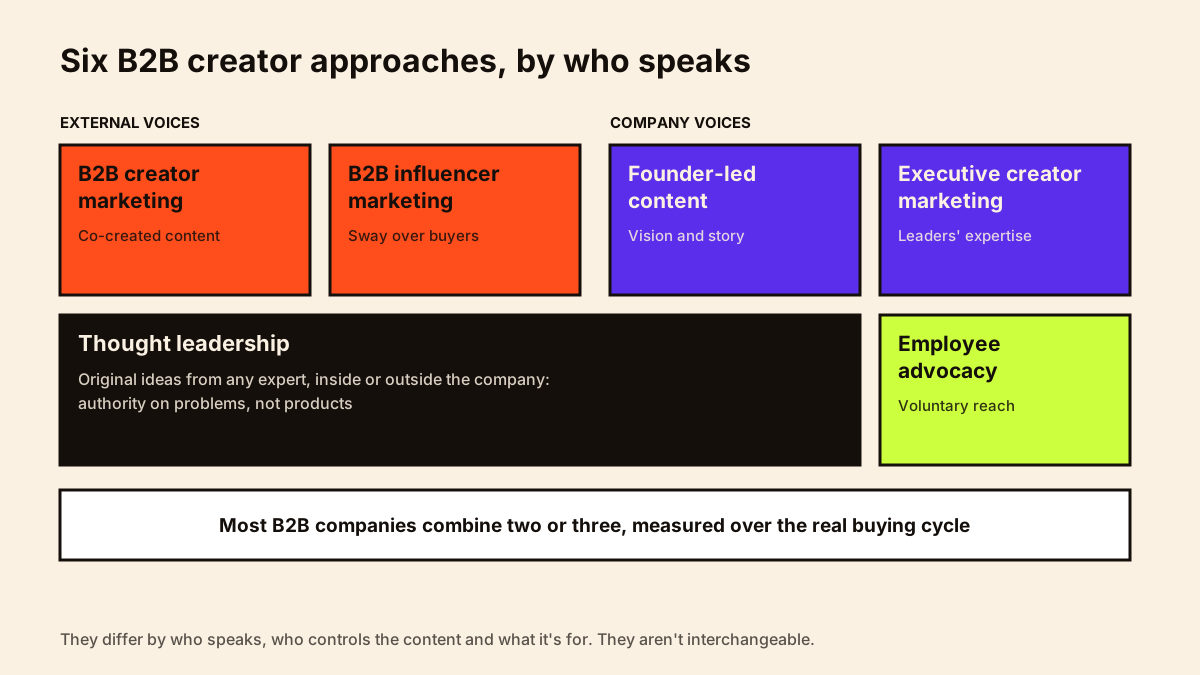
| Approach | Who speaks | Who controls content | Main purpose |
|---|---|---|---|
| B2B creator marketing | External creators with professional audiences | Creator, within a brief | Co-created content, demand and trust |
| B2B influencer marketing | Credible voices who shape buyer opinion | Creator, often with more brand direction | Reach and endorsement among a defined audience |
| Thought leadership | Anyone with genuinely original expertise, internal or external | The expert | Authority on ideas, not products |
| Founder-led content | The company's founders | The founder | Trust in the company's vision and story |
| Executive creator marketing | Senior leaders beyond the founder | The executive, with editorial support | Visibility and credibility for leadership |
| Employee advocacy | Employees | Employees, voluntarily | Extending reach and authentic insight |
In practice the terms overlap, and many people use "B2B creator marketing" and "B2B influencer marketing" interchangeably. The useful distinction is intent: creator marketing emphasizes content the creator makes for their own audience; influencer marketing emphasizes the person's sway over buyers. Each approach has a dedicated guide: B2B creator partnerships, LinkedIn thought leadership marketing, founder creator brand, executive influencer marketing and employee influencer marketing.
Why B2B is different
| B2B reality | What it means for creator work |
|---|---|
| Long buying cycles | Measure over months; content supports several stages |
| Buying committees | Different creators reach different roles: users, managers, finance, IT |
| Expertise decides credibility | Depth beats reach; small audiences can be ideal |
| Much research happens privately | Buyers read and share content in private channels you can't track |
| High-value deals | A few influenced deals can justify a program |
| Regulated and technical claims | Experts and review processes matter more |
How it applies by industry
| Industry | Useful creator types | Formats |
|---|---|---|
| SaaS and technology | Practitioners who use the tool category; developers; product managers | Tutorials, comparisons, workflows, webinars |
| Fintech and finance | Credentialed finance professionals, within SEBI and ASCI rules | Explainers, regulatory updates, calculators |
| Manufacturing and industrial | Engineers, plant operators, trade educators | Process videos, facility walkthroughs, trade-fair content |
| Professional services | Consultants, partners, specialists | Frameworks, case discussions, newsletters |
| Education and edtech | Educators, academics, career creators | Curriculum walkthroughs, outcomes, live sessions |
| Healthcare B2B | Clinicians and administrators, within professional rules | Educational content, not product endorsement |
Industry guides: SaaS, manufacturing, and the India overview in influencer marketing for B2B companies in India.
Enterprise technology has its own guide: influencer marketing for B2B technology brands; building materials and construction are covered in influencer marketing for construction.
India's B2B creator landscape
- LinkedIn is the main professional platform for B2B creators in India; YouTube carries long-form explainers, often in Hindi and regional languages for MSME audiences.
- Podcasts and video interviews with founders and operators are a strong format, frequently distributed on YouTube.
- WhatsApp and Telegram communities carry much professional discussion that's invisible to analytics.
- Indian SaaS companies selling abroad often need creators in their customers' markets, not only Indian ones.
- Disclosure applies to B2B too: in January 2025 ASCI issued an advisory to LinkedIn influencers after complaints about undisclosed brand partnerships.
Disclosure requirements are covered in influencer marketing compliance, and LinkedIn specifics in LinkedIn influencer marketing in India. Source for the advisory: MediaNama's report on ASCI's LinkedIn advisory.
Choosing where to start
| If you need… | Start with |
|---|---|
| Credibility in a category buyers don't know you in | External experts and B2B creators |
| Trust in the company and its direction | Founder-led content |
| Pipeline from a defined buyer audience | Creator-led demand programs; see creator-led B2B marketing |
| Authority on a problem you solve | Thought leadership with internal and external experts |
| Wider reach for existing content | Employee advocacy |
| Visible leadership for hiring and partnerships | Executive creator marketing |
Building demand and measuring pipeline through creators is covered in creator-led B2B marketing.
Conclusion
The B2B creator economy is made of professionals whose content business buyers trust. Companies can partner with external creators and experts, build their founders' and executives' voices, support employees who want to create, and invest in genuine thought leadership. Treat these as distinct tools with different owners and purposes, measure them against a long buying cycle, and keep credibility, not reach, at the center.