Influencer Marketing for Construction and Building Materials Brands
How cement, steel, paints, tiles, plumbing, electricals and other building materials brands work with creators: the specifier, contractor and homeowner journey, architects, engineers, contractors and home-building creators, site and product demonstrations, regional reach, claims accuracy, dealer leads and measurement.
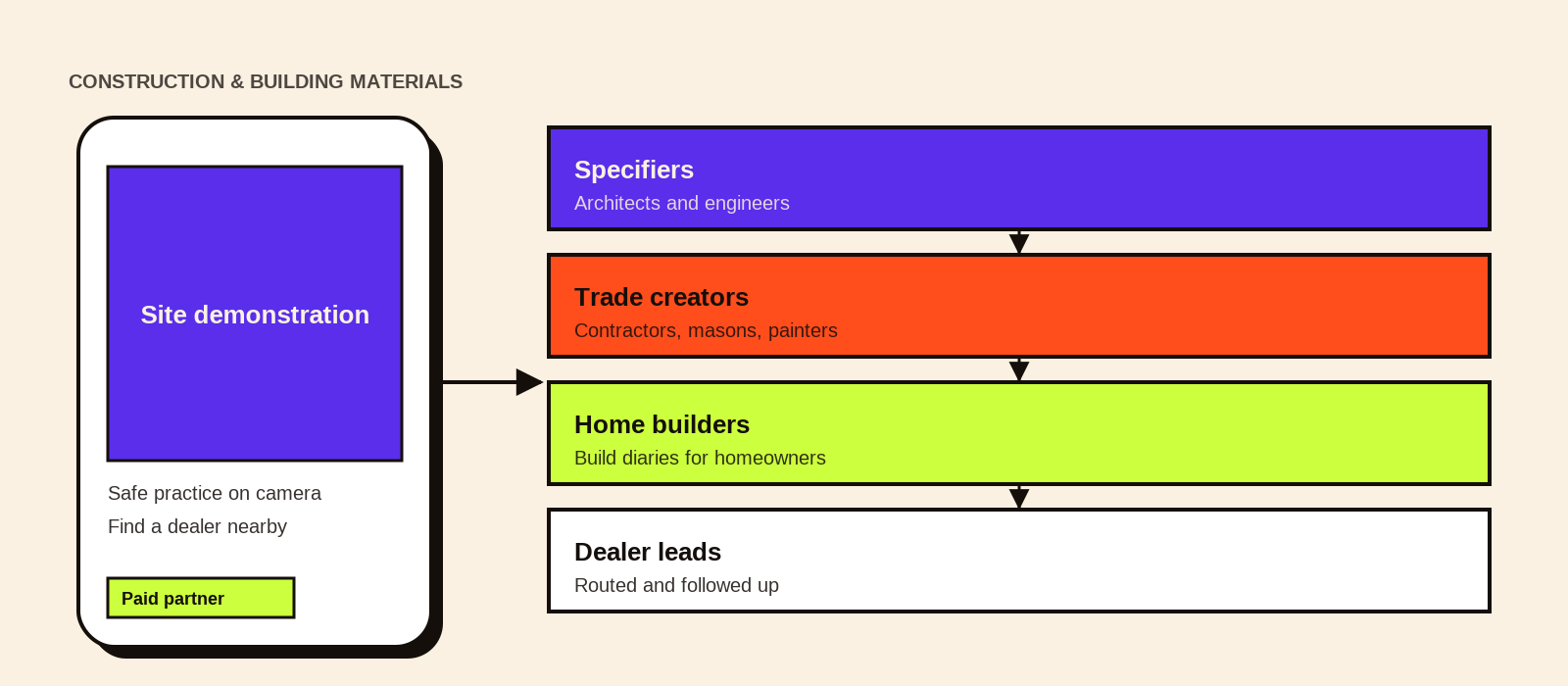
Building materials are bought in an unusual way. An architect or engineer may specify the product, a contractor or mason may recommend or substitute it, a dealer may push whatever earns the best margin, and a homeowner pays for all of it while understanding little. A creator campaign has to decide which of these people it's talking to.
This guide is for construction and building materials. Industrial and B2B manufacturing more broadly is covered in influencer marketing for manufacturing companies, and finished interiors in influencer marketing for home and interior brands.
Quick answer
Construction and building materials brands work with three creator groups: professionals (architects, civil engineers, structural consultants) who influence specification; trade creators (contractors, masons, electricians, plumbers, painters) who influence on-site choices; and home-building creators documenting their own construction for homeowners. Content that works is practical: site demonstrations, application techniques, comparisons, common mistakes and real build diaries. Keep technical claims precise and standards-based, reach regional audiences in their language, route enquiries to dealers, and measure dealer leads, specification interest and brand preference over a long cycle.
Who influences the purchase
| Influencer in the journey | What they care about | Creator approach |
|---|---|---|
| Architect or engineer | Performance, standards, design, reliability | Professional creators; technical explainers; CPD-style content |
| Contractor or mason | Ease of use, speed, availability, margins, callbacks | Trade creators showing real application on site |
| Dealer | Stock, margins, demand | Demand signals from local campaigns; dealer co-marketing |
| Homeowner | Trust, durability, cost, appearance | Home-building diaries, explainers in plain language |
Creator categories
- Architects and designers with social followings showing projects and material choices.
- Civil and structural engineers explaining construction quality and common failures.
- Contractors, masons, electricians, plumbers and painters sharing site techniques, often in regional languages.
- Home-building creators documenting their own house construction.
- Renovation and waterproofing specialists for repair and maintenance categories.
- Regional creators in markets where you have distribution.
Content that works
| Format | Example (illustrative) | Audience |
|---|---|---|
| Site demonstration | Waterproofing applied on a terrace, step by step | Contractors, homeowners |
| Mistakes to avoid | Why plaster cracks and how to prevent it | Homeowners, trade |
| Comparison with methodology | Two tile adhesives tested for coverage and set time | Trade, specifiers |
| Build diary series | A family's house from foundation to handover | Homeowners |
| Professional explainer | An engineer on choosing steel grades | Homeowners, junior professionals |
| Product in a finished project | An architect's project featuring the material | Specifiers, premium homeowners |
Claims and safety
- Technical claims (strength, durability, fire or water resistance) should match tested data and relevant standards; give creators an approved claims sheet.
- Comparisons must use fair methodology; avoid implying a competitor's product is unsafe without evidence.
- Show safe site practices on camera: protective equipment, safe heights and handling.
- Structural advice should come from qualified engineers, and homeowners should be advised to consult professionals for their own projects.
- Disclose every sponsored post, including trade creators who may not be used to disclosure.
Regional reach and dealer leads
Construction is local: materials, practices and languages vary by region, and purchases happen through nearby dealers. Plan campaigns market by market, use trade creators who speak the local language, and give every piece of content a local next step: find a dealer, book a site visit from the brand's technical team, or request a quote. Route enquiries to dealers quickly and ask for outcomes back. Multi-market planning is covered in how to run a pan-India influencer marketing campaign, and lead handling in influencer marketing for lead generation.
Contractor and dealer creator programs
One-off posts rarely change what a contractor uses on site. What does is repeated, practical content from tradespeople they recognise, backed by product availability at the local dealer. Many building materials brands already run contractor meets, training and loyalty schemes; a creator program extends that work onto social platforms.
| Program element | How it works | What to agree |
|---|---|---|
| Trade creator roster | A small group of contractors, masons, painters or electricians per region posting site content every month | Monthly deliverables, regional language, safe-practice rules, disclosure |
| Technical support | The brand's technical team checks methods and answers questions creators can't | Who reviews content and how quickly; approved claims sheet |
| Dealer tie-in | Each region's content names where to buy and routes enquiries to nearby dealers | Dealer list by area, enquiry routing, how outcomes are reported back |
| Training-to-content | Contractor training sessions are filmed and turned into short how-to clips | Consent from everyone on camera; usage rights for the brand |
| Incentives | Fees, product or loyalty-scheme benefits for participating creators | Any benefit is a material connection, so posts must be disclosed |
- Start in two or three regions where distribution is strong, and expand only where dealers can follow up enquiries.
- Pay trade creators fairly for their time on site; filming slows their work.
- Agree how incentives from existing loyalty schemes interact with creator fees, so nobody is paid twice for the same post or left unsure whether to disclose.
- Review results with dealers every month: enquiries received, quotes given and orders closed.
The same principles apply to contractor-focused brands outside India, such as tool, home-improvement and trade-supply companies in the UK and Australia, though disclosure and claims rules differ by market; see influencer disclosure rules by country. Structuring a long-running roster is covered in influencer ambassador programs.
Measurement
- Dealer enquiries and quote requests by market and creator.
- Technical team site-visit requests.
- Specification interest from architects and engineers (sample requests, CPD session sign-ups).
- Brand preference among contractors, through dealer feedback or periodic surveys.
- Search trends for the brand and product in campaign regions.
Common mistakes
- Talking only to homeowners when contractors decide on site.
- Metro, English-only content for a regional trade audience.
- Glossy content without real application.
- Unsafe practices visible on camera.
- No dealer follow-up on enquiries.
Conclusion
Building materials creator campaigns succeed when they speak to whoever actually decides: professionals for specification, trade creators for on-site choice, home builders for trust. Keep content practical and accurate, go regional, show safe work, and connect every piece to a local dealer or technical team.