Influencer Marketing for SaaS Brands: How B2B Software Companies Can Work With Creators
Whether creator marketing works for B2B software, and how it differs meaningfully from consumer influencer marketing given longer sales cycles and narrower, more specific audiences.
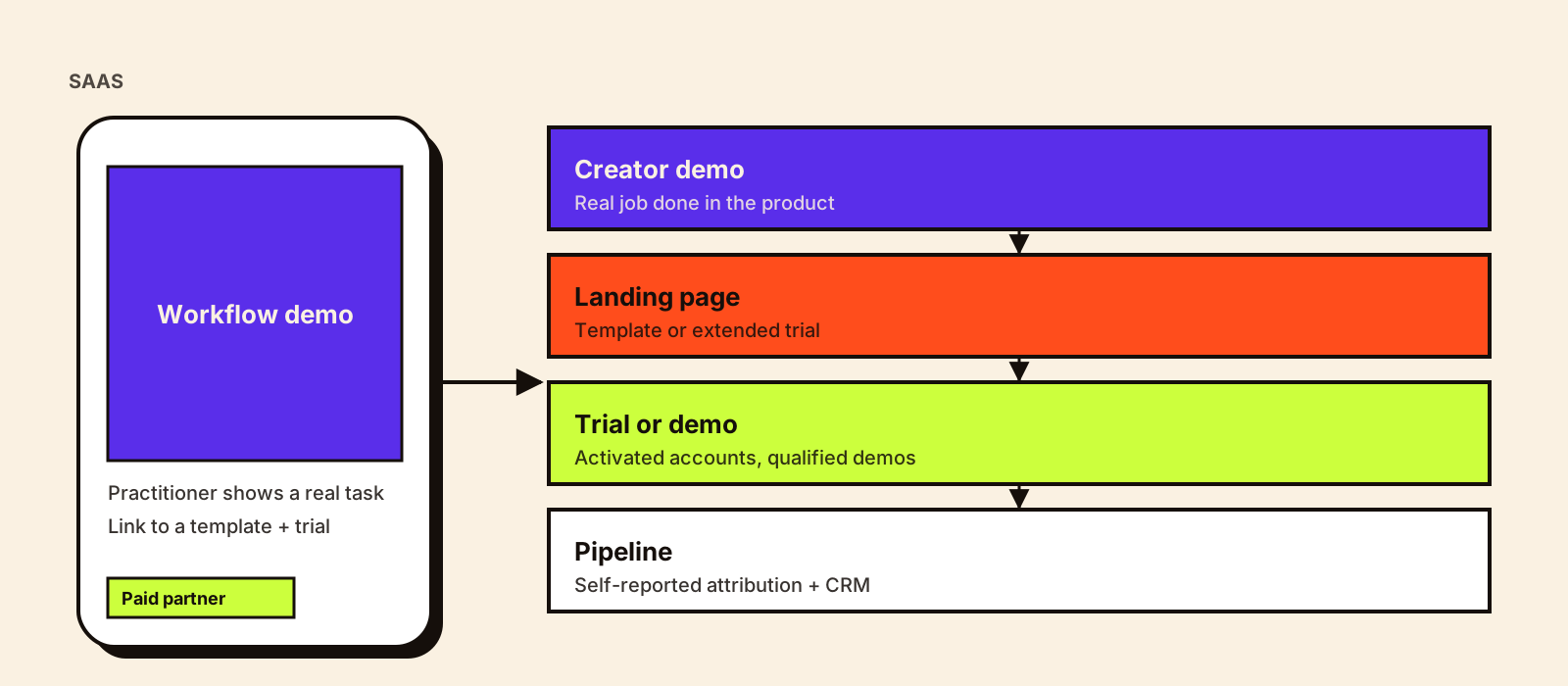
Influencer marketing can work for B2B SaaS, but it looks different from consumer creator marketing in almost every respect: the audience is narrower, the credibility bar is higher, the sales cycle is longer, and a large following usually matters less than genuine relevance to a specific professional audience.
Can influencer marketing work for B2B SaaS?
Yes, when it's built around genuine expertise and a specific professional audience rather than the reach-first approach that works for consumer products. A creator with 5,000 highly relevant followers in a specific role or industry can be more valuable to a SaaS brand than one with ten times that reach outside the target audience.
Identifying the right audience
Before creator selection, define the actual buyer or user persona precisely, job title, industry, company size, since B2B audiences are narrower and more specific than most consumer categories, and a creator's relevance depends entirely on matching that specific profile.
Industry experts versus traditional influencers
A recognized practitioner or industry commentator with genuine professional credibility, even with a modest following, often carries more weight with a B2B audience than a larger, more general content creator, since the audience is buying expertise as much as content.
Product educators
Creators who specialize in explaining how software works, comparing tools, and walking through real use cases can be genuinely valuable for SaaS specifically, since much of the buying decision hinges on understanding whether a product actually solves the buyer's problem.
LinkedIn creators
LinkedIn is a natural platform for B2B SaaS creator content given its professional audience, and creators who've built credibility there through genuine industry commentary can be an effective way to reach decision-makers directly.
YouTube creators
YouTube works well for more detailed SaaS content, tool comparisons, workflow walkthroughs, longer explainer videos, that a shorter LinkedIn post format doesn't accommodate as naturally.
Product reviews
Genuine, detailed reviews from a creator who has actually used the product in a real workflow build more credibility than a sponsored feature list, particularly for a buyer comparing multiple tools before committing budget.
Tutorials and walkthroughs
Content showing how to actually use a product to solve a specific problem tends to perform well for SaaS, since it demonstrates real value rather than describing it abstractly.
Thought leadership collaborations
Co-created content with a recognized industry voice, a joint webinar, a co-authored piece, or a shared framework, can lend credibility to a newer or less-known SaaS brand entering a category with established players.
Webinar and event collaborations
Inviting a relevant creator or industry expert to co-host a webinar or speak at an event gives a SaaS brand access to that person's audience in a format naturally suited to a longer, more considered B2B sales process.
Measuring leads and product adoption
Given SaaS's typically longer sales cycle, measure creator campaigns on qualified leads, trial sign-ups, and downstream product adoption rather than immediate purchases, tracked through dedicated referral links or UTM parameters specific to each creator or piece of content. See influencer marketing KPIs for the broader framework this borrows from.
Turning creator content into pipeline, with buying-committee mapping and attribution that accounts for private research, is covered in creator-led B2B marketing.
SaaS Influencer Marketing Funnel
| Stage | Goal | Typical creator content |
|---|---|---|
| Awareness | Introduce the product to a relevant professional audience | LinkedIn commentary, industry-relevant content |
| Education | Explain the problem and how the product addresses it | Explainer videos, workflow content |
| Product discovery | Introduce the specific product as a solution | Reviews, comparisons, tool roundups |
| Trial | Get a qualified prospect to actually try the product | Walkthroughs, tutorials, demo content |
| Lead generation | Capture a qualified sales conversation | Webinars, gated deep-dive content |
| Customer acquisition | Convert a trial or lead into a paying customer | Case-study-style content, informed by the sales cycle |
Why B2B SaaS creator marketing isn't consumer influencer marketing
Follower count, aesthetic content, and broad reach, the usual signals in consumer influencer marketing, matter far less here than whether a creator's specific professional audience overlaps with your actual buyer, and whether that creator has real credibility to speak on the problem your product solves. This is also why early-stage SaaS founders should approach creator marketing with the same objective-first discipline covered in influencer marketing for Indian startups.
In B2B SaaS, a creator's real currency isn't followers. It's whether the specific people who'd actually buy your product already listen to them.— Kudozz Strategy Team
Conversion paths: trial, demo and product-led
| SaaS motion | Creator content that fits | Conversion action | What to measure |
|---|---|---|---|
| Product-led (self-serve) | Tutorials, templates, workflow walkthroughs | Free trial or free plan sign-up | Activated accounts, not just sign-ups |
| Sales-led | Practitioner reviews, comparisons, webinars | Demo request | Qualified demos, pipeline, closed deals |
| Marketplace or integration | Integration walkthroughs by power users | Install or connect | Installs and retained usage |
| Community-led | Creator-hosted sessions and communities | Community join, event sign-up | Engaged members who start trials |
Give each creator a tracked link to a landing page that continues their demo, and add a free-text "how did you hear about us?" field to sign-up and demo forms; many B2B buyers research privately and won't click a tracked link. Pipeline measurement is covered in creator-led B2B marketing and lead flows in influencer marketing for lead generation.
AI tools have extra claim and data questions; see influencer marketing for AI software products.
Launching a SaaS product with creators
| Phase | Creator activity |
|---|---|
| Beta | A few practitioners use the product and give feedback; nothing is published yet |
| Launch | Beta creators publish honest walkthroughs; live sessions and Q&As |
| Post-launch | Tutorials for specific jobs, templates, comparison content |
| Ongoing | Recurring creator partnerships tied to feature releases |
Give launch creators working accounts early enough to use the product on real work, and support from someone who can answer technical questions.
Migrations, major upgrades and trial-to-paid
Creators are useful after acquisition too. When a product changes significantly, or when trial users need to see the value of a paid plan, a trusted practitioner explaining it often works better than release notes.
| Situation | Creator content | Measure |
|---|---|---|
| Migration to a new version or platform | Before-and-after walkthrough of the same task, and what moves automatically | Migration completion, support tickets on migration |
| Major redesign | 'Where did it go?' tour of changed features | Feature adoption, complaints |
| Trial users not upgrading | Workflows that need paid features, shown honestly | Trial-to-paid conversion by creator source |
| Plan comparison | Which plan suits which team size, by a practitioner | Plan mix, downgrades |
| Public beta | Early-access creators testing and reporting honestly, with known issues stated | Beta sign-ups, feedback submitted, beta-to-launch retention |
| Major new feature | A real workflow that uses the feature, published on launch day | Feature activation by creator source |
| Underused features | Short explainers of valuable features existing customers miss | Feature adoption among existing accounts |
Judge creators who drive trials on paid conversions and retained accounts, not sign-ups alone; free trials attract many users who never activate.
Creator-led demos that convert
- Show a real job being done in the product, start to finish, with the creator's own data or a realistic example.
- Let the creator mention limitations and alternatives; it's what makes the recommendation believable.
- Offer something useful in return for the click: a template, extended trial or setup help.
- Repurpose long demos into short clips for LinkedIn and YouTube Shorts, with rights agreed.
HR and payroll software
HR and payroll tools have a split audience. The buyer is usually a founder, HR head or finance lead; the users are HR teams and every employee who checks a payslip or applies for leave. Creator content needs to reach both, and payroll content touches compliance, which makes accuracy essential.
| Audience | Creators who reach them | Content that works |
|---|---|---|
| Founders of small companies | Startup and founder creators | Setting up payroll and HR basics as you hire |
| HR leaders and teams | HR practitioners on LinkedIn | Workflow walkthroughs: onboarding, leave, appraisals |
| Finance leads | Chartered accountants and finance creators | Payroll processing, statutory deductions explained in general terms |
| Employees | Career and workplace creators | The employee app: payslips, leave, reimbursements |
Keep statutory explanations general and current, and let qualified professionals explain them; tax and labour rules change, and creators shouldn't give firm-specific compliance advice. Measure demo requests and trials by creator, and expect long buying cycles; see influencer marketing for long sales cycles. Recruitment and employer-brand campaigns are covered separately in influencer marketing for HR and recruitment companies.
Related B2B guides
For how SaaS creator marketing fits alongside founder, executive and employee content, see the B2B creator economy; for working with credentialed experts, expert creator marketing.