Creator Marketplace: How Brand–Creator Marketplaces Work
What a creator marketplace is and how it works for brands, creators and the platform in the middle: the marketplace types, how a campaign moves through one, platform-native marketplaces from Meta, YouTube, LinkedIn and TikTok and their India availability, and how marketplaces differ from creator databases, discovery tools, networks and agencies.
A brand that wants twenty creators for a launch has three broad options: search and contact creators itself, hire someone who already knows them, or use a platform where creators and brands meet and transact. That third option is a creator marketplace, and it has become one of the main ways creator partnerships are arranged.
Quick answer
A creator marketplace is a two-sided platform where brands find creators and creators find paid brand work, with the platform facilitating discovery, matching, communication, agreements and often payments. Brands post campaigns or search profiles; creators build profiles, apply or respond to invitations; the platform earns fees or subscriptions and is responsible for trust and safety. Marketplaces differ from creator databases (searchable data, no transactions), discovery platforms (tools for finding creators), creator networks (relationship-based groups of creators) and agencies (people who run the work for you). Some marketplaces are built into social platforms, such as Meta's Creator Marketplace and YouTube Creator Partnerships; others are independent.
Three sides of a marketplace
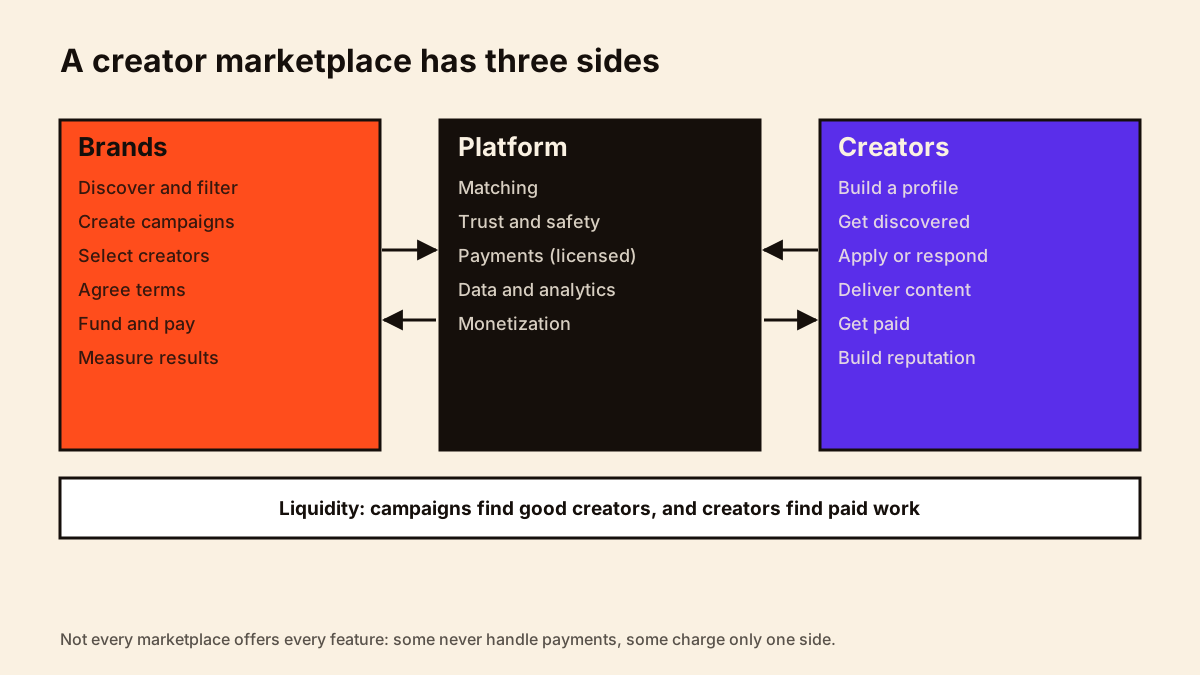
| Stage | Brand side | Creator side | Platform's job |
|---|---|---|---|
| Discovery | Search and filter creators | Profile, portfolio, audience data | Search, data quality, ranking |
| Campaign creation | Brief, budget, deliverables, dates | Browse or receive opportunities | Structured briefs; matching |
| Selection | Shortlist, compare, invite | Apply or propose; set rates | Recommendations; messaging |
| Agreement | Terms, usage, exclusivity | Accept or negotiate | Contract templates; records |
| Delivery | Review drafts, approve | Create, submit, revise | Workflow, approvals, deadlines |
| Payment | Fund the campaign | Get paid on approval | Payments through licensed providers; disputes |
| Measurement | Results and reporting | Analytics; ratings | Data connections; reputation |
Types of creator marketplace
| Type | How it works | Suits |
|---|---|---|
| Open marketplace | Any eligible creator joins; brands post and choose | High-volume, smaller creator campaigns |
| Curated marketplace | Platform vets creators (and sometimes brands) | Brands wanting quality control without an agency |
| Managed marketplace | Platform staff help run campaigns for a fee | Brands with little in-house capacity |
| Vertical or niche marketplace | One category, format or creator type (e.g. UGC, B2B experts) | Specialist needs |
| Platform-native marketplace | Built into a social platform, using its own data | Campaigns on that platform, often with ad amplification |
Not every marketplace uses every feature. Some never touch payments; some are closer to a job board; some charge brands only, others charge creators. Check the model before assuming how a specific platform works; creator marketplace business model covers the fee structures.
Platform-native marketplaces and India availability
| Tool | What it is (as the platform describes it) | India status (September 2026) |
|---|---|---|
| Meta Creator Marketplace (Instagram) | Brands discover creators and send branded content and partnership ad projects; APIs for approved partners | Available to eligible creators; Meta began inviting Indian creators and brands in 2024 |
| YouTube Creator Partnerships (formerly BrandConnect) | Creator discovery, inquiries and branded content tools in YouTube Studio and Google's ad tools | India is listed as an available country for eligible creators |
| LinkedIn Creator Marketplace | Self-serve creator discovery in Campaign Manager | Alpha, limited to select brands and creators in North America; no India timeline published |
| TikTok One | TikTok's marketer hub, which replaced the standalone TikTok Creator Marketplace in 2025 | Not relevant for Indian campaigns while TikTok remains blocked in India |
Features and eligibility change, so confirm details in each platform's help center before planning around them. Sources: Meta's Creator Marketplace help page and 2025 NewFronts update, YouTube's Creator Partnerships help page, and TikTok's TikTok One migration guide. The creator-side guides are Instagram Creator Marketplace and YouTube Creator Partnerships in India.
Marketplace vs database vs discovery platform vs network vs agency
| Model | What you get | Transactions? | Relationship | Who does the work |
|---|---|---|---|---|
| Creator database | Organized creator data you can search | No | None implied | You |
| Discovery platform | Search, filters, audience analytics, often a database underneath | Usually no | None implied | You |
| Creator marketplace | Two-sided platform where campaigns are posted, agreed and often paid | Yes, usually | Transactional, can become repeat | Mostly you, with platform tools |
| Creator network | A group of creators connected to an organization through relationships | Through the network owner | Ongoing, relationship-based | The network owner coordinates |
| Agency | People who plan, source, negotiate and run campaigns | Through the agency | Ongoing with brand and creators | The agency |
Creator database vs creator marketplace
A database answers "who exists?" A marketplace answers "who is available and willing, on what terms, and how do we complete the deal?" Databases can cover far more creators, including ones who have never agreed to be listed, but they don't tell you whether a creator wants the work. Marketplace profiles are opted in, so they're fewer but more actionable. An agency's own roster database is a third thing again; see creator talent database.
Creator network vs creator marketplace
A network is relationship-based: an organization knows its creators, vets them, and brings them campaigns, usually coordinating the work itself. A marketplace is platform-based: it provides tools for brands and creators to find each other and transact, and relationships form one deal at a time. Networks trade scale for trust and coordination; marketplaces trade coordination for scale and self-service. Many businesses mix the two.
When a marketplace fits, and when it doesn't
| A marketplace fits when | It fits less well when |
|---|---|
| You have in-house time to brief, review and manage creators | No one on the team can own the work |
| Deliverables are standard and repeatable | The campaign needs strategy, creative development or complex negotiation |
| You're running many smaller collaborations | You need a few carefully chosen creators in a niche |
| The platform's creator pool covers your category and languages | Coverage in your region or language is thin |
The wider decision between a self-serve platform, an agency or a hybrid is covered in the guide to influencer marketing platforms.
What to check before using one
- Where the audience data comes from: connected accounts, public data or estimates.
- How creators are verified and how fake engagement is detected.
- Coverage of your category, languages and regions in India.
- Who holds campaign funds, when creators are paid, and how disputes work.
- Contract terms: usage rights, exclusivity and ownership of content.
- How disclosure is handled, and whether the platform supports ASCI-compliant labelling.
- Fees on both sides, and what happens to your data if you leave.
How platforms verify users and protect payments is covered in creator marketplace trust and safety; how they recommend creators, in creator matching.
Conclusion
Creator marketplaces bring brands and creators together on one platform for discovery, agreements and often payment. They suit brands with in-house capacity and repeatable campaigns, and they differ in important ways from databases, discovery tools, networks and agencies. Check where the data comes from, how trust is handled and what each side pays, and confirm platform-native features and India availability in the platform's own documentation.