Creator Outsourcing: What Should Creators Delegate First?
A decision framework for creators: which tasks to keep, delegate, outsource, automate or hire for, the usual order creators delegate in, a free delegation calculator, how to hand work over and what should never leave your hands.
Every full-time creator hits the same wall: the business grows, but there are still only so many hours for scripting, filming, editing, replying to brands, invoicing and posting. Outsourcing is the obvious answer, but outsourcing the wrong thing first wastes money and can quietly weaken the content people followed you for.
This guide is the starting point for Kudozz's outsourcing and production section.
Quick answer
Keep the work only you can do: ideas, on-camera presence, your opinions and final approval. Automate tasks that follow fixed rules. Delegate or outsource tasks that are skilled but repeatable, starting with the one that takes the most hours for the least creative value; for most video creators that's editing, followed by admin, design and distribution. Hire in-house only when the volume is steady and daily collaboration matters. Before outsourcing, compare the monthly cost with what your freed hours are worth.
Five options for every task
| Option | Means | Best for |
|---|---|---|
| Do it yourself | You keep doing it | Work that is your voice, face, judgement or relationships |
| Automate | Software does it by rule | Frequent, rule-based, low-risk tasks |
| Delegate | A team member you already have takes it | Tasks inside an existing role's skills and hours |
| Outsource | A freelancer or agency does it per task or retainer | Skilled, repeatable work with variable volume |
| Hire in-house | A part-time or full-time person owns it | Steady daily volume needing close collaboration |
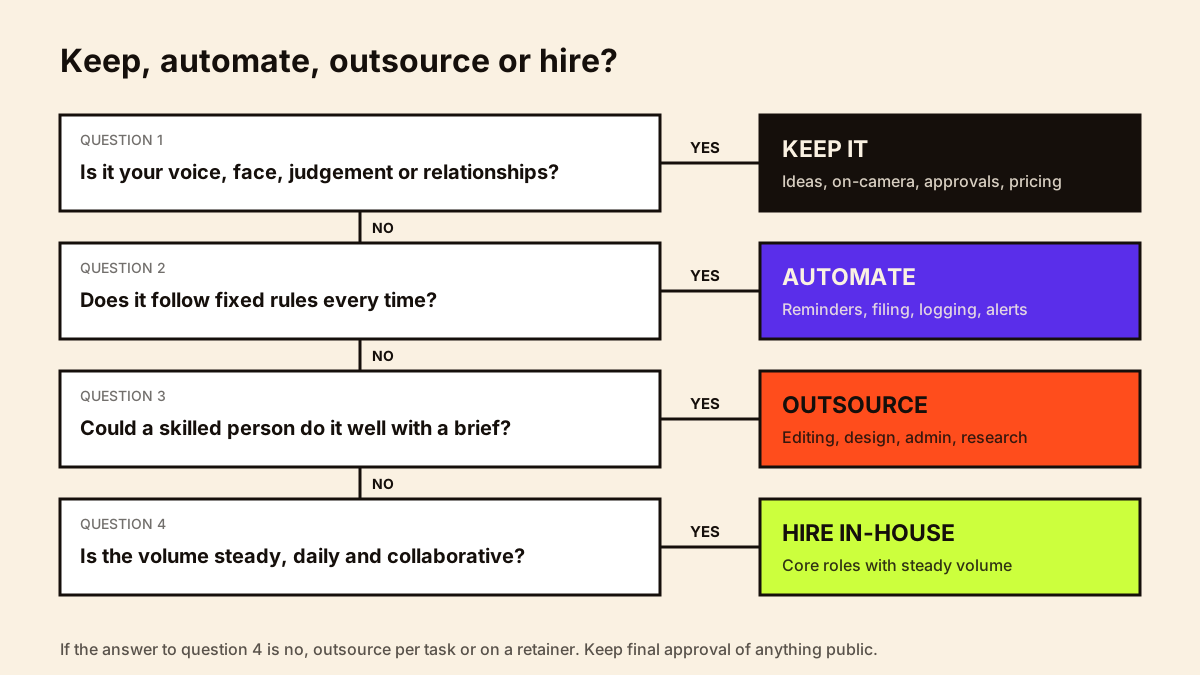
The questions to ask about each task
- Does this task depend on my face, voice, opinions or relationships? If yes, keep it (or keep final approval).
- Does it follow fixed rules every time? If yes, try automating it.
- Could someone skilled do it as well as or better than me with a good brief? If yes, delegate or outsource.
- Is the volume steady enough to fill regular hours each week? If yes, consider hiring.
- What happens if it's done badly? Keep a review step on anything public or contractual.
What creators usually delegate first
| Order | Task | Why it's often first |
|---|---|---|
| 1 | Video editing | Highest hours per piece; skilled editors are widely available |
| 2 | Admin: inbox, scheduling, trackers | Frequent, fragmenting, easy to document |
| 3 | Thumbnails and graphics | Specialist skill; directly affects clicks |
| 4 | Distribution and scheduling | Repetitive once content is approved |
| 5 | Research and first drafts | Saves time on research-heavy formats, with care for voice |
| 6 | Community moderation | Grows with audience; needs clear rules |
| 7 | Bookkeeping and tax filing | Specialist; mistakes are costly |
Your order may differ. A photographer-creator might outsource retouching before anything else; a newsletter writer might start with research. Detailed guides: hiring a video editor, a creator assistant, and a social media manager.
Delegation calculator
Use your own numbers to see whether outsourcing a task pays for itself. Your hourly value is what an hour of your time typically earns when spent on income work such as brand content, products or pitching.
Delegation calculator
Uses only your numbers. It runs in your browser and nothing is saved or sent anywhere.
Track it for a couple of weeks if you're unsure
Typical earnings per hour of income work: brand content, products, pitching
From a real quote, including any tools they need
Usually higher in the first month
Enter your hours, hourly value and a real outsourcing quote to compare.
The value of freed hours only becomes income if you use them for income work. This is a planning aid, not a prediction; amounts are before tax.
Money isn't the only return. Freed hours might go to rest, better content or a new format, which is still a good reason to delegate as long as the cost fits your budget. Check it against your creator business budget.
What should never leave your hands
- Your ideas and point of view.
- Your face and voice on camera, and anything presented as your personal experience.
- Final approval of anything published under your name.
- Sponsored content approvals and disclosure checks.
- Accepting brand terms and pricing (a manager can negotiate, but you decide).
- Ownership of your accounts, passwords and recovery methods.
How to hand work over
- Write a one-page SOP: the trigger, steps, tools, examples of good output and how to hand back.
- Run a paid trial on real work.
- Review everything for the first two weeks, then spot-check.
- Turn repeated feedback into the SOP or style guide.
- Agree terms, ownership and confidentiality in writing.
Keeping your voice when others help make content is covered in how to outsource content creation. Maintaining quality as more people touch each piece is covered in creator content quality control.
Outsourcing by stage
| Stage | Typical approach |
|---|---|
| Early solo creator | Automate basics; outsource occasional edits or thumbnails |
| Full-time solo creator | Regular editor; VA for admin; accountant |
| Small team | Mix of retainers and in-house; content manager coordinates |
| Professional business | In-house core, freelancers for peaks and specialist work |
Common mistakes
- Outsourcing the part of the work audiences actually follow you for.
- Outsourcing a task you've never defined.
- Choosing on price alone and paying for it in revisions.
- Hiring in-house for volume that isn't steady yet.
- No review step on public or sponsored content.
Conclusion
Delegate from the edges inward: automate the rule-based work, outsource the skilled but repeatable work, and keep your voice, judgement and approvals. Start with the task that costs you the most hours for the least creative value, and check the numbers before you commit.