Influencer Marketing for Dental Clinics and Oral-Care Brands in India
How oral-care brands and dental clinics in India can approach creator marketing: the National Dental Commission's October 2026 advisory, what clinics should avoid, product ideas, claims and measurement.
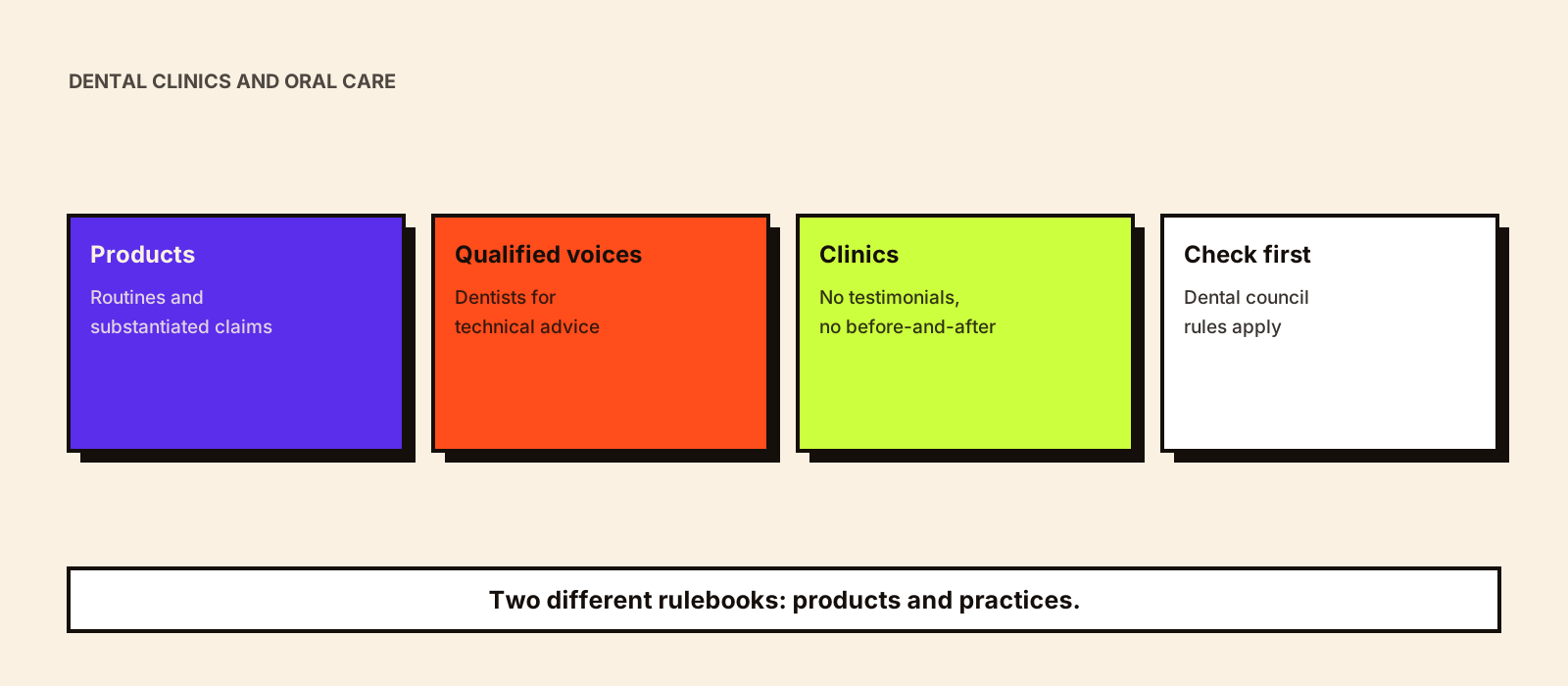
Dental marketing in India has two very different sides. Oral-care brands, from toothpaste and brushes to aligners and whitening kits, can work with creators much like other personal-care brands, provided their claims hold up. Dental clinics and practitioners are bound by professional ethics rules that restrict how they advertise, and in October 2026 the National Dental Commission reminded dentists of those rules, specifically warning against patient testimonials, before-and-after photographs and recorded procedures. Creator campaigns have to be planned around that.
Quick answer
Oral-care product brands can use creators for routines, demonstrations and education from qualified dentists, as long as every claim is substantiated. Dental clinics should be far more careful: India's Revised Dentists (Code of Ethics) Regulations, 2014 govern advertising, patient solicitation and publicity, and a National Dental Commission advisory of 14 October 2026 warned against patient testimonials, before-and-after photos, broadcasting consultations or procedures and misleading treatment claims. For clinics, focus creator content on general oral-health awareness and practical information, avoid patient stories and results, and take advice from the relevant dental council or a lawyer before running any campaign.
Clinics and product brands are not the same
| Oral-care product brands | Dental clinics and practitioners | |
|---|---|---|
| Who is regulated | Advertising rules (ASCI, consumer protection) apply to claims | Dentists are also bound by professional ethics regulations on advertising and solicitation |
| Creator role | Routine, product use, education by qualified dentists | General awareness and practical information only |
| Testimonials and before-and-after | Allowed only where results are typical and substantiated | Warned against in the October 2026 advisory |
| Recorded procedures | Product demonstrations, not procedures | Warned against |
| Main risk | Unsubstantiated claims ('whitens in 3 days', 'dentist recommended') | Professional disciplinary action for the dentist |
What the rules say for dentists
According to Medical Dialogues' report of the advisory, the Ethics and Dental Registration Board of the National Dental Commission issued it on 14 October 2026 to all registered dental practitioners, citing Chapter VI (Unethical Acts), clauses 8.1 to 8.3 of the Revised Dentists (Code of Ethics) Regulations, 2014. Those clauses cover advertising, patient solicitation, confidentiality, publicity and signage. The advisory warned against recording and broadcasting consultations and procedures, publishing patient testimonials and before-and-after photographs, misleading treatment claims, inaccurate health information and self-aggrandising publicity, and said violations may lead to disciplinary action, including suspension or removal from the register.
A creator paid by a clinic to post about it is promoting that clinic, so the same limits should be treated as applying to the content. This is general guidance, not legal advice; dental practices should confirm what is permitted with their state dental council or a lawyer.
Creator ideas for oral-care product brands
| Idea | What to show | Keep accurate |
|---|---|---|
| Real routines | Brushing, flossing or rinsing as part of a normal morning or night | Use as directed on the pack |
| Technique explainers from qualified dentists | How to brush, how long, how to floss, with qualifications stated | General education, not personal diagnosis |
| Family routines | Children brushing with parents, age-appropriate products | Children on camera need parental consent |
| Product demos | How an electric brush, water flosser or aligner kit is used | Only claims the brand can substantiate |
| Habit challenges | A 30-day routine with honest check-ins | No promised results |
| Regional-language education | Oral-health basics in the audience's language | Translate claims carefully |
Claims such as 'whitens in three days', 'dentist recommended' or 'removes 99% of plaque' need evidence the brand holds, such as clinical tests or properly conducted surveys of dentists. Under ASCI's influencer guidelines, creators giving technical health information must be qualified and say so; see who can give health advice. Personal-care creator approaches are covered in influencer marketing for personal care brands.
What dental clinics can reasonably do
- General oral-health awareness by health and family creators: why regular check-ups matter, without naming results.
- Practical information: location, timings, accessibility, how booking works, languages spoken.
- Local community events, such as school dental awareness days, covered by local creators, without filming patients.
- Content about the clinic environment (hygiene, waiting area) without patients in shot and without superlative claims.
- Educational content by the clinic's own dentists only after checking it fits the ethics regulations.
Avoid entirely: patient testimonials, before-and-after photos, filmed treatments, price-led 'offers' that read as solicitation, and any claim of being the best. Similar professional-advertising limits for lawyers are covered in influencer marketing for legal services.
Measuring campaigns
| Business | What to measure |
|---|---|
| Oral-care products | Sales by creator code or link, repeat purchase, saves of technique content |
| Clinics | Appointment enquiries through the clinic's normal booking channel, without asking for health details in creator links or comments |
Patient and booking data is health-related personal data; handle it under India's data protection rules; see influencer marketing and data privacy.
Common mistakes
- Clinics running influencer 'smile makeover' stories with before-and-after photos.
- Filming a treatment for social media.
- 'Dentist recommended' claims without survey evidence.
- Lifestyle creators giving dental advice.
- Collecting health details through contests or comments.
Conclusion
Oral-care brands can work with creators on routines and education, with every claim backed by evidence. Dental clinics should treat creator content as tightly limited: awareness and practical information, no patient stories, no results, and advice from their dental council first. Kudozz plans compliant creator programmes for health and personal-care brands through its campaign strategy service.