Influencer Marketing for Beauty Brands in the UAE: A Campaign Strategy That Converts
How beauty and personal care brands can run creator campaigns in the UAE: product trials that produce honest results, choosing credible creators for each skin and hair concern, tutorials and demonstrations, claims that stay inside cosmetic rules, usage rights and sales tracking.
UAE beauty buyers have seen every kind of sponsored post, from Dubai's largest makeup artists to nano creators reviewing a moisturizer in the car. What still persuades them is evidence: a creator with skin, hair or a routine like theirs, using a product long enough to say something true about it. That makes beauty one of the easiest categories to start in and one of the hardest to stand out in.
Quick answer
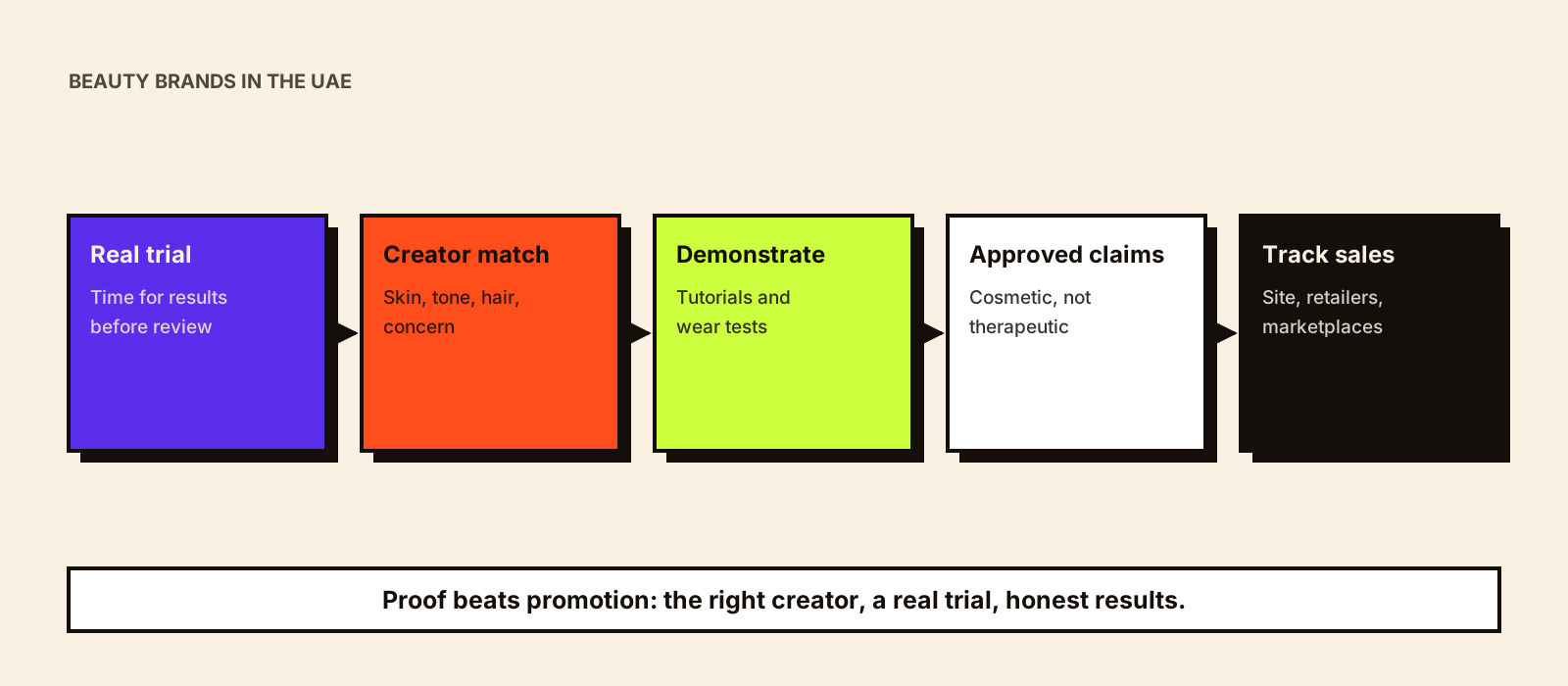
A beauty influencer campaign in the UAE that converts usually combines a genuine product trial, creators whose skin type, tone, hair or concern matches the product, and demonstration formats such as tutorials, wear tests and routines. Keep claims within what the product is registered and substantiated for, because therapeutic claims move a cosmetic into medical territory. Agree usage rights upfront if you'll reuse the content in ads, and track sales separately for your own site, beauty retailers and marketplaces. Every creator needs a UAE advertiser permit, including those paid only in products.
What's different about beauty in the UAE
| Factor | Campaign implication |
|---|---|
| Heat, humidity and long hours in air-conditioning | Wear tests in real conditions (an outdoor afternoon, a humid evening) are more persuasive than studio shots, but don't make performance claims you haven't tested |
| A wide range of skin tones and hair types | One hero creator can't represent the market. Match creators to the shades and concerns each product serves |
| Ingredient and suitability questions | Buyers ask about alcohol-free formulas, halal certification and fragrance. Only state what's certified or substantiated |
| Strong fragrance culture, including oud and bakhoor | Fragrance and home-scent brands can lean on ritual, gifting and occasion content |
| Different norms of presentation | Some audiences respond to modest presentation and hands-only or face-only demonstrations; brief creators to their own audience's norms |
| Arabic, English and South Asian-language audiences | Tutorials work in any language, but the voiceover and on-screen text should match the audience you want |
Running product trials that produce honest content
Beauty campaigns live or die on whether the creator has actually used the product. Build the trial into the timeline rather than shipping products the week before posting.
- Send products with enough lead time for a real trial: a few days for makeup, several weeks for skincare where results take time
- Ask creators to share any reaction or poor result privately first, and decide together whether to proceed
- Don't require a positive verdict. Ask for an honest review within approved claims; audiences spot scripted enthusiasm
- Provide patch-test guidance and the full ingredient list, especially for actives and fragrance
- Seed a larger group of smaller creators without obligation, then pay the ones whose content and audience fit for a second, paid round
Gifting without payment still counts as advertising for permit and disclosure purposes, so the creator needs a permit and must disclose the gift if they post about it. How to run seeding as a program is covered in influencer product seeding.
Choosing creators with beauty credibility
| Creator type | Best for | Check |
|---|---|---|
| Professional makeup artists | Color cosmetics, techniques, bridal and occasion looks | Whether their audience is other artists or consumers |
| Skincare enthusiasts and routine creators | Skincare, sun care, body care | Skin type and concerns they talk about; past reactions they've shared |
| Hair creators | Hair care, styling tools, curly or textured hair ranges | Hair type match; heat and humidity content |
| Fragrance creators | Perfume, oud, home scent | Language and Gulf audience share |
| Licensed doctors and dermatologists | Credibility for clinically tested products | Medical professionals promoting products may fall under health advertising rules; check before contracting |
| Everyday micro creators | Relatability, real-life testing, UGC for ads | Audience location and authenticity of engagement |
Look at how many beauty brands a creator has promoted recently. A creator who recommends a new serum every week has little credibility left to lend you. Audience checks matter more than follower counts; how to run them is in how to vet influencers.
Formats that demonstrate rather than describe
- Tutorials: a full look or routine using the product, step by step, ideally in the creator's language
- Wear tests: makeup or sunscreen through a real day, filmed at the start and end
- Routine integration: where the product sits in an existing routine, and what it replaced
- Shade and texture demonstrations: swatches on several skin tones, under daylight
- Occasion looks: Eid, weddings and evening events, where relevant to the audience
- Honest comparison with what the creator used before, without disparaging named competitors
Before-and-after content needs particular care. If results come from a treatment at a clinic, the Dubai Health Authority's social media standards require the same person, the same lens, unedited photos and a disclaimer that results vary. For cosmetics, avoid filters and editing that change the result being shown.
Claims, registration and approvals
Reviewed 9 October 2026; confirm with the relevant authority. Cosmetics and personal care products sold in the UAE must be registered or notified with the relevant authorities before sale, for example through Dubai Municipality's Montaji system in Dubai. Claims made in advertising should match what's on the registered product and packaging. If a claim suggests the product treats or prevents a condition, such as acne treatment, hair-loss treatment or eczema relief, it may be treated as a medical or pharmaceutical product, where the Emirates Drug Establishment and health advertising approval rules apply.
- Give creators a written list of approved claims and words to avoid, such as 'cures', 'heals', 'permanent' or '100% results'
- Substantiate any 'dermatologist-tested', 'halal', 'vegan', 'organic' or 'alcohol-free' claim before a creator repeats it
- Avoid skin-lightening language and messaging that ranks skin tones; it's a reputational risk as well as a regulatory one
- Review captions and voiceovers in every language used, not only the English version
- Discounts and giveaways may need a promotion permit from the emirate's economic department
Permit, disclosure and sector approval basics are summarized in our UAE influencer marketing guide. If your range includes clinic treatments, aesthetics or products with medical claims, see influencer marketing for healthcare and wellness brands in the UAE.
Usage rights
Beauty brands reuse creator content more than most categories: on product pages, in retailer listings and in paid social. Decide which channels, how long and whether paid amplification through the creator's handle is included before the shoot, and price it separately. Tutorials often keep working for many months, so a 30-day licence can be a false economy. Retailer use matters too: if a retailer wants to run the content, the creator agreement must allow it. The options are compared in influencer usage rights.
Tracking sales across channels
| Where people buy | How to track | Gap |
|---|---|---|
| Your own site | Creator UTM links and unique codes | Buyers who search later |
| Beauty retailers (for example Sephora, Faces or Boots) | Retailer sell-out data by week; retailer-specific codes where allowed | Codes often can't be used; data may be delayed or aggregated |
| Marketplaces such as noon and Amazon.ae | Marketplace sales and search trend during the campaign window | Little creator-level attribution |
| In-store | Store sales for the promoted SKU vs baseline; staff asking 'where did you hear about us?' | Confounded by other activity |
Report tracked sales as the floor, then look at lift across all channels for the promoted products. The method is in how to measure influencer marketing ROI.
An example campaign structure
| Phase | What happens | Measure |
|---|---|---|
| Weeks 1 to 4: seed | Products sent to 30 micro creators across skin types, no obligation | Posting rate, sentiment, which creators' audiences respond |
| Weeks 5 to 8: paid | 8 to 10 paid creators from the seed group plus 2 larger creators; tutorials and wear tests | Clicks, codes, saves, comments asking where to buy |
| Weeks 6 to 12: amplify | Best-performing content run as ads through creator handles | Cost per purchase against other paid channels |
| Ongoing | Top creators move to a quarterly arrangement | Repeat purchases and code use over time |
This is a hypothetical structure, not a Kudozz client result. Numbers will depend on your product, price and distribution. Selling in Saudi Arabia too? Its regulator, language and platform mix differ; see influencer marketing for beauty brands in Saudi Arabia.
For a demonstration brief with a claims sheet and before-and-after rules, see how to brief influencers for skincare product demonstrations in the GCC.
Common mistakes
- Using one creator's skin type to represent a range made for many
- Posting reviews before a skincare product has had time to work
- Letting creators improvise therapeutic claims, especially in Arabic captions no one reviewed
- Forgetting that gifted posts still need a permit and disclosure
- Buying 30-day rights for content you'll want to use for a year
- Judging the campaign on your own site's sales when most product sells through retailers
Conclusion
In UAE beauty, the strongest campaigns look less like advertising and more like proof: the right creator, a real trial, a demonstration the viewer can judge for themselves, and claims the brand can stand behind. Get those right, track across every place the product sells, and the content can keep earning long after the campaign ends.