How to Brief Influencers for Skincare Product Demonstrations in the GCC
A practical brief for skincare demonstrations with creators in the UAE, Saudi Arabia and the GCC: an approved-claims sheet, a demonstration protocol that shows real results, before-and-after and filter rules, skin type and tone, climate and Ramadan context, review steps and a copy-ready brief template.
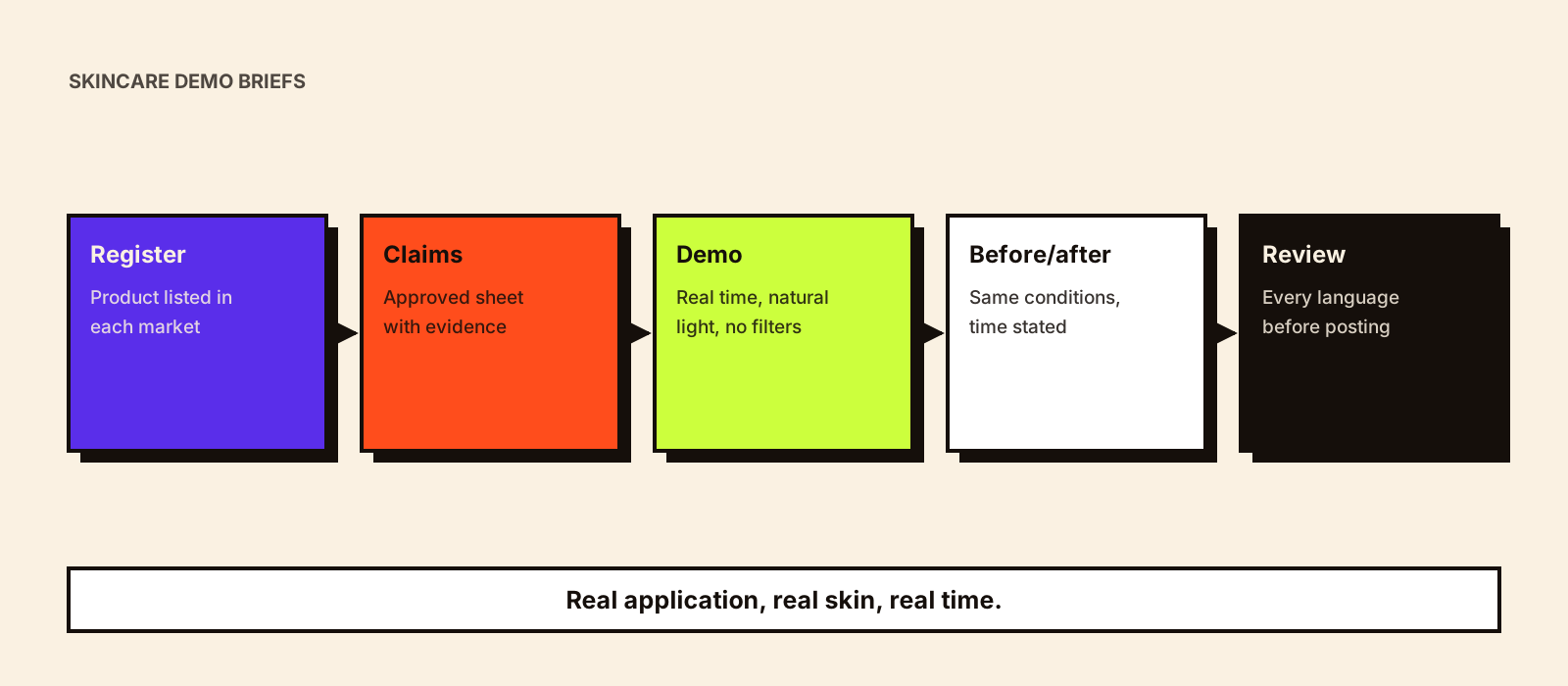
Skincare is sold by demonstration: texture on skin, how it layers, what it looks like after weeks of use. That is also where creator content goes wrong, with exaggerated results, heavy filters and claims the product can't support. This guide is a practical brief for brands and agencies running skincare demonstrations with creators in the UAE, Saudi Arabia and the wider GCC. Market-level strategy is covered in our beauty guides for the UAE and Saudi Arabia; this page is about the brief.
Quick answer
A good skincare demonstration brief gives the creator an approved-claims sheet, a demonstration protocol (patch test, real-time application, natural light, no beautifying filters on the skin), rules for any before-and-after (same conditions, stated time between images, no editing), guidance on describing their own skin type, and a review step for claims in every language before posting. Confirm the product is registered for sale in each market first, and keep medical or therapeutic claims out unless they're approved.
Before you brief: market checks
Reviewed 9 October 2026. Not legal advice. Products must be registered or listed for sale in each market before creators promote them: in Dubai through Dubai Municipality's Montaji system, and in Saudi Arabia with the Saudi Food and Drug Authority (SFDA). In 2025 the UAE Media Council summoned an advertiser and started legal proceedings over a social media promotion with therapeutic claims that lacked health-authority approval. Claims, registration and approvals by market are covered in influencer marketing for beauty brands in the UAE and influencer marketing for beauty brands in Saudi Arabia.
The approved-claims sheet
| Allowed (if substantiated) | Not allowed without approval or evidence |
|---|---|
| 'Hydrates for up to 24 hours (consumer test, n=X)' | 'Cures acne', 'heals eczema', 'treats pigmentation' |
| 'Lightweight, non-greasy texture' | 'Permanent results', '100% effective' |
| 'Fragrance-free', 'dermatologist-tested' (with evidence) | 'Whitening' or language that ranks skin tones |
| 'SPF 50 broad spectrum' (as registered) | 'Stops ageing', medical-sounding claims |
| Ingredient facts: '10% niacinamide' | Comparisons with named competitors |
The demonstration protocol
- Patch test first and say so; recommend viewers do the same
- Apply on camera in real time, in natural or neutral light
- No beautifying or skin-smoothing filters on skin shots; color correction of the whole frame is fine
- Show the amount used and the order in a routine
- Say how long the creator has used the product, and avoid results claims after a single use
- For SPF, show reapplication and how it sits under makeup in Gulf heat
Before-and-after rules
- Same lighting, angle, camera and distance in both images
- State the time between images and how often the product was used
- No retouching, filters or makeup in either image
- Only results that are typical; don't show the best case as the norm
- Avoid before-and-after entirely for claims you can't substantiate, or for anything medical
Skin type, tone and context
- Ask creators to describe their own skin type and concerns, so viewers can relate
- Include a range of skin tones across the campaign; avoid messaging that implies lighter is better
- Heat, humidity and air conditioning affect skin in the Gulf; let creators talk about it
- Ramadan changes routines (fasting, late nights); adjust timing and tone
- Modest-dress creators may show face and hands only; plan demonstrations accordingly
Review before posting
- Check the draft against the claims sheet, including voiceover and on-screen text
- Review Arabic and English captions separately; claims must match
- Confirm disclosure is clear and the creator's licence or permit is current
- Check the before-and-after against the rules above
- Record the approval with the date and version
A general quality-control process, including Arabic and bilingual checks, is in influencer campaign quality control.
A copy-ready brief
PRODUCT: [name, size, market(s) where registered]
OBJECTIVE: [e.g. trial among women 25–40 with oily skin in Riyadh]
KEY MESSAGE: [one sentence]
APPROVED CLAIMS: [list, with evidence reference]
NOT ALLOWED: [medical claims, whitening language, competitor comparisons, ...]
DEMONSTRATION: patch test mentioned; real-time application in natural light; no skin filters; amount and routine shown
USAGE PERIOD BEFORE POSTING: [e.g. 3 weeks, daily]
BEFORE AND AFTER: [allowed / not allowed]; same conditions; time between images stated
YOUR SKIN: describe your skin type and concerns in your own words
LANGUAGE: [Arabic dialect / English]; captions reviewed in each language
DISCLOSURE: [wording and placement]
DELIVERABLES AND DATES: [formats, draft date, posting window]
REVIEW: drafts to [name] by [date]; we check claims, not your style
RIGHTS: [organic only / paid use, duration, territories]
Rules differ by market: in Australia, for example, sunscreens are therapeutic goods and paid creators can't give personal testimonials for them; see beauty and skincare influencer marketing in Australia.
Common mistakes
- Sending product without a claims sheet
- Skin filters that make the result look better than it is
- Before-and-after images taken in different light
- Posting results after two days of use
- Reviewing only the English caption
Conclusion
The best skincare demonstrations are honest: real application, real skin, real time. A brief with an approved-claims sheet, a demonstration protocol and clear before-and-after rules protects the brand and makes the content more convincing. Confirm registration first, review every language, and give creators enough time with the product to say something true.