Influencer Marketing for Sports and Fitness Brands: Complete Campaign Guide
How Indian fitness brands can use creators to build community and demonstrate genuine results, with explicit guardrails against misleading health claims and guaranteed outcomes.
Fitness is a category where audience trust depends heavily on a creator's own credibility and consistency, an audience follows a fitness creator specifically because they believe that person's approach and results are genuine, which makes creator selection and honest content especially important for fitness brands.
Quick answer
Fitness brands in India should work with coaches, athletes and community creators whose audiences trust their consistency, using workout content, product demonstrations, gym partnerships and longer collaborations. Keep health, supplement and results claims accurate and avoid guaranteed outcomes. Measure community growth, trial and repeat purchase rather than one-off reach.
Fitness creators and audience trust
A fitness creator's value to a brand is largely inherited from how much their own audience already trusts their expertise and consistency, which means a mismatch between a creator's established approach and a brand's product can undermine credibility for both.
Product demonstrations
Genuine demonstration content, a creator actually using equipment, a supplement, or an app as part of their real routine, is more persuasive than a one-off sponsored mention disconnected from their usual content.
Workout content
Content integrating a product into an actual workout, rather than a standalone product shot, gives the audience a realistic sense of how it fits into their own routine.
Sports and active lifestyle creators
Beyond dedicated fitness creators, athletes and active-lifestyle creators can extend reach into adjacent audiences, though brand fit and genuine product use should be evaluated the same way as with core fitness creators.
Gym partnerships
For brands relevant to a physical fitness setting, equipment, supplements, apparel, partnering with gyms or fitness studios alongside individual creators can add a layer of real-world credibility, particularly for local or regional campaigns.
Long-term creator collaborations
Fitness results and habits build over time, which makes long-term creator relationships particularly well-suited to this category, a creator genuinely using a product over months tells a more credible story than a single sponsored post ever could.
Community building
Fitness audiences often engage as a community around shared goals, which creates a genuine opportunity for creators to drive engagement beyond passive content consumption, challenges, check-ins, and shared progress content.
UGC opportunities
Encouraging genuine customer-generated content, real people sharing their own fitness journey with a product, can complement creator content with authentic, harder-to-manufacture social proof, covered in more depth in what is UGC marketing.
This article covers gyms, supplements, apparel, and workout-app brands specifically. Sporting goods brands, athletic apparel tied to a specific sport, and sports-adjacent businesses should see influencer marketing for sports brands in India, which covers athlete collaborations and fan-community campaigns not addressed here.
Compliance considerations
Fitness content should never promise guaranteed results, specific weight-loss timelines, or outcomes that vary significantly by individual, and should avoid unsafe fitness advice or unsupported product claims. Any health or performance claim should be accurate and something the brand can genuinely substantiate, with legal or regulatory review sought for anything beyond general product description.
Measuring campaigns
Engagement and community growth are reasonable indicators for brand-building fitness campaigns, while conversion-focused campaigns should use trackable codes or links, with realistic expectations that fitness purchase decisions, like memberships or supplement subscriptions, often involve some consideration time.
Fitness Influencer Selection Framework
- Audience relevance: does the creator's audience genuinely match your target customer's fitness level and goals?
- Content quality: is workout and demonstration content clear, consistent, and well-produced?
- Credibility: does the creator have a genuine, consistent track record in this space, not a one-off pivot into fitness content?
- Brand alignment: does the creator's approach and tone match the brand's actual positioning?
Fitness brands aren't working from a different playbook. Influencer marketing in India and how to build an influencer marketing strategy for the Indian market cover the overall approach, how to find the right Indian influencers for your brand covers sourcing, how influencer campaign management works covers execution, and how to measure influencer marketing ROI for Indian brands covers measurement.
The fitness creators worth working with earn that trust by showing up consistently, results and setbacks both, over a long period, not by making the boldest claims.— Kudozz Strategy Team
Coaches, athletes and community creators
| Creator | Best for | Care points |
|---|---|---|
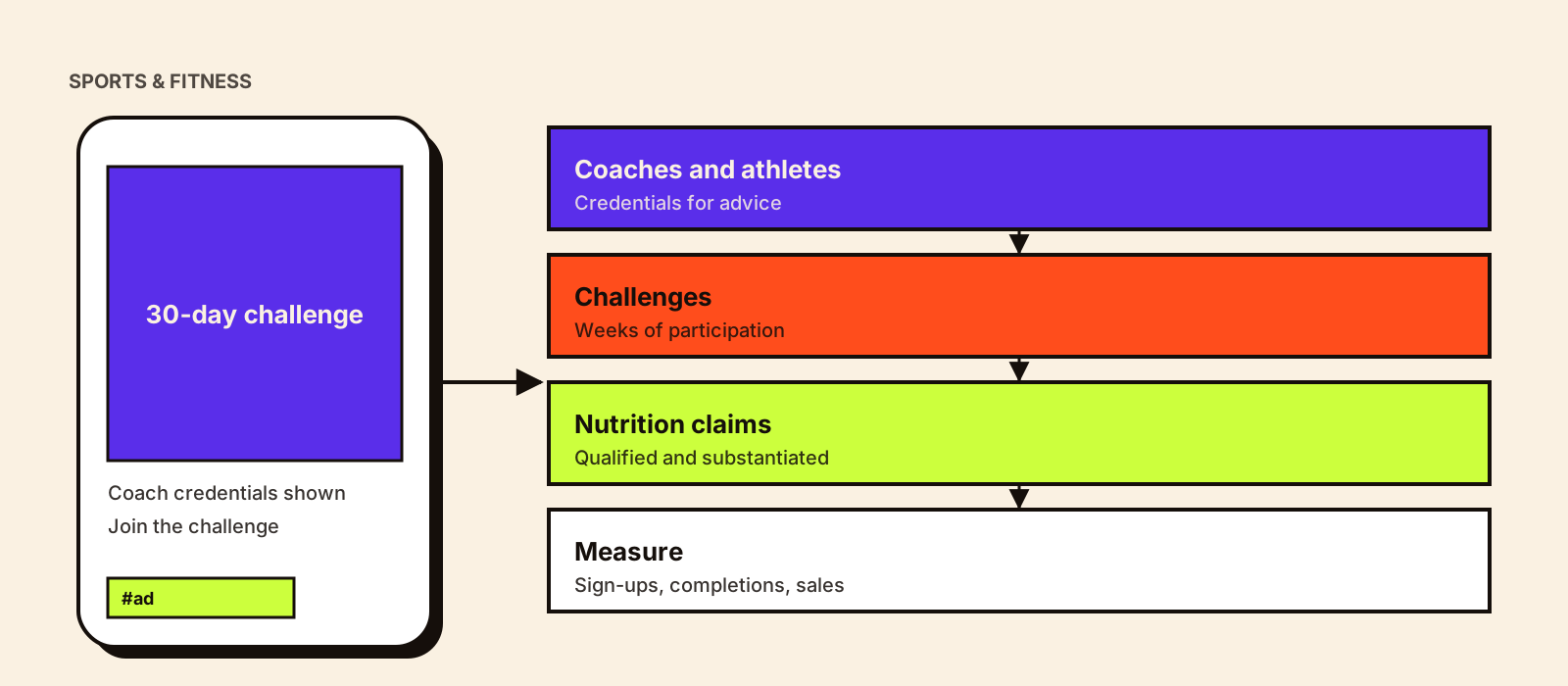
| Certified trainers and coaches | Programs, equipment, apps | Credentials shown for training advice |
| Athletes | Performance gear, sports nutrition | Performance claims backed by evidence |
| Everyday fitness journeys | Beginners' products, wearables, apparel | Realistic progress, no before-and-after exaggeration |
| Yoga and wellness teachers | Mats, apparel, wellness apps | No treatment claims |
| Run clubs and community leaders | Shoes, events, challenges | Community rules and consent |
Supplements and nutrition claims
Nutrition and supplement content carries extra risk. ASCI's guidelines expect influencers giving health and nutrition advice to hold relevant qualifications and state them upfront, and food and supplement claims must be permitted and substantiated under FSSAI rules. Avoid weight-loss or muscle-gain promises and dramatic transformation claims.
Challenges and community events work well for fitness because they turn one post into weeks of participation; track sign-ups, completions and user content. Sports brands and athlete collaborations are covered in influencer marketing for sports brands.
Planning your next campaign
Wearables and fitness apps can also use influencer marketing for mobile apps; always-on community programs are covered in always-on influencer marketing.