Influencer Marketing and SEO: What Creator Partnerships Can and Can't Do for Search
Paid creator links don't help rankings and can break Google's rules. What influencer marketing can do for search: branded search demand, creator videos in results, referral traffic and content for your own pages, with a brief and measurement plan.
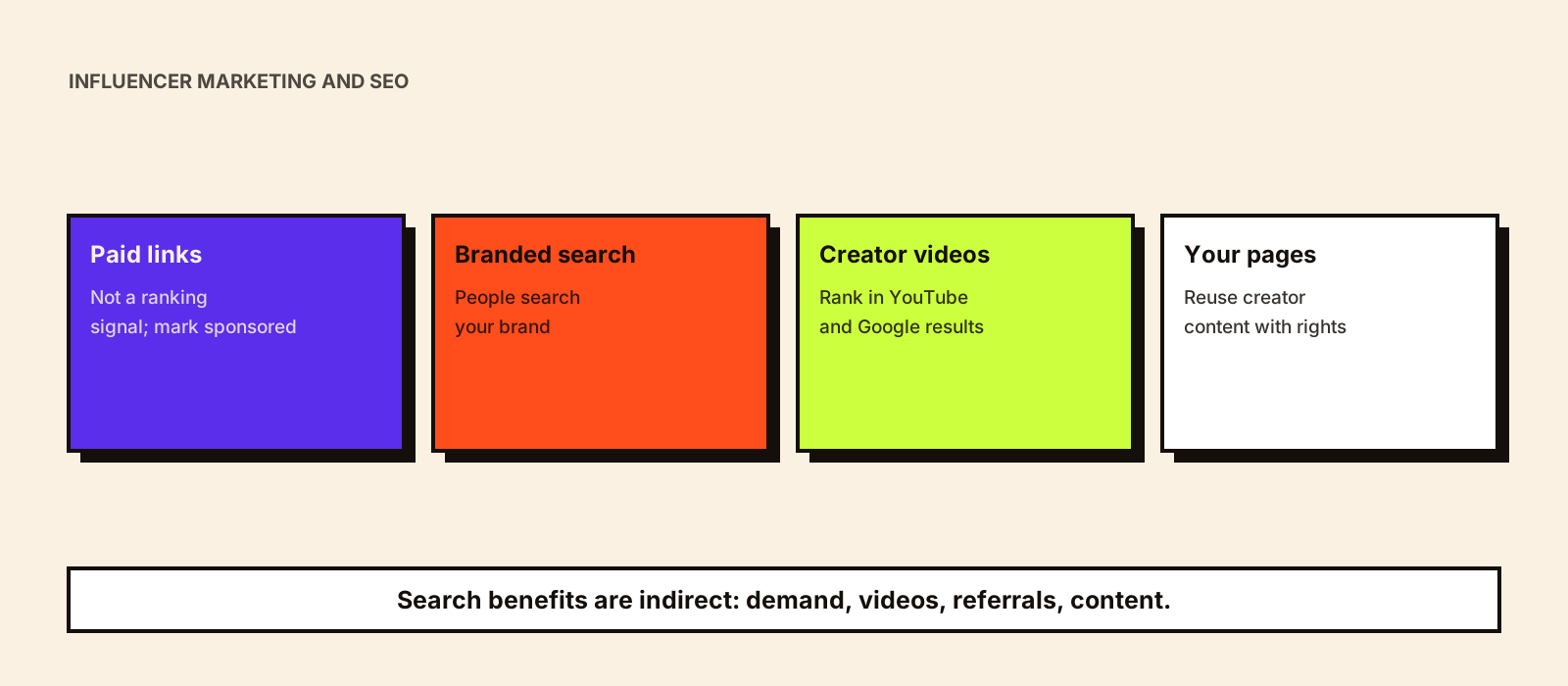
Brands sometimes ask whether influencer marketing helps SEO. It can, but rarely in the way people expect. Paid links from creators aren't meant to pass ranking value, and asking for them breaks Google's rules. The real search benefits are indirect: more people searching for your brand, creator videos that rank in YouTube and Google results, referral visits, and content you can use on your own pages.
Quick answer
Influencer marketing doesn't improve rankings through links: Google treats paid links, and links given in exchange for free products, as link spam unless they're marked rel="sponsored" or rel="nofollow". What creator partnerships can do is grow branded search demand, put creator videos about your product into YouTube and Google results, send referral traffic, and supply content and reviews for your product pages. Brief creators so their content is findable, measure branded search and referral traffic, and never pay for followed links.
What Google says about links from creators
Google defines link spam as links created mainly to manipulate rankings, and lists exchanging money for links, or posts that contain links, as an example. It also gives the example of sending someone a product in exchange for them writing about it and including a link. For outbound links, it asks sites to mark paid placements with rel="sponsored", and says nofollow is still acceptable. Sources: Google's spam policies (updated August 2026) and Google's guidance on qualifying outbound links.
- Don't pay for followed (dofollow) links on creator blogs or websites, or ask creators to remove a sponsored or nofollow attribute.
- Don't specify keyword-rich anchor text for links in paid posts.
- Do expect sponsored links in creator blogs and newsletters to carry rel="sponsored" or rel="nofollow".
- Links on Instagram, YouTube and other social platforms generally don't pass ranking value anyway; their value is the visit and the awareness.
Direct vs indirect: what creators can really do for search
| Effect | Direct ranking factor? | How it helps | How to see it |
|---|---|---|---|
| Paid links from creator sites | No (and risky if followed) | None for rankings; possible referral visits | Referral traffic in analytics |
| More people searching for your brand | Not a link signal; it's demand | People who see creators search your brand or product name, and those searches convert well | Branded query impressions and clicks in Search Console |
| Creator videos ranking for product searches | The video ranks, not your site | Your product appears in YouTube results and video results on Google for review and comparison searches | Creator's YouTube analytics (search traffic); manual searches |
| Social search | Not Google | Instagram and YouTube search surface creator posts for category terms | Creator insights; platform search |
| Earned coverage and natural links | Can help, when editorial and unpaid | Journalists and bloggers who discover the brand through creators may cover it | New referring domains you didn't pay for |
| Content for your own pages | Indirect | Creator reviews and videos on product pages can make pages more useful | Engagement and conversion on those pages |
How to brief creators so their content is findable
- Ask creators to use your exact brand and product names in the title, caption and spoken audio, so people searching later find the content.
- For YouTube reviews and comparisons, agree a title and description that describe what the video covers, and consider chapters, because YouTube's search uses signals such as the title, description and video content.
- Leave the creator's voice alone. A natural title that matches how people search beats a keyword-stuffed one.
- Get usage rights to embed or reuse the video on your product or comparison pages if you plan to.
- Keep the disclosure label; findability never replaces disclosure.
YouTube explains its ranking signals in its help page on how search works.
Measuring the search impact
| Metric | Where | What to compare |
|---|---|---|
| Branded search impressions and clicks | Google Search Console, filtered to queries containing your brand | Campaign weeks vs the weeks before, and campaign cities vs others if you can segment |
| Searches for the product name | Search Console; marketplace search reports | Before and after creator content goes live |
| Referral sessions from creator links | Analytics, using tagged links | Engagement and conversions, not just volume |
| Creator video search traffic | Creator's YouTube analytics (ask for screenshots) | Views from search over 30-90 days |
| Unpaid new links and mentions | Backlink tools, media monitoring | Mentions you didn't pay for after the campaign |
Branded search is often the clearest sign that creator content reached people, which is why it appears in influencer marketing for brand awareness. Creator content and AI shopping assistants are covered in creator reviews and AI shopping assistants.
Using creator content on your own site
Creator videos and reviews can make product, comparison and FAQ pages more useful, as long as you have the rights and label sponsored content. The practical checklist is in UGC content for e-commerce, and rights in influencer usage rights.
Common mistakes
- Buying 'guest posts' on creator blogs for followed links.
- Judging an influencer campaign on domain authority instead of demand and sales.
- Asking creators to stuff keywords into captions, which hurts the content.
- Forgetting to reuse strong creator videos on your own pages.
- Not checking branded search in Search Console before and after a campaign.
Conclusion
Treat SEO as a side benefit of good influencer marketing, not a reason to buy links. Brief for findability, mark any website links as sponsored, measure branded search and referral traffic, and reuse the best creator content on your own pages. If you're planning a campaign with search in mind, Kudozz can build it into the brief through its campaign strategy service.