Influencer Marketing for Brands That Sell to Small Businesses and Shop Owners
How brands selling apps, devices, supplies or services to shop owners and small businesses can use creators: who owners trust, campaign ideas, careful claims and measuring activated businesses.
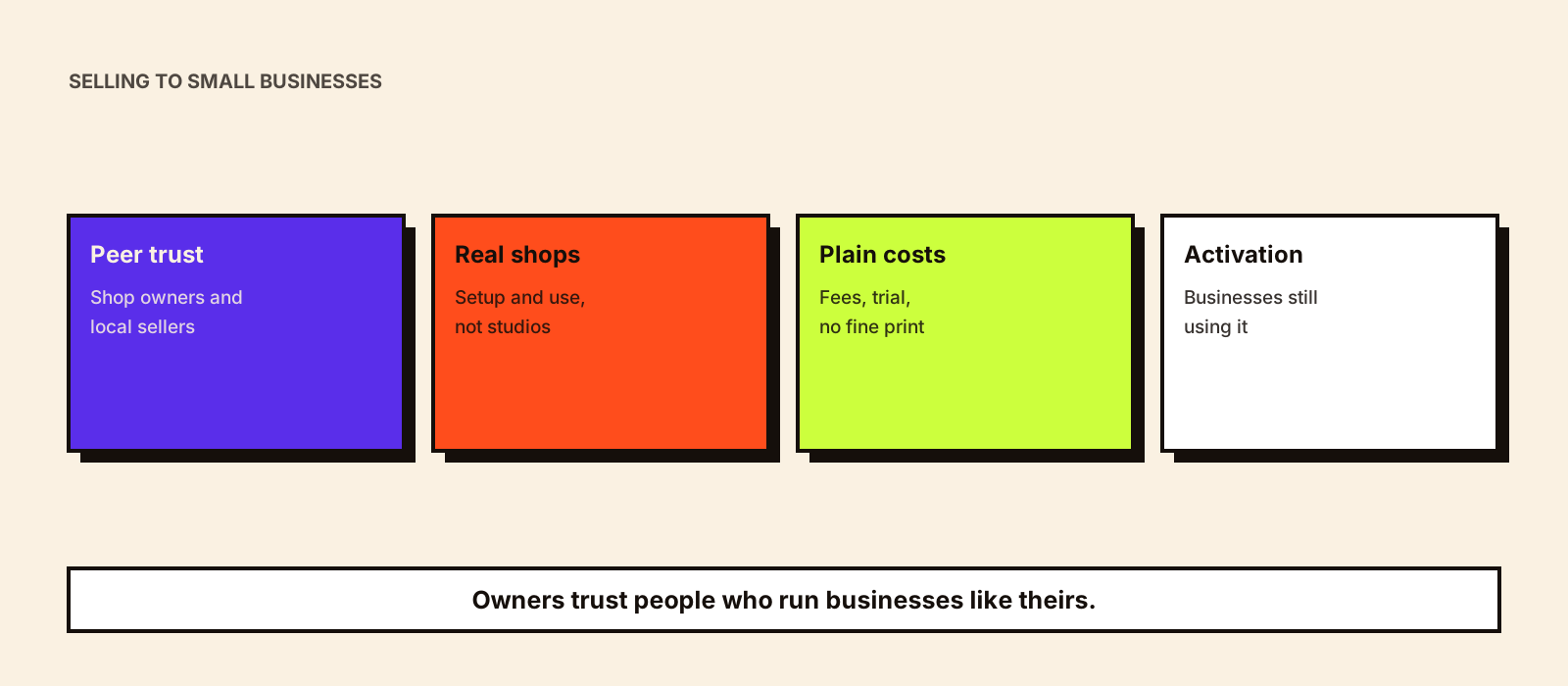
Some brands' customers aren't consumers but small businesses: shop owners, restaurants, salons, clinics, tutors and home-based sellers. They buy point-of-sale apps, payment devices, inventory software, packaging, wholesale supplies and business loans. They rarely read B2B whitepapers or follow LinkedIn thought leaders. They do watch YouTube and short videos, often in their own language, from people who run businesses like theirs.
Quick answer
Brands that sell to small businesses and shop owners in India should work with creators who are trusted by business owners: small-business educators, chartered accountants, trade and shop-owner creators, regional business channels and successful local sellers. Show the product being used in a real shop or business, explain costs and setup plainly, offer a free trial or demo, and measure sign-ups, activations and retained businesses rather than views. Keep claims about earnings, savings, loans and compliance accurate and within what regulated products allow.
How small business buyers decide
| Trait | What it means for creator content |
|---|---|
| The owner decides, often alone | Speak to the owner's problems: time, cash flow, staff, customers |
| Little time for research | Short, practical videos that show the product working |
| Trust in peers | Other shop owners and local business creators are more credible than brands |
| Language and region matter | Regional-language content often reaches more owners |
| Cost sensitivity | Clear pricing, no hidden fees, and a free trial lower the risk |
| Setup worries | Show how long setup takes and who helps if something goes wrong |
Creator types
| Creator type | Best for | Watch for |
|---|---|---|
| Small-business educators | How-to content on running a shop or service | Income or growth promises |
| Chartered accountants and tax creators | Billing, GST invoicing, bookkeeping tools | Keep compliance explanations general; no firm-specific advice |
| Shop owners and local sellers | Real use in their own business | Paid relationship must be disclosed |
| Regional business channels | Owners in Tier 2 and Tier 3 towns | Check audience is owners, not job seekers |
| Trade and industry creators | Restaurant, salon, pharmacy or kirana-specific tools | Category-specific claims |
10 campaign ideas
- A day in a real shop using the product, from opening to closing.
- Setup in one take: from download or unboxing to the first sale or invoice.
- Owner-to-owner interviews: a creator visits two or three businesses using the product.
- 'What it costs': pricing, fees and what's included, explained without fine print.
- Problem-specific explainers: managing credit customers, stock, staff attendance or online orders.
- Regional-language series for specific trades, such as pharmacies or restaurants.
- Free-trial challenge: the creator uses the product for a set period in a real business and reports back honestly.
- Live Q&A with a creator and a product specialist, answering owners' questions.
- Festival-season preparation: billing, stock and payments before Diwali or wedding season.
- Switching guide: moving from a notebook or another tool, step by step.
For products sold through distributors or field sales teams, plan creator content around where the sales team is active; see influencer marketing for brands sold through distributors and retailers.
Claims to handle carefully
- Earnings or growth: 'double your sales' or 'earn more' claims need evidence and usually shouldn't be made.
- Savings and fees: state actual fees and conditions.
- Loans and credit: lending and payment products are regulated; rates, eligibility and terms must match what the lender offers.
- Compliance: GST, invoicing and tax explanations should be general and current, ideally from qualified professionals.
- Testimonials: shop owners featured must use the product and consent to appear.
Financial product rules are covered in influencer marketing for fintech brands, and working with qualified professionals in expert creator marketing.
Measuring results
| Stage | What to measure |
|---|---|
| Interest | Demo requests, trial sign-ups by creator link or code |
| Activation | Businesses that complete setup or make a first transaction |
| Retention | Businesses still active after 30, 60 or 90 days |
| Value | Revenue per business acquired through each creator |
Small-business products often have a gap between sign-up and real use, so judge creators on activated and retained businesses. Tracking leads from creators to sales is covered in influencer marketing for lead generation.
Common mistakes
- Using consumer lifestyle creators for a business product.
- Polished studio content instead of real shops.
- Only English content for a regional audience.
- Earnings promises in creator content.
- Counting downloads instead of businesses that actually use the product.
Conclusion
Small-business owners trust people who run businesses like theirs. Work with educators, accountants and real shop owners, show the product in real businesses, be plain about cost and setup, and measure activated, retained businesses. Kudozz plans regional creator programmes for products sold to small businesses through its regional influencer marketing service.