Influencer Marketing for Travel Brands: How to Build Creator-Led Destination Campaigns
How Indian travel and tourism brands can use creators for destination discovery and authentic storytelling, with honest disclosure so sponsored trips aren't mistaken for independent editorial reviews.
Travel is a category built on aspiration and trust in advance of an experience the buyer hasn't had yet, which makes creator content, someone else's real trip, genuinely persuasive in a way brand-produced destination marketing often isn't.
Quick answer
Travel and tourism brands in India should use creators to show real trips: destination stories, itineraries and experience content that help people picture the journey before they book. Match creators to the traveller you want, plan around travel seasons, disclose sponsored trips clearly so they aren't read as independent reviews, and measure enquiries and bookings.
Who uses influencer marketing in the tourism industry
| Organisation | Usual goal | Creator approach | What to measure |
|---|---|---|---|
| State and city tourism boards | Put a destination on travellers' lists; spread visits beyond peak season | Familiarisation trips, regional-language creators from source markets, itinerary series | Reach in source markets, saves, website and enquiry traffic, seasonal visitor data |
| Hotels and resorts | Direct bookings and higher occupancy in shoulder seasons | Hosted stays with room, food and experience content | Direct-booking codes or links, enquiry calls, booking-engine sessions |
| Tour operators and travel agents | Enquiries for packages | Itinerary and 'what it costs' content (with dated prices), group trips | Leads, quote requests, bookings by source |
| Online travel platforms | App installs and bookings | Deal-led short-form content, many creators at once | Installs, bookings, cost per acquisition |
| Airlines and rail | Route awareness and launches | Route-launch and journey content | Searches and bookings for the route |
| Attractions, adventure and experiences | Ticket sales, weekend footfall | Local and family creators, activity demos | Ticket codes, footfall, reviews |
Hosted trips and stays are a material connection, so creators must disclose them even when no fee is paid; this is covered further down in disclosure for sponsored travel experiences. For hotel-specific campaigns, see influencer marketing for hospitality brands.
Destination discovery
Creator content introduces destinations, routes, and experiences to audiences who weren't actively planning that specific trip, functioning as a genuine discovery layer for travel decisions made well in advance of booking.
Travel storytelling
Narrative, day-in-the-life-style content tends to outperform a simple highlight reel for travel, since it gives a viewer a realistic sense of the experience, including its logistics and pace, not just its most photogenic moments.
Destination-focused content
For destination marketers specifically, content should showcase a range of experiences within a location, not just one iconic shot, to represent the actual breadth of what a visitor could do there.
Experience marketing
For experience providers, tours, activities, adventure operators, content demonstrating the actual experience, including genuine reactions, builds more confidence than promotional copy alone.
Museums, galleries and visitor attractions have their own planning needs, from exhibition previews to filming rules; see influencer marketing for museums, galleries and visitor attractions.
Itinerary content for tour operators
For travel agencies and tour operators specifically, content built around a full itinerary, day-by-day pacing, what's included, realistic time budgeted for each stop, helps a prospective traveler evaluate a packaged trip in a way a single scenic clip can't, since the actual structure of the trip is often the deciding factor between operators offering similar destinations.
Short-form versus long-form travel content
Short-form content tends to drive initial destination discovery, a striking clip that makes someone consider a place they hadn't thought about, while long-form content, a full day's vlog, a detailed itinerary walkthrough, better serves someone already close to booking and trying to understand exactly what a trip or package involves.
Travel creator selection
Beyond general audience-fit criteria covered in how to find the right Indian influencers for your brand, evaluate a travel creator's content style, whether it's aspirational, budget-conscious, luxury-focused, adventure-oriented, against your specific destination or experience's actual positioning.
Authentic travel content
Genuine, specific detail, actual costs, actual logistics, actual downsides where relevant, builds more trust than uniformly polished promotional content, particularly for an audience planning real trips of their own.
Campaign planning
Plan around genuine travel booking windows and, where relevant, the specific season a destination or experience is actually best suited to, rather than a fixed marketing calendar disconnected from real travel patterns.
Seasonal travel campaigns
Timing content to align with when an audience is actually planning trips for a given season, well ahead of the season itself, tends to perform better than content published during or after the relevant travel window.
Regional tourism
For destinations targeting a specific regional audience within India, regional-language creators can meaningfully extend reach beyond a purely English-language travel content audience, covered in regional and vernacular influencer marketing in India.
Measuring campaign impact
Awareness and consideration metrics, reach, saves, and engagement, are reasonable indicators for destination marketing, while businesses with a direct booking path should track clicks and bookings through trackable links, accounting for the often longer consideration window travel decisions involve. See influencer marketing for hospitality brands in India for how this plays out specifically for hotels and stays.
Travel Influencer Campaign Framework
| Business type | Typical content focus | Primary goal |
|---|---|---|
| Destination marketing | Range of experiences, storytelling | Awareness and consideration |
| Hotels | Stay experience, amenities, location | Booking consideration |
| Travel services (booking platforms, agencies) | Ease of use, planning experience | App or platform trial |
| Experience providers | Genuine activity demonstration | Booking or inquiry |
An 8-Step Travel Campaign Process
- 1. Destination or experience objective: define whether the goal is destination awareness, a specific package, or a tour operator's booking volume
- 2. Target traveler profile: identify budget range, travel style, and whether the audience is planning independently or through an operator
- 3. Creator selection: match creators to the destination or experience's actual positioning, budget-conscious, luxury, adventure, family
- 4. Travel experience coordination: plan logistics, timing, and access with the creator well ahead of the trip itself
- 5. Content planning: agree on specific angles: itinerary breakdowns, day-in-the-life content, or destination highlights
- 6. Publishing: time content to when the target audience is realistically planning trips for that season
- 7. Amplification: extend reach through resharing, paid boosting of top-performing content, or coordination with destination-level campaigns
- 8. Campaign measurement: track engagement and, where a direct booking path exists, trackable links or inquiries
Disclosure for sponsored travel experiences
A sponsored or hosted trip is a paid or gifted collaboration and should be disclosed as such, consistent with ASCI guidelines, rather than presented as an independent editorial review. This distinction matters both for compliance and for maintaining audience trust in the creator's content long-term.
Travel brands work from the same base as any other category. See influencer marketing in India and how to build an influencer marketing strategy for the Indian market for the overall approach, and how influencer campaign management works and how to measure influencer marketing ROI for Indian brands for how execution and measurement actually happen.
The travel content that actually drives a booking usually answers a practical question the viewer already had, not the most cinematic shot in the reel.— Kudozz Strategy Team
For tourism boards and destinations
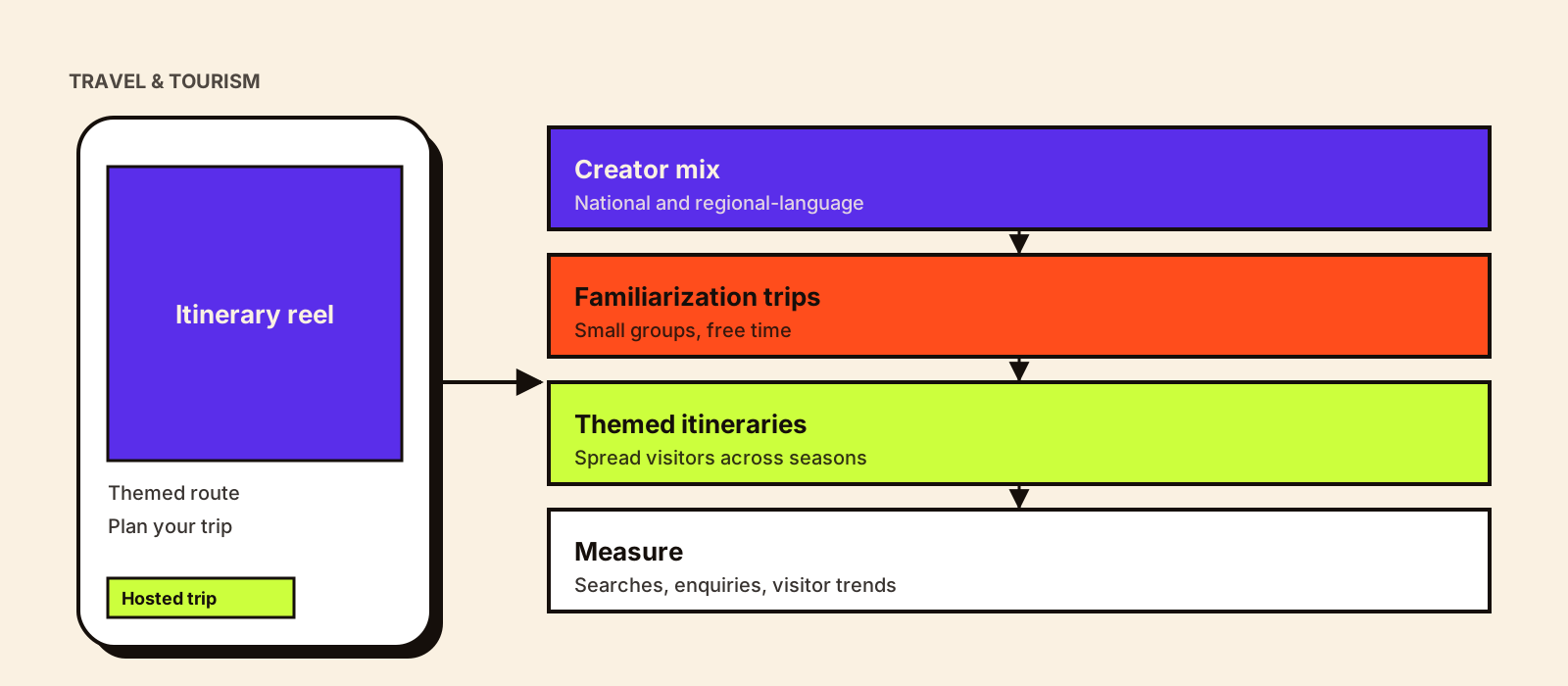
Destination marketing organizations and state tourism departments have different goals from travel companies: awareness of a destination, longer stays, off-season visits and spreading tourism beyond the best-known spots. They also often buy through formal procurement, so plan for documentation, clear deliverables and reporting that fits public accountability.
| Campaign element | Destination approach |
|---|---|
| Creator mix | National travel creators for reach; regional-language creators for domestic source markets |
| Familiarization trips | Small groups with enough unscheduled time for authentic content |
| Itineraries | Themed routes (food, heritage, adventure, wellness) that spread visitors |
| Languages | Content in the languages of the markets you want visitors from |
| Local partners | Homestays, guides and artisans featured fairly and with consent |
| Measurement | Searches, enquiries, bookings data from partners, seasonal visitor trends |
Multilingual campaigns are covered in how to run a pan-India influencer marketing campaign, and hotel-specific collaborations in influencer marketing for hospitality brands.
Planning your next campaign
Restaurants at destinations are covered in influencer marketing for restaurants and cafes.