Influencers and Retail Media in the GCC: How to Coordinate Campaigns
How brands selling through marketplaces, grocers and delivery apps in the UAE, Saudi Arabia and the GCC can coordinate creator campaigns with retail media: what retail media is, the roles each channel plays, sequencing, using creator content in retail ads, shared measurement and the budget conversation.
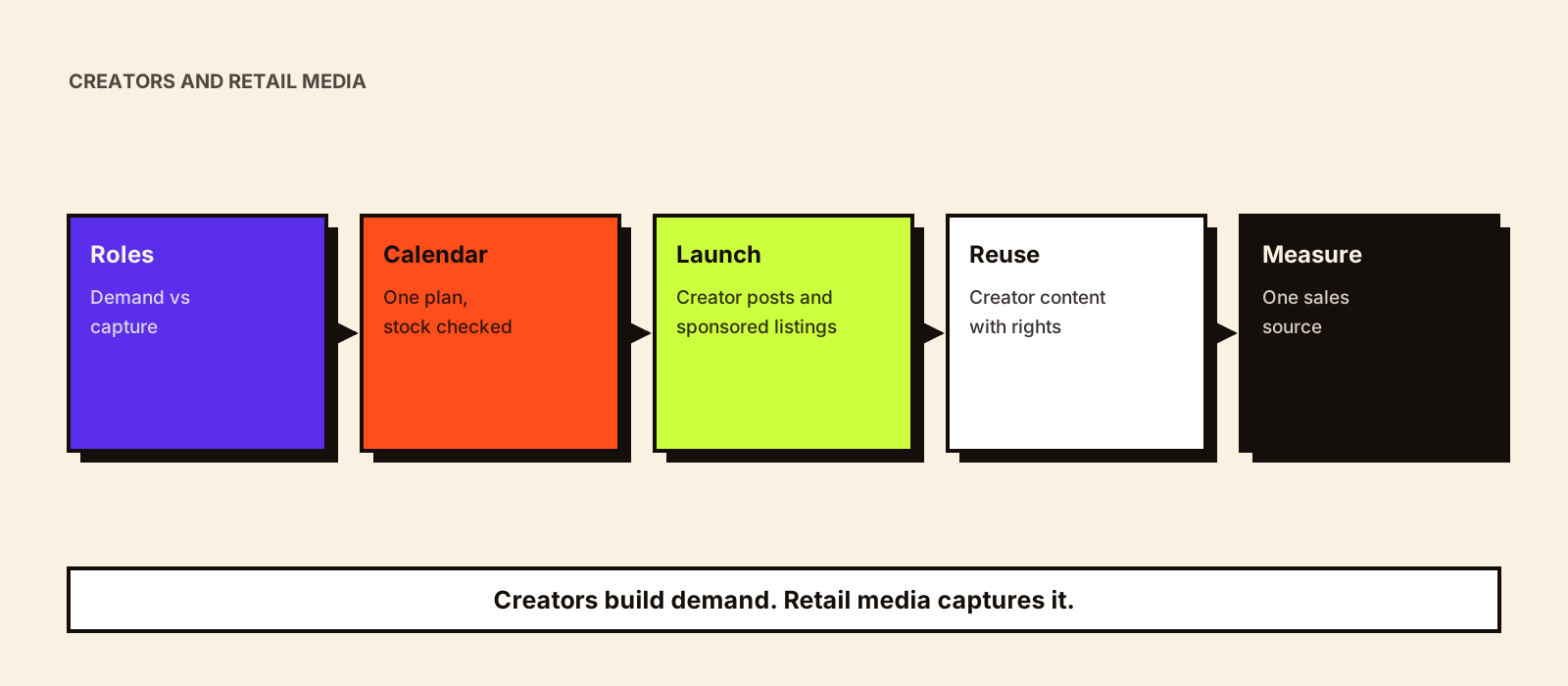
Retail media is advertising sold by retailers on their own sites, apps and stores: sponsored product listings on a marketplace, banners in a grocery app, screens in a hypermarket. In the Gulf, brands increasingly buy it from marketplaces, grocers and delivery apps. Creator campaigns and retail media often sit with different teams and budgets, yet they serve the same shopper. This guide is for brand, e-commerce and trade marketing teams who want the two to work together.
Quick answer
Coordinate influencers and retail media by giving each a role: creators build demand and explain the product, retail media captures that demand where people buy. Plan both on one calendar so retail ads and stock are live when creators post, send creator traffic to the retailer where the product is promoted, reuse approved creator content in retail ads where rights allow, and measure both against the same sales data rather than each channel's own reporting.
What retail media looks like in the GCC
Checked 9 October 2026. Retail media in the region includes sponsored listings and display ads on marketplaces such as Amazon's UAE and Saudi stores and noon, sponsored placements in grocery and food delivery apps, and in-store media in hypermarkets. Majid Al Futtaim, which operates Carrefour in much of the region, runs a retail media business called Precision Media and announced in May 2025 an in-store audience measurement rollout in Carrefour hypermarkets. Ad products change often, so confirm current formats and targeting with each retailer.
Roles for each channel
| Creators | Retail media | |
|---|---|---|
| Job | Create demand, explain, persuade | Capture demand at the shelf or search |
| Audience | Followers and lookalikes | Shoppers already on the retailer's platform |
| Strength | Trust, demonstration, new audiences | Proximity to purchase, closed-loop sales data |
| Weakness | Distance from the purchase | Mostly reaches people already shopping |
| Typical owner | Brand or social team | E-commerce or trade marketing team |
Sequencing a joint campaign
| When | Creators | Retail media |
|---|---|---|
| Before | Teasers and education | Check stock and listings; prepare product pages with creator content |
| Launch week | Main creator posts with links to the retailer | Sponsored listings and search ads on product and category terms |
| Following weeks | Follow-up posts, reviews | Retarget visitors from creator links where the retailer allows |
| Peak moments (Ramadan, sales events) | Seasonal content | Heavier retail media around the same dates |
Using creator content in retail media
- Agree usage rights that cover retailer platforms, formats and duration before the shoot
- Ask creators for vertical and square cuts, and stills, for marketplace product pages and banners
- Check each retailer's creative rules; some limit people, text or claims in ads
- Keep claims identical to what's approved for the product listing
- Credit the creator only where the retailer and contract allow
Rights clauses are covered in influencer usage rights.
Shared measurement
| Question | How to answer it |
|---|---|
| Did creators drive retailer sales? | Tracked links to the retailer (where attribution is offered), sales vs baseline in launch weeks |
| Did retail media perform better during creator activity? | Compare retail media conversion rates with and without creator activity |
| Did both together grow the brand? | Branded search on the retailer, new-to-brand customers where the retailer reports them |
| Where should the next dirham or riyal go? | Cost per incremental sale for each channel, using the same sales source |
Avoid adding each channel's own attributed sales together; they will count some of the same orders. Agree one source of truth for sales, usually the retailer's sales report or your own sell-out data. Store-based measurement is in retail influencer marketing in the GCC.
The budget conversation
- Retail media budgets often come from trade spend and sit with sales or e-commerce teams; creator budgets sit with marketing
- Plan both in one campaign brief so neither runs without the other at peak moments
- Fund retail media for creator launches, so demand created by creators isn't captured by competitors bidding on the category
- Review the split after each campaign using cost per incremental sale
Category specifics are in FMCG influencer marketing in the UAE and Saudi Arabia and influencer marketing for e-commerce brands in the UAE.
Common mistakes
- Creators sending traffic to a retailer where the product is out of stock
- Retail media paused during the creator launch week
- Creator content reused in retail ads without the rights
- Adding both channels' attributed sales together
- Separate teams planning separate calendars
Conclusion
Creators create demand; retail media helps capture it where people buy. In the GCC, where marketplaces, grocers and delivery apps sell more media every year, the brands that plan both together, on one calendar and one sales source, get more from each.