Influencer Marketing for Toy and Family Entertainment Brands
Toy and family brands reach children and parents at once, which is why creator campaigns need extra care. What India's advertising rules say about minors, who to work with, content that respects children and how to measure.
Toy and family entertainment brands have two audiences: children, who notice what's fun, and parents, who decide what to buy. Creator content can reach both, which is exactly why it needs more care than most categories. What's acceptable in an ad for adults can be unfair or unsafe when children are watching.
Quick answer
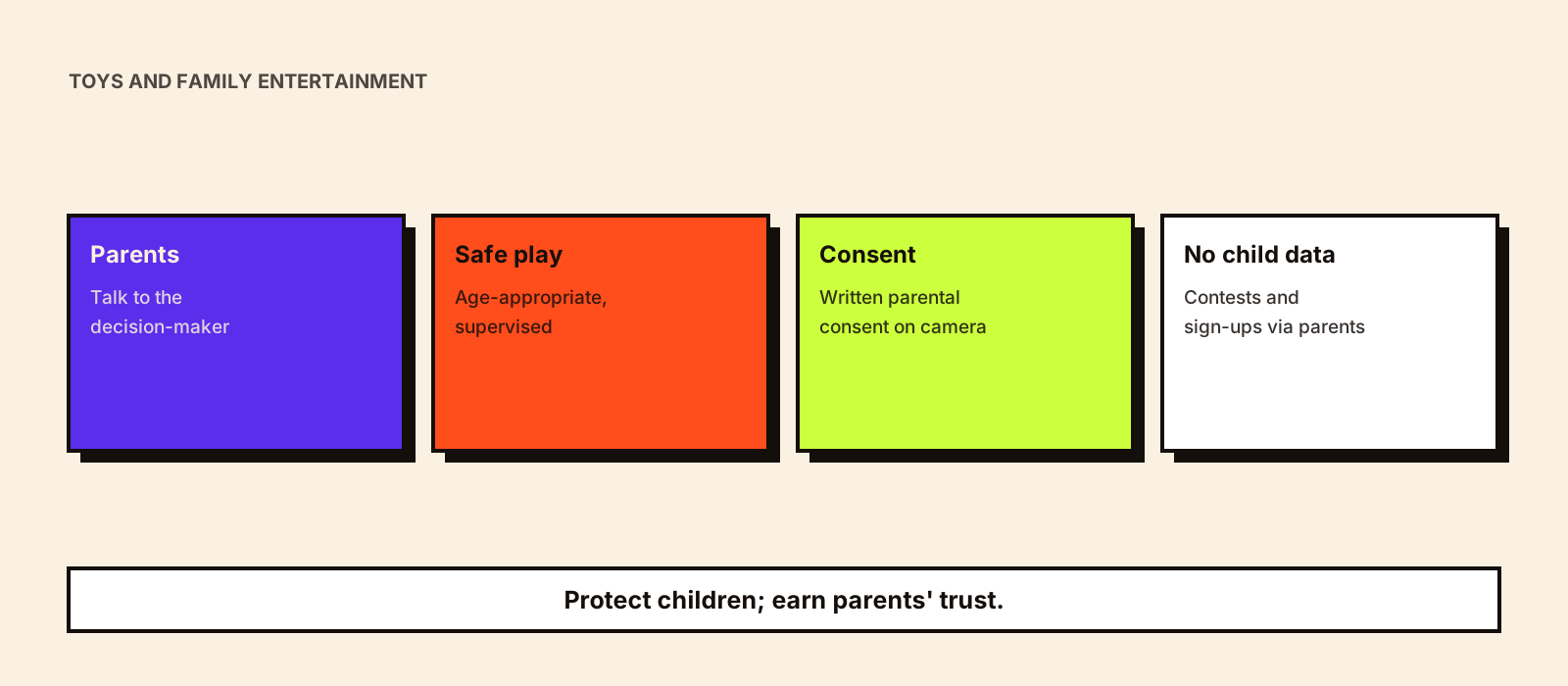
Influencer marketing for toy, game and family entertainment brands should talk to parents, show safe and age-appropriate play, and never pressure children. In India, the ASCI Code says advertisements addressed to minors must not contain anything that might cause them physical, mental or moral harm or that exploits their vulnerability. Work with parent and family creators rather than building child audiences, get parents' written consent for any child on camera, disclose every paid or gifted post clearly, follow age labels and safety guidance, and avoid collecting children's data.
What the rules say
The ASCI Code provides that advertisements addressed to minors shall not contain anything, in illustration or otherwise, which might result in their physical, mental or moral harm or which exploits their vulnerability. For television, the advertising code under the Cable Television Networks (Regulation) Act, 1995 bars ads that endanger children's safety or create an interest in unhealthy practices. Both were set out in the government's December 2019 reply to Lok Sabha Starred Question 261, published by ASCI. ASCI's influencer guidelines on disclosure apply as for any other category, and India's Digital Personal Data Protection Act, 2023 restricts processing children's personal data.
This is general guidance, not legal advice; for food or snacks aimed at children, ASCI's separate food and beverage guidelines also apply.
Who to work with
| Creator type | Fits | Watch for |
|---|---|---|
| Parenting and family creators | Play ideas, gifts, learning toys, family outings | Children on camera only with written parental consent; child-led, short sessions |
| Educators and child-development professionals | Learning toys and age suitability | Qualifications stated; no developmental promises |
| Hobby creators (board games, puzzles, model kits, collectibles) | Older children, teens and adult fans | Age labels and small-parts warnings shown |
| Family entertainment and venue creators | Play zones, parks, shows and events | Safety rules and supervision visible |
Content that respects children and parents
- Show the toy being used safely and as intended, at the right age, with adult supervision where the pack says so.
- Speak to parents: what the child learns, how long it lasts, how it fits a budget, what's in the box.
- Avoid urgency aimed at children ('ask your parents now', 'everyone has one').
- Be accurate about what the toy does; don't use edits that make it look bigger, faster or more capable than it is.
- Keep unboxing content honest about assembly time, batteries and parts.
Children on camera
When children appear in creator content, parents decide, never as a condition of the deal. Keep identifying details out of shot, keep sessions short and child-led, and don't script young children. These and the data rules are set out in more detail in influencer marketing for baby and parenting brands.
Measuring family campaigns
- Sales by creator code or link, with returns.
- Store and marketplace sales around gifting moments (birthdays, festivals, holidays).
- Saves and shares among parents, which often signal gift intent.
- Venue bookings and ticket sales for family entertainment, by creator link or code.
Common mistakes
- Building audiences of children rather than parents.
- Paying child creators through a deal the parent didn't fully agree to.
- Showing unsafe play, even as a joke.
- Exaggerating what a toy does.
- Contests that collect children's details.
Conclusion
Toy and family brands do well with creators when parents trust the content and children are protected. Talk to parents, show safe and honest play, get consent for any child on camera, disclose clearly and keep children's data out of it. Kudozz finds and vets parenting and family creators through its creator discovery service.