Arabic UGC Creators in the GCC: How Brands Can Brief and Evaluate Content
How to commission Arabic user-generated content for Gulf markets: choosing the dialect for each market, briefing for natural delivery, subtitles and right-to-left text, revisions, a scorecard for evaluating content, usage rights for paid ads and what pricing evidence exists.
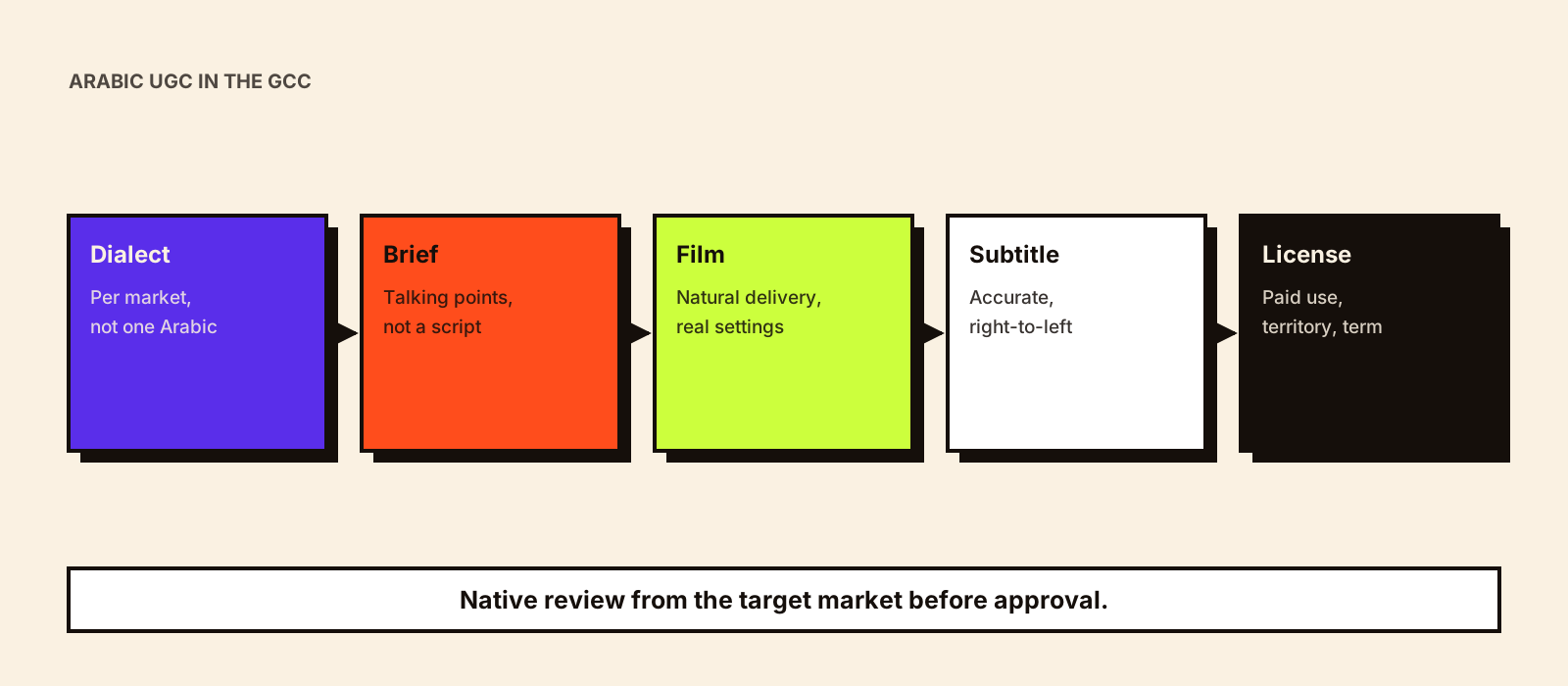
Arabic UGC, short creator-made videos for a brand's own ads and channels, is in demand across the Gulf because ads that sound local tend to feel more trustworthy than translated ones. 'Arabic' isn't one voice, though. A video that sounds natural in Riyadh can sound slightly foreign in Kuwait City or Dubai, and a script written in English and read out in Arabic sounds like exactly that.
Quick answer
To get good Arabic UGC for GCC markets, choose the dialect for each market (Saudi for Saudi Arabia, Gulf or Emirati voices for UAE nationals, the relevant dialects for Arab expatriate audiences), brief creators with talking points rather than a word-for-word script, ask for natural delivery in real settings, add accurate Arabic subtitles with correct right-to-left text, allow defined revision rounds, and evaluate each video against a scorecard. Agree usage rights for paid ads, territory and duration before production, and price bilingual versions separately.
Choosing the dialect for each market
| Target audience | Usual choice | Note |
|---|---|---|
| Saudi Arabia (national audiences) | Saudi Arabic, chosen by region where it matters | Najdi, Hijazi and Eastern voices differ |
| UAE nationals | Emirati or wider Gulf Arabic | Emirati creators carry extra credibility |
| Kuwait | Kuwaiti Arabic | Kuwaiti audiences notice other Gulf dialects |
| Arab expatriates in the UAE and Qatar | Levantine, Egyptian or other relevant dialects | Match the community you're targeting |
| Pan-Arab or broad Gulf reach | A neutral Gulf register, or several versions | One version rarely suits every market equally |
| Formal or institutional content | Modern Standard Arabic | Usually sounds stiff in UGC-style ads |
Many creators can soften their dialect for a broader audience, but few can convincingly switch to another country's. If you need several markets, plan several creators. The broader language decision is covered in Arabic vs English influencer campaigns in the UAE and the dialect section of influencer marketing in Saudi Arabia.
Briefing for natural delivery
- Write the brief in Arabic, or at least the talking points and claims
- Give the problem, the product's key benefit and three talking points, not a script
- Provide approved claims and words to avoid in Arabic
- Ask for several hook options in the first three seconds
- Specify setting (home, car, office, outdoors) and what must be visible
- State length, aspect ratios and whether on-screen text is needed
- Let creators phrase things their way; correct facts, not style
A general UGC brief structure is in our UGC brief template; add the dialect, subtitle and market fields from this page.
Subtitles and on-screen text
- Most people watch ads without sound; Arabic subtitles are usually essential
- Subtitle what the creator actually said, not the original script
- Check right-to-left rendering: Arabic broken into separate letters or reversed is a common editing error
- Keep numbers, prices and product names consistent across subtitles and voice
- If you need English subtitles too, deliver them as a separate version
A subtitle checklist for Arabic and English
Professional subtitle standards are a useful benchmark for creator videos. Netflix's Arabic timed text style guide, for example, sets a maximum of 42 characters per line, two lines per subtitle and a reading speed of up to 20 characters per second for adult content. Short-form social video doesn't have to match streaming rules exactly, but they show where viewers start to struggle.
- Line length and reading time: short lines, two lines at most, on screen long enough to read
- Burned-in or platform captions: burn in for paid ads and reposts; keep a clean version for other languages
- Safe zones: keep text clear of the platform's buttons, captions and profile overlays
- Right-to-left display: check punctuation, numbers and English words inside Arabic lines on the final export
- Dialect: subtitles in the same register as the speaker, or Modern Standard Arabic if the audience spans several markets
- Claims: Arabic and English subtitles say exactly the same thing as the approved script
- Timing: subtitles match speech; no subtitle covers the product at the moment it matters
Revisions
- Agree the number of revision rounds (often one or two) and what counts as a revision versus a reshoot
- Give consolidated feedback in one document, in Arabic where it concerns wording
- Have a native speaker from the target market review before you approve
- Separate factual corrections (always fixable) from taste (be sparing)
Evaluating Arabic UGC
| Criterion | What good looks like |
|---|---|
| Hook | Grabs attention in the first seconds without clickbait |
| Natural delivery | Sounds like the creator talking, not reading |
| Dialect fit | Right for the target market; a native reviewer agrees |
| Clarity of benefit | A viewer understands what the product does and why it matters |
| Accuracy | Claims, prices and product details correct in voice and subtitles |
| Visual quality | Well lit, product clearly visible, real setting |
| Subtitles | Accurate, readable, correct right-to-left text |
| Call to action | Clear next step that matches the ad's destination |
Score each video, then let ad performance decide: hook rate, watch time and cost per result by version will tell you which creators and angles to commission again.
Usage rights and paid ads
- Define channels: organic social, paid social, website, marketplaces, retail screens
- Define territory: one country, several, or the GCC
- Define duration and what happens when it ends
- Agree whether ads can run through the creator's handle
- Agree edits: cut-downs, new hooks, re-subtitling; ask before re-voicing
How rights work under UAE and Saudi copyright law is covered in influencer usage rights.
What Arabic UGC costs
There's little reliable pricing data. A Kuwait-based affiliate platform, Coodooo, wrote in August 2026 that it had not found a reliable published GCC-specific UGC rate survey; its own sample rate card treats one language as included in the base price, adds roughly 40% for both Arabic and English versions from the same script, and prices dialects outside the creator's own case by case. Treat that as one company's sample, not market data. Ask for quotes per finished video with rights, extra hooks, bilingual versions and VAT itemized.
Permits
Reviewed 9 October 2026. The UAE advertiser permit and Saudi Arabia's Mawthooq licence are framed around individuals publishing advertising through their own social accounts. Whether content that appears only on a brand's channels requires the creator to hold one isn't clearly addressed in the guidance we reviewed. Ask your UGC partner how they handle it, and confirm with the relevant authority. If the creator also posts the content on their own account, the licensing rules clearly apply.
How to compare UGC partners is covered in UGC agencies in Dubai.
Common mistakes
- Translating an English script and asking creators to read it
- Using one dialect for every Gulf market
- Subtitles that don't match what was said, or broken Arabic text
- Buying organic-only rights, then running the video as an ad
- Approving without a native reviewer from the target market
Conclusion
Good Arabic UGC sounds like someone from your customer's own world talking honestly about a product. Choose the dialect per market, brief with talking points, check subtitles and claims carefully, buy the rights you need, and let ad performance tell you which creators to work with again. Running UGC across the Gulf and other markets at once is covered in how to localize UGC.