Creator Crisis Management: How to Respond When Content or Brand Partnerships Go Wrong
A calm, step-by-step response process for creators (pause, verify, communicate, correct, document, learn) applied to eight common scenarios: sponsored content backlash, product complaints, errors, disclosure mistakes, brand miscommunication, misunderstandings, copyright disputes and controversy.
Most creator crises aren't scandals. They're ordinary problems that feel huge because they happen in public: a product that disappoints followers, a wrong fact in a viral video, a missing disclosure, a brand unhappy with a post. Handled calmly, most pass quickly. Handled in panic, small problems become big ones.
This guide gives one response process and applies it to common scenarios. It's general guidance, not legal advice; for legal threats, serious allegations or safety concerns, get professional help.
Quick answer
When content or a partnership goes wrong: pause (stop posting related content and don't react instantly), verify the facts (what happened, who's affected, what the contract says), communicate (privately with the brand or people affected first, then publicly if needed, briefly and honestly), correct where necessary (fix the content, add disclosure, update recommendations), document everything, and learn (change the process that allowed it). Don't delete legitimate criticism, attack critics or make promises you can't keep.
The response process
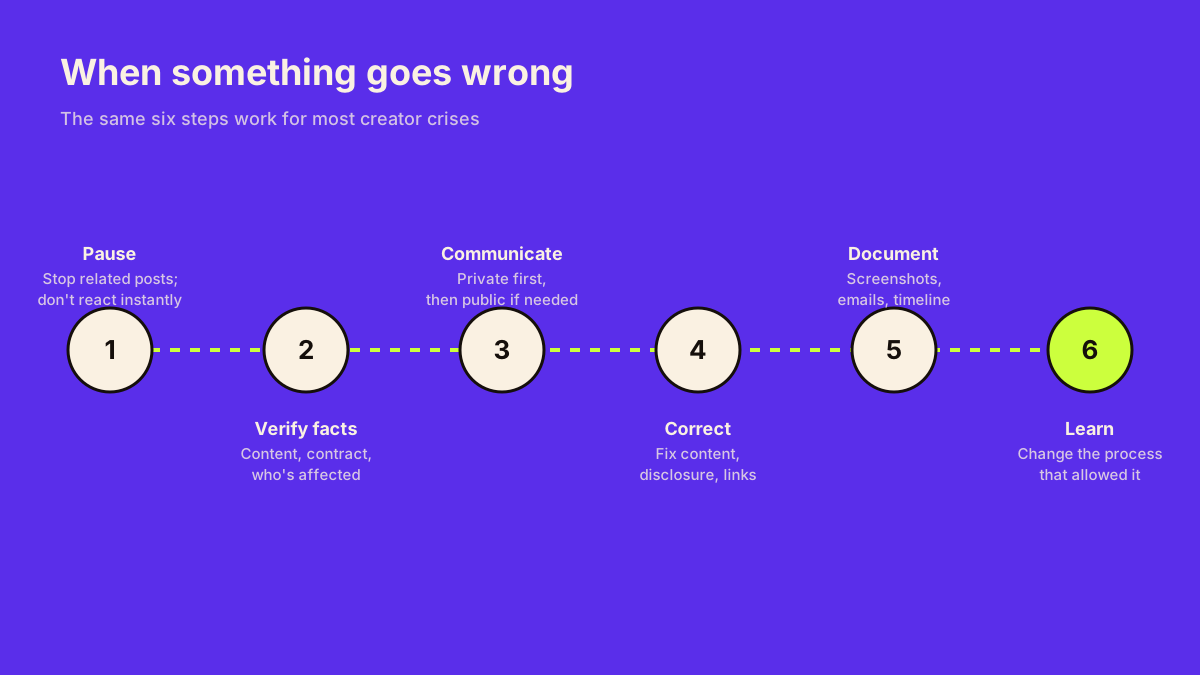
| Step | What to do | Avoid |
|---|---|---|
| Pause | Stop related posts; step away for an hour | Instant replies, deleting everything |
| Verify | Establish facts; read the contract; check the content | Responding to rumours |
| Communicate | Private first (brand, affected people), then public if needed | Long defensive statements |
| Correct | Fix content, add disclosure, update links | Silent edits that look like hiding |
| Document | Screenshots, emails, timelines, decisions | Relying on memory |
| Learn | Change the process | Moving on without changes |
Scenario 1: sponsored content backlash
Followers criticise a sponsored post: the product seems wrong for you, or they object to the brand.
- Pause further posts for the brand.
- Verify: is the criticism about the product, the brand's conduct, or your disclosure?
- Communicate: tell the brand privately; if criticism is fair, acknowledge it publicly without blaming the brand.
- Correct: add context, clarify disclosure, or, if your contract allows and it's warranted, end the partnership.
- Learn: tighten your brand vetting. See creator brand safety.
Vetting: creator brand safety.
Scenario 2: product complaint
Followers report a problem with a product you recommended.
- Verify with a few affected people and the brand.
- Share complaints with the brand and ask how customers will be helped.
- Publicly: "Several of you have had [issue]. I've raised it with [brand]; here's how to get help."
- Update or remove the recommendation if the problem is real.
Scenario 3: incorrect information
You got a fact wrong.
- Correct quickly and visibly: pinned comment, caption edit, a short follow-up if the original spread widely.
- Say what was wrong and what's right. No need for a dramatic apology for an honest mistake.
- For health, finance or legal errors, act fast; people may act on your content.
Scenario 4: disclosure mistake
You posted sponsored content without clear disclosure.
- Add the platform label and a visible disclosure immediately.
- Tell the brand; they have obligations too.
- If asked publicly, acknowledge it plainly.
- Fix your checklist so it doesn't recur. See the creator disclosure guide.
Rules: creator disclosure guide.
Scenario 5: miscommunication with a brand
The brand says the content doesn't match what was agreed, or payment is disputed.
- Keep it private and professional.
- Check the brief, emails and contract.
- Propose a fair fix within the agreed scope (a revision, a replacement asset).
- Escalate in writing if needed; don't air disputes publicly. See creator brand revisions and creator payment terms.
Terms: creator brand revisions and creator payment terms.
Scenario 6: content misunderstood
A joke, clip or opinion is taken differently from how you meant it.
- Watch it again as a stranger would.
- If people were genuinely hurt, acknowledge the impact, not just your intent.
- If a clip is misleadingly cut, share the full context once, calmly.
- Avoid repeated statements; they keep the story alive.
Scenario 7: copyright dispute
You receive a claim, or someone uses your work.
- Check the facts: what was used, whose, under what licence.
- If you used someone's work without a licence, remove or license it.
- If you believe a claim is wrong, use the platform's dispute process with evidence.
- If your work was taken, use official reporting routes. See creator copyright.
Rights: creator copyright.
Scenario 8: creator controversy
Something about your conduct becomes a public issue.
- Pause and get advice if serious.
- Tell brand partners before they hear it elsewhere; check contract terms.
- If you're responsible, a brief, specific acknowledgement and a real change matter more than a long statement.
- If allegations are false, respond once with facts, and consider legal advice before saying more.
Scenario 9: your account is hacked
Someone takes over your account and posts scams or deletes content.
- Start the platform's official recovery process and secure your email first.
- Warn your audience from another platform or your email list not to click links or send money.
- Tell brands with live campaigns and agree new dates.
- Report fraud at cybercrime.gov.in or on 1930 in India.
- After recovery, review who has access and how your accounts are secured.
Full prevention and recovery steps: creator account security.
Scenario 10: a team member makes a public mistake
An editor publishes the wrong version, a manager sends a brand the wrong rate, or a scheduled post goes live at a sensitive moment.
- Fix or remove the mistake first; the audience and brand hold you responsible, not the team member.
- Take responsibility publicly if needed, without blaming individuals.
- Review privately what failed: the process, the checklist or the access level.
- Update the SOP or approval step so it can't happen the same way again.
Review steps that catch these errors before publishing are in creator content quality control.
What to say, to whom and in what order, with templates for holding statements, apologies, corrections and brand partner messages, is covered in creator crisis communication.
A holding statement
"I've seen the concerns about [topic]. I'm looking into it properly and will share an update by [day]. Thank you for your patience."
Only promise an update you'll actually give.
Many crises are easier to prevent than to handle. A simple risk register, reviewed quarterly, is explained in creator business risk management.
Build a crisis kit before you need it
- A list of brand contacts and contract locations.
- Your disclosure checklist.
- Holding statement template.
- Who you'd call for legal, tax or personal support.
- Platform reporting links (impersonation, copyright, harassment).
Common mistakes
- Posting a long defensive statement within minutes.
- Deleting all comments, including fair criticism.
- Blaming the brand publicly.
- Promising investigations or updates that never come.
- Changing nothing afterwards.
Conclusion
Pause, verify, communicate, correct, document and learn. Most creator crises are ordinary problems made worse by speed and defensiveness; a calm, honest process makes them smaller. For the longer-term work of protecting how people see you, see creator reputation management.