Influencer Controversy During a Campaign: What Should a Brand Do?
When a creator you're working with becomes the story: how to verify before reacting, what to pause in the first hours, how to decide between continuing, pausing, distancing and ending, what to say and not say, and how to handle the contract and payment calmly.
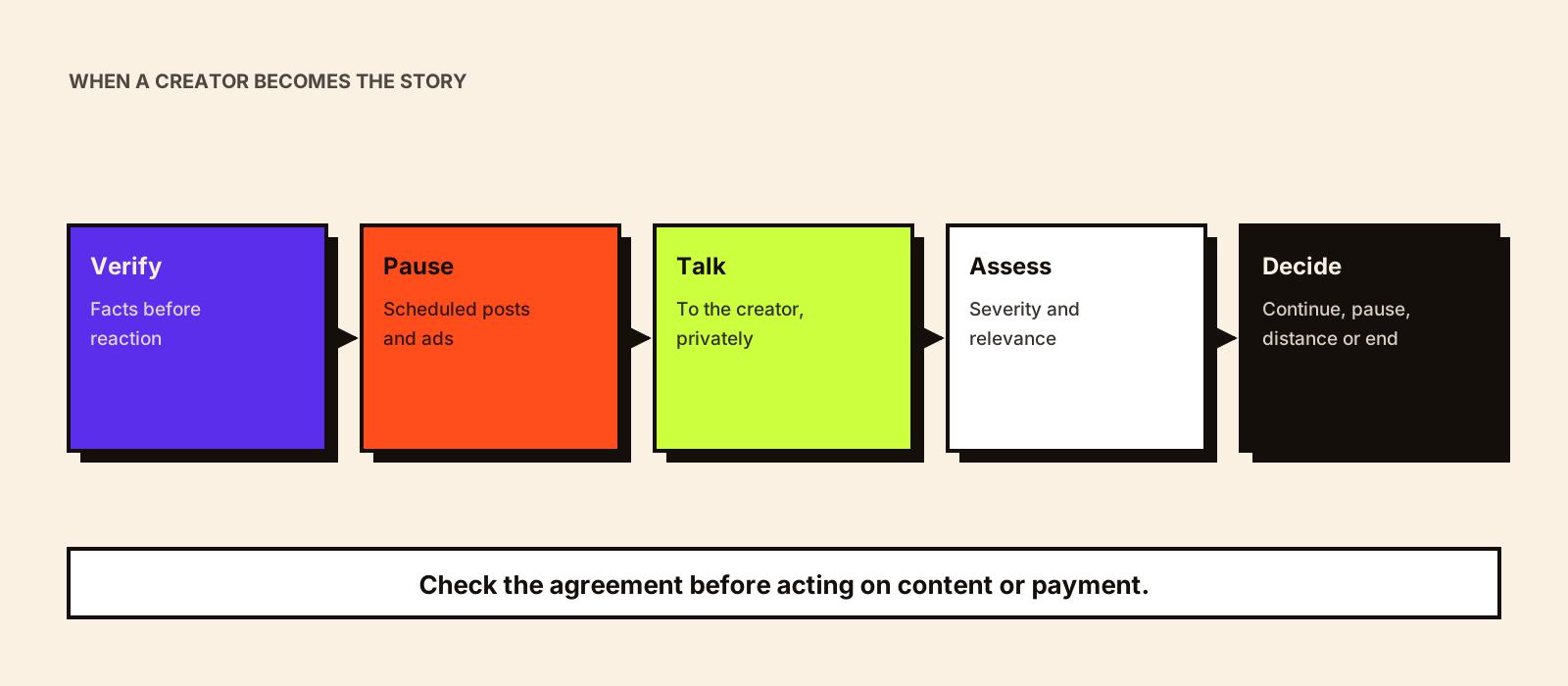
Hypothetical: a snack brand is three days into a campaign when an old video from one of its creators starts circulating, with comments tagging the brand and asking why it works with them. The social team wants to post something now. The performance team has partnership ads running through the creator's handle. Nobody is sure what the contract allows. The decisions made in the next few hours matter more than anything said a week later.
Quick answer
When a creator becomes controversial during a campaign: verify what actually happened before reacting; pause anything scheduled and any paid ads running through the creator's identity while you assess; talk to the creator privately; judge severity and how closely the issue connects to your brand and campaign; then choose to continue, pause, continue without paid amplification, distance the brand, or end the partnership. Check the agreement before taking any action on content or payment, keep public statements short and factual, and document every decision.
The first 24 hours
| When | Do | Avoid |
|---|---|---|
| First 2 hours | Gather the facts: what was said or done, when, where, and whether it's new or old content resurfacing. Tell the brand lead and whoever approves public statements. | Public comment before you know what happened |
| Hours 2 to 6 | Pause scheduled creator posts and paid ads using the creator's identity. Contact the creator privately. Read the agreement. | Deleting brand comments wholesale or blocking users |
| Hours 6 to 24 | Assess severity and relevance (below). Decide on an interim position. Prepare a holding line if people are asking the brand directly. | Making allegations about the creator, or speaking on their behalf |
| Days 2 to 7 | Make the decision, communicate it to the creator first, then externally if needed. Record it. | Changing position repeatedly in public |
How serious is it, and is it about you?
| Situation | Typical seriousness | Common response |
|---|---|---|
| Old content resurfacing that conflicts with your values | Varies with content and the creator's response | Pause, hear the creator out, decide on continuing or distancing |
| A new statement or post unrelated to your brand | Varies widely | Pause paid amplification; continue or distance depending on severity |
| Serious allegations about conduct, not yet established | High uncertainty | Pause; avoid public judgment; decide on facts and the agreement |
| A problem with your campaign itself (a misleading claim, missing disclosure) | High, and it is about you | Correct or remove the content, fix the process, own it publicly if asked |
| Backlash against the brand for choosing the creator | Depends on the audience and the issue | Listen before reacting; explain the decision or change it |
| Platform action against the creator's account | Operational | Pause; confirm what's affected; adjust delivery |
Two questions do most of the work: how serious is the issue on its own, and how close is it to what your brand stands for and to this campaign? A creator's view on a film is rarely your business. Content that attacks people, spreads harmful misinformation in your category, or contradicts your campaign's own message usually is.
Your options
| Option | When it fits | Watch for |
|---|---|---|
| Continue as planned | Minor issue, unrelated to your brand, creator handled it well | Monitoring comments on your posts |
| Pause | Facts unclear; you need time | Telling the creator it's a pause, not a decision |
| Continue organically, stop paid amplification | The issue is moderate; you don't want to put spend behind it | Ad permissions and any usage commitments |
| Distance the brand (no future work, no new posts) | Serious enough to end the association, not the agreement | What the agreement says about remaining deliverables |
| End the partnership | Serious and clearly connected to your brand or values | Agreement terms, payment owed, published content and rights |
Asking a creator to remove content already published, or ending the partnership early, depends on what the agreement allows; many agreements include a reputational-harm or conduct clause, but its wording decides what you can do. Read it before acting, and take legal advice for anything significant. Influencer campaign cancellation covers ending a partnership professionally.
Talking to the creator
- Call or message privately and early, before any public statement
- Ask what happened and what they plan to do, rather than telling them what to say
- Explain what you've paused and why, and that no final decision has been made yet if that's the case
- Agree how you'll communicate with each other while things are moving
- Confirm any decision in writing once made
What to say publicly, if anything
Often the right public response is none, or a short reply to people asking the brand directly. If you do say something, keep it about your own actions, not the creator's character, and don't repeat or add to allegations.
We're aware of the conversation about [creator]'s recent [post/video]. We've paused our campaign content while we look into it and will share an update once we've made a decision.
Avoid deleting critical comments en masse, arguing in replies, or posting statements that judge disputed facts. Influencer sentiment analysis helps you see whether concern is growing or fading before you decide whether to say more.
Payment, content and rights
Don't withhold payment or demand removals unilaterally in the heat of the moment. Work out from the agreement what's owed for work already delivered, what happens to remaining deliverables, whether content must stay up or come down, and what happens to usage rights and ad permissions. Stop paid ads through the creator's handle while you decide; the platform permission and the contract are separate, so record what you've switched off and when. Influencer marketing contracts and influencer whitelisting and ad authorization cover the relevant terms.
Afterwards
Write down what happened, what you decided and why, and what you'd change. Then ask whether your checks could reasonably have caught it. Sometimes they couldn't; sometimes the creator's history showed patterns your brand-safety review didn't weigh. Feed it into influencer brand safety checks and your campaign risk register.
Common mistakes
- Posting a statement before knowing the facts
- Leaving paid ads running through the creator's handle while deciding
- Ending the partnership publicly before telling the creator
- Withholding payment for work already delivered without checking the agreement
- Treating every online argument as a crisis
- No record of what was decided and why
Conclusion
Controversies are rare, but when one happens the pressure to react instantly is intense. Verify, pause what you control, talk to the creator, judge severity and relevance, check the agreement, then decide and communicate once. A plan agreed before the campaign makes every one of these steps faster. This guide is general information, not legal advice.