Who Owns the Comments? Managing Community Engagement During Influencer Campaigns
Who replies, who moderates and who escalates when a sponsored post starts getting comments: a responsibility split between brand and creator, reply guidelines, moderation rules for organic posts and creator ads, response times, escalation triggers and notes for Arabic and English comments in the GCC.
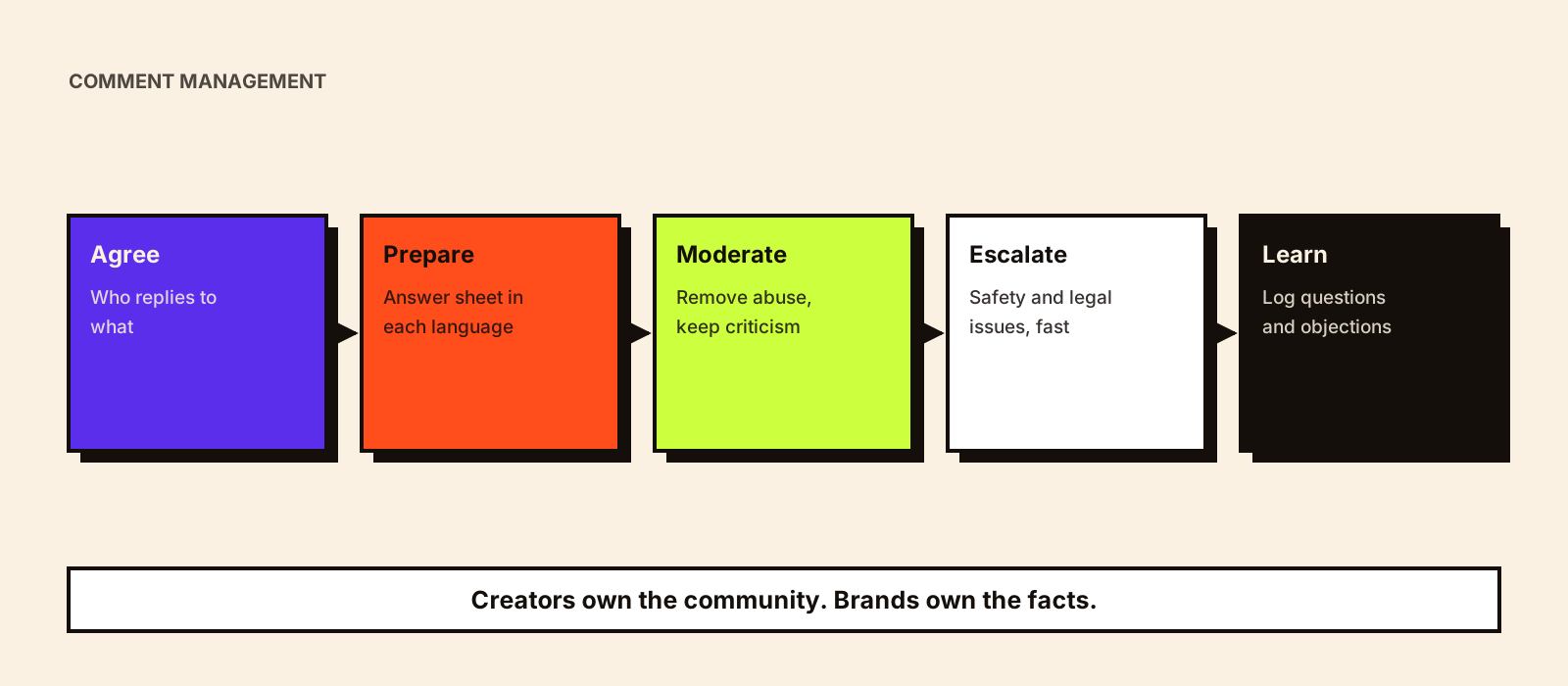
A sponsored post lives on the creator's account, but the comments under it are about your brand. Product questions, complaints, jokes, competitor mentions and occasionally abuse all arrive in a space the brand doesn't control. Without an agreement, questions go unanswered, the creator improvises answers about your product, or someone deletes criticism and makes it worse. This guide sets out who should do what, for brand, agency and social teams running creator campaigns.
Quick answer
The creator owns their comment section and their relationship with their audience; the brand owns the accuracy of anything said about its product. Agree before posting: the creator answers personal and experience questions, the brand supplies approved answers to product, price and availability questions, both agree what may be hidden or deleted, and anything about safety, legal issues or a crisis is escalated to the brand within an agreed time. When creator content runs as an ad from the brand's account or with ad permissions, the brand usually moderates those comments itself.
Who does what
| Comment type | Who replies | How |
|---|---|---|
| 'Do you really use it?' / personal experience | Creator | In their own words |
| Product facts: ingredients, sizes, compatibility | Creator using the brand's approved answers, or the brand account | Never improvise claims |
| Price, stock, delivery, offers | Brand account, or creator with a link to official information | Prices change; point to the source |
| Complaints about the product or service | Brand account, quickly and publicly, then move to private messages | Don't argue in the creator's comments |
| Criticism of the creator for doing an ad | Creator decides | The brand stays out unless asked |
| Abuse, hate or harassment | Creator hides or deletes; reports if needed | Brand supports, doesn't pile on |
| Safety issues, adverse reactions, legal threats | Escalate to the brand immediately | Brand handles with its own process |
Prepare before the post goes live
- A short answer sheet: the ten questions you expect, with approved answers in each language the post uses
- Links to official product, price and support pages
- Moderation rules: what the creator may hide or delete, and what must stay visible
- Escalation contacts with names, phone numbers and hours, including the weekend and Ramadan schedule
- Response-time expectations for the first 48 hours, when most comments arrive
- Whether the brand account will reply directly under the creator's post
Moderation rules
- Don't delete genuine criticism; it looks like censorship and often spreads
- Hide or delete spam, scams, hate speech, personal data and abuse
- Don't hide competitor mentions unless they're spam
- Keep a screenshot record of anything removed and why
- Use platform keyword filters for known spam and abuse terms
Creator ads are different. When you run a creator's post as an ad (whitelisted, partnership or Spark-style ads), the post reaches people who don't follow the creator, and comments can be harsher. Agree in the contract who moderates ad comments; brands often handle them because the creator didn't choose that audience.
Escalation triggers
| Trigger | Respond within | Who |
|---|---|---|
| Reported allergic reaction, injury or safety problem | Same day | Brand customer care and quality team |
| Claim that the product or ad is misleading | Same day | Brand marketing and legal |
| Rapid rise in negative comments | Within hours | Brand and agency leads |
| Creator's past content resurfacing | Within hours | See controversy response |
| Ordinary product questions left unanswered | Within 24 hours | Brand or creator per the split above |
For serious cases, follow influencer controversy response and the severity levels in influencer campaign escalation.
Notes for GCC campaigns
- Answer in the language of the comment; prepare Arabic answers in the right dialect, reviewed by a native speaker
- Keep replies factual and polite; online insults and defamation can carry legal consequences in Gulf states
- Never discuss religion, politics or security events in brand replies
- Pause and review scheduled replies during sensitive news periods
- Make sure someone can respond on each market's weekend
Wider GCC crisis planning is in the GCC section of influencer controversy response.
Turn comments into learning
Comments are a free source of questions and objections. Log recurring themes, add answers to product pages and FAQs, and feed objections into the next brief. Treat them as signals, not a representative survey; the method is in how to use influencer campaign insights to improve your next product launch, and sentiment tracking in influencer sentiment analysis.
Common mistakes
- No answer sheet, so creators guess at product facts
- Deleting criticism
- The brand arguing in a creator's comment section
- Nobody watching comments on creator ads
- No one available to escalate to at the weekend
Conclusion
Comments decide how a sponsored post is received. Agree the split before posting: creators handle their community, brands own the accuracy of product information and anything serious. Prepare answers, moderate fairly, escalate fast, and use what people ask to make the next campaign better.