Creator-to-Customer Journey: From First View to Purchase
Map the journey from your audience's side: what someone thinks, asks and needs at each step from first view to purchase and repurchase, where they get stuck, and how to remove friction without pressure.
A funnel describes what you build. A customer journey describes what your audience experiences. The same Reel, newsletter and product page look very different from the other side: a stranger scrolling at 11pm, a follower who's watched you for six months, a buyer wondering whether they chose well.
This guide maps that experience. For the system of stages and assets you build, see the creator funnel.
Quick answer
The creator-to-customer journey is the path a person takes from first seeing your content to buying and buying again: first view, follow, repeat engagement, trust, sign-up, consideration, purchase, onboarding and repurchase or referral. At each step they have a question ("Is this for me?", "Can I trust them?", "Is it worth the money?") and possible friction. Mapping the journey means writing down those questions and frictions and answering them in your content, pages and follow-up, without pressure.
The journey, step by step
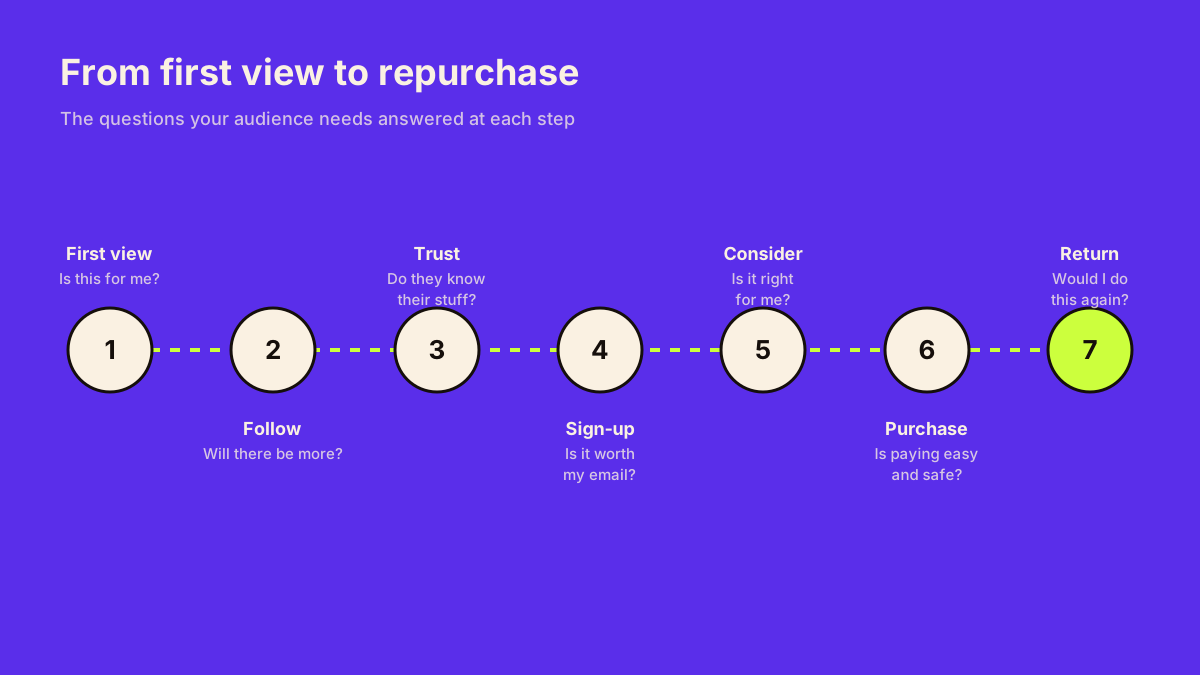
| Step | The person thinks | Friction | What helps |
|---|---|---|---|
| First view | "Is this for me?" | Unclear topic | Clear hook and on-screen topic |
| Follow | "Will there be more like this?" | Random profile | Series, pinned posts, bio |
| Repeat engagement | "They keep helping me" | Inconsistent posting | Predictable rhythm |
| Trust | "They know what they're talking about" | No depth or evidence | Long-form, case studies, honesty |
| Sign-up | "Is this worth my email?" | Vague promise, long form | Specific lead magnet, short form |
| Consideration | "Is this right for me?" | Unclear offer | Clear details, who it's for and not for |
| Purchase | "Is paying easy and safe?" | Complicated checkout | UPI, clear price, refunds explained |
| Onboarding | "Did I choose well?" | Silence after purchase | Welcome, quick win, support |
| Repurchase or referral | "I'd do this again" | No next step | Updates, community, fair referral |
Map your own journey
For your main offer, write for each step:
• What the person is thinking
• The question they need answered
• Where they are (platform, page, inbox)
• What currently answers it (content, page, email)
• Friction you've seen (comments, DMs, drop-off data)
• One improvement to test
Where Indian audiences get stuck
- Language: the journey switches from Hindi Reels to an English-only sales page.
- Payment: no UPI, or card-only checkout.
- Trust in online payments: unclear refunds and no contact details.
- Price context: no comparison with what people already pay for similar help.
- Mobile data: heavy pages that load slowly.
Language and payments: creator landing pages.
Remove friction without pressure
Friction worth removing: confusing pages, slow checkout, missing information. Friction worth keeping: the pause before someone buys something that isn't right for them. Say who your offer isn't for; it builds trust and reduces refunds. Avoid fake scarcity and countdowns.
Trust standard: creator product recommendations.
Measure the journey
| Step | Measure |
|---|---|
| Discovery to follow | Follows per 1,000 views |
| Follow to sign-up | Sign-ups per 1,000 followers per month |
| Sign-up to purchase | Buyers as a share of subscribers per launch |
| Purchase to repurchase | Repeat purchase rate; referrals |
Add these to your creator analytics dashboard monthly.
Measuring the journey after purchase
The journey doesn't end at payment. Activation, completion, refunds and repeat purchases show whether buyers got what they came for; creator product analytics covers what to track, and creator checkout experience covers the step just before.
Common mistakes
- Mapping from your side only.
- Different language or tone at each step.
- Nothing after purchase.
- Adding pressure instead of answering questions.
Conclusion
The creator-to-customer journey is a series of questions. Map them from the audience's side, answer each where the person is, remove friction that confuses and keep the honesty that protects trust.