Creator Funnel: How to Turn Social Followers Into Customers
The creator funnel as a system: discovery content, trust content, an owned-audience step, offers and retention, with the assets each stage needs, the metrics that show where people drop off, and an example funnel for an Indian creator.
Most creators have a top of the funnel and a bottom, with nothing in between. They post Reels that reach thousands, then occasionally announce a product and wonder why few people buy. A funnel is simply the set of steps that turns a stranger into someone who trusts you enough to pay, built deliberately rather than left to chance.
This is the pillar guide for Kudozz's funnels and audience ownership section. It connects the guides on landing pages, lead magnets, audience ownership and the customer journey.
Quick answer
A creator funnel is the system that moves people from discovering your content to buying from you and coming back. It has five stages: discovery (short-form and search content that reaches new people), trust (deeper content that proves you're worth listening to), owned audience (email, community or channels via a lead magnet), offer (products, services, memberships or recommendations) and retention (delivery, support and reasons to stay). Each stage needs its own content and a metric, so you can find and fix the stage where people drop off.
The five stages
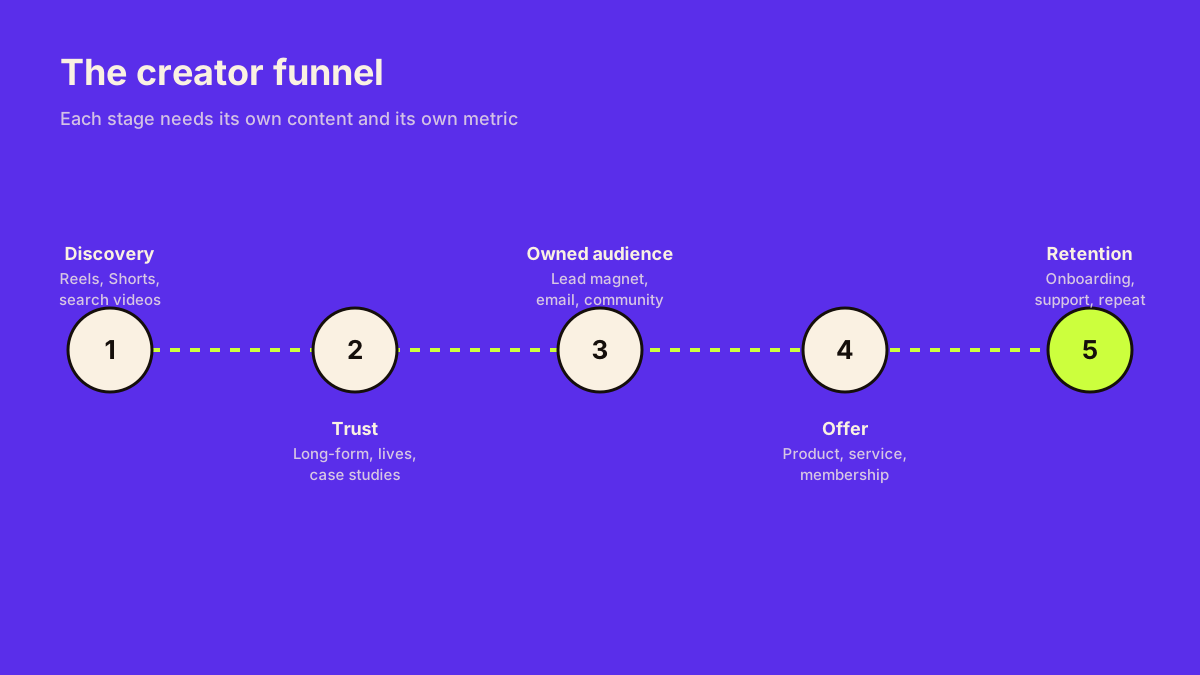
| Stage | Job | Content and assets | Metric |
|---|---|---|---|
| Discovery | Reach new people | Reels, Shorts, search videos, collabs | Reach, follows per 1,000 views |
| Trust | Prove your value | Long-form, carousels, case studies, lives | Returning viewers, saves |
| Owned audience | Move people off-platform | Lead magnet, landing page, channel | Sign-up conversion |
| Offer | Solve a paid problem | Product, service, membership, recommendations | Conversion, revenue per subscriber |
| Retention | Keep and grow customers | Onboarding, support, community | Repeat purchase, churn |
Discovery: reach the right strangers
Discovery content should attract people who have the problem your offer solves, not just anyone. A finance creator selling a budgeting course needs viewers interested in budgeting, not viral comedy. Short-form and search content do most of the work here; see short-form video strategy and creator SEO.
Trust: earn attention
Trust content goes deeper: a full tutorial, a detailed case study, a live Q&A. It turns a casual viewer into someone who believes you can help. How to build authority as a creator explains what makes this content credible.
Credibility: how to build authority as a creator.
Owned audience: the bridge
Platforms decide who sees your posts. An email list, WhatsApp community or website means you can reach people directly when you have something to offer. The usual bridge is a lead magnet on a landing page.
Bridge: creator lead magnets, creator landing pages and creator audience ownership.
Offer: sell what solves the problem
| Offer type | Fits when | Guide |
|---|---|---|
| Recommendations (affiliate) | Audience asks "what do you use?" | Creator product recommendations |
| Digital product | Recurring problem you can package | Sell digital products |
| Membership or community | Ongoing need and belonging | Creator memberships |
| Service or consulting | High-value expertise | Creator pricing strategy |
Guides: creator product recommendations, sell digital products, creator memberships and creator pricing strategy.
Retention: the stage most creators skip
A customer who got value buys again and tells others. Onboard buyers, check they're using what they bought, answer questions and invite feedback. Retention is cheaper than acquisition and it's where trust compounds.
A worked example
DISCOVERY: 3 Reels/week in Marathi on everyday money questions
TRUST: 1 YouTube long-form a week; monthly live Q&A
OWNED: free "monthly budget sheet in Marathi" → email list
OFFER: ₹999 self-paced course on budgeting and first investments (no stock tips; within expertise)
RETENTION: WhatsApp group for course buyers; monthly check-in email; course updates each budget
Metrics: follows per 1,000 views → sign-up rate → course conversion → completion and referrals
The example is illustrative; prices and conversion depend on your audience.
Find the leak
| Symptom | Leaking stage | Fix |
|---|---|---|
| Views but few follows | Discovery | Content attracts the wrong people; tighten topics |
| Followers but few sign-ups | Owned audience | Weak lead magnet or unclear promotion |
| Subscribers but few buyers | Offer | Offer doesn't match the problem, or trust is low |
| Buyers who don't return | Retention | Onboarding, delivery or support |
The commerce funnel for products you recommend
When the offer is someone else's product (an affiliate link, a tagged product or a sponsored recommendation), the funnel has the same shape but different steps:
| Step | What happens | Where it's covered |
|---|---|---|
| Discovery | Someone meets the product in your content | Shoppable content for creators |
| Recommendation | You explain who it's for and why | Creator product recommendations |
| Click | A tag, link or code gives them a next step | Creator affiliate links |
| Purchase | They buy on the retailer or brand's site | Creator conversion rate |
| Attribution | The sale is connected to your content | Creator attribution |
| Retention | They keep the product and trust your next pick | Honest recommendations and returns data |
Guides for each step: shoppable content, product recommendations, affiliate links, conversion rate and attribution.
The funnel for a digital product or course
For a creator's own product or course, the funnel usually runs: useful content → a related lead magnet → an email sequence that teaches and builds trust → a landing page with a clear offer → a low-friction checkout → onboarding that gets buyers to a first result → feedback and the next offer. Each step has its own guide: creator lead magnets, creator email funnel, creator landing pages, creator checkout experience and creator product analytics. For courses specifically, the launch and evergreen phases are covered in creator course launch.
Keep it ethical
No fake scarcity, no invented testimonials, no hidden paid relationships, no pressure on vulnerable audiences. A funnel built on trust keeps working; one built on tricks burns the audience it depends on.
Common mistakes
- Discovery content unrelated to the offer.
- No owned-audience step.
- Launching an offer to a list that's never heard from you.
- Measuring only views and revenue, not the stages between.
- Ignoring buyers after purchase.
Conclusion
A creator funnel connects content to income through five deliberate stages. Give each stage content and a metric, find where people drop off, and fix that stage first. For the audience's view of the same path, see the creator-to-customer journey.