Creator SEO: Complete Guide to Getting Discovered Across Google, YouTube and Social Search
Search is where people go when they already want something. Here's how discovery works across Google, YouTube, Instagram, TikTok and AI search, and a single system for being findable on all of them.
Feeds show people what an algorithm thinks they might like. Search shows people what they asked for. For creators, search traffic is valuable because it arrives with intent, keeps arriving long after posting, and doesn't depend on being in the right feed on the right day.
This is the overview of creator search across platforms. For your own website specifically, see creator website SEO.
Quick answer
Creator SEO means making your content easy to find when people search, on Google, YouTube, Instagram, TikTok and increasingly AI search tools. Each platform ranks results differently, but the same foundations help everywhere: pick topics people actually search for, use the words they use in titles, captions, spoken audio and on-screen text, answer the question quickly and well, keep your identity consistent across platforms, and measure which searches bring viewers. There is no single universal algorithm.
How discovery differs by platform
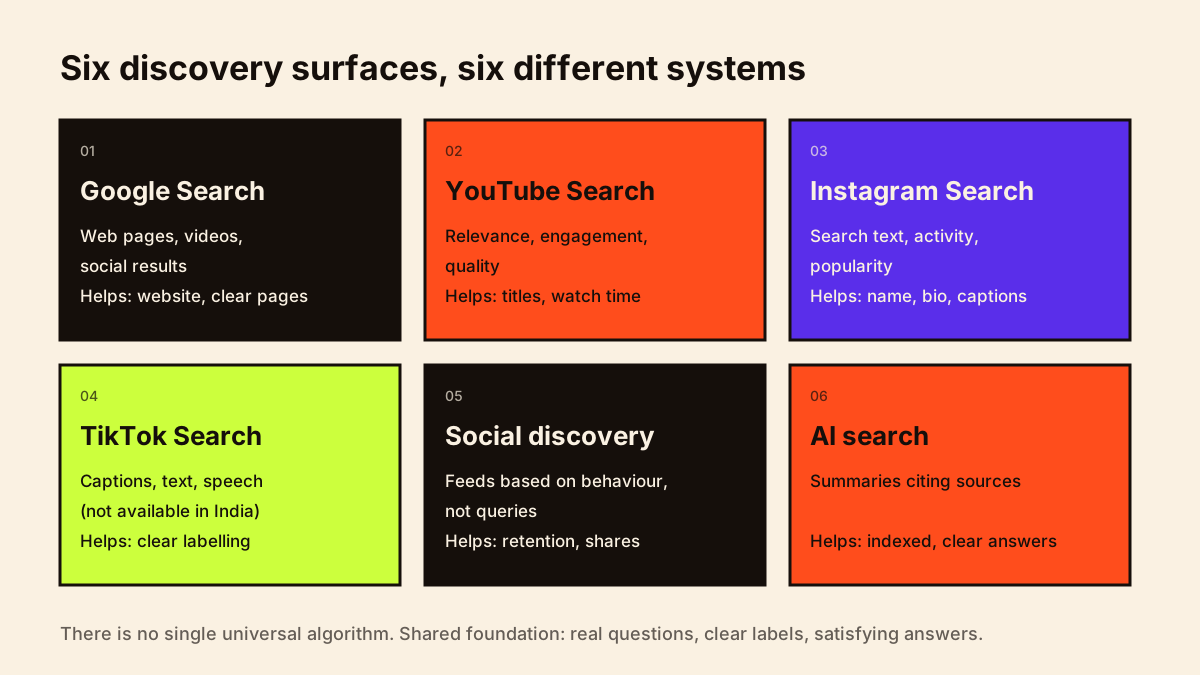
| Surface | How people find content | What helps creators |
|---|---|---|
| Google Search | Web pages, videos and social posts ranked for a query | A website with helpful pages; video results; consistent name and profiles |
| YouTube Search | Results ranked by relevance, engagement and quality | Clear titles and descriptions, strong watch time for that query, topical authority |
| Instagram Search | Accounts, audio, hashtags, places and posts matching search text | Keywords in name, bio and captions; relevant hashtags; engagement |
| TikTok Search | Videos matching queries, where available | Keywords in captions, on-screen text and speech (TikTok isn't available in India) |
| Social discovery feeds | Recommendations based on behaviour, not queries | Retention, shares, saves, consistency |
| AI search and answers | Summaries citing web pages and videos | Being indexed and eligible for search snippets; clear, well-structured answers |
Official explanations: How YouTube search works, how Instagram search works, and Google's guidance on AI features and your website.
Search vs recommendations
Search responds to a query; recommendations respond to behaviour. Most creators get views from both. A video titled for search ("best budget phone under ₹15,000") can keep collecting views for months, while a trend-led Reel spikes and fades. A healthy channel usually has both kinds. YouTube search vs recommendations explains how to plan for each.
The creator SEO system
1. Research what people search
Use search suggestions, YouTube's Trends and research insights in Studio, TikTok's Creator Search Insights where available, your comments, and Google Search Console for your website. See YouTube keyword research and how to find content gaps.
2. Say the keyword where each platform reads it
- Titles and captions: the words people type, early and naturally.
- Spoken audio: platforms can process speech; say the topic clearly in the first seconds.
- On-screen text: reinforces the topic for viewers and search.
- Descriptions and alt text: more context, especially on YouTube and your website.
- Profile and bio: what your account is about, in searchable words.
3. Answer fast and well
Search viewers leave quickly if the answer isn't there. Put the answer or promise early, then deliver it. Engagement for that query is a ranking signal on YouTube.
4. Build topical authority
A channel with twenty videos on budget phones is more likely to be seen as a good result for budget phone searches than one video among random topics. Series and playlists help. See how to build authority as a creator.
5. Connect your identity
Use the same name, photo and short description across platforms, link them to each other and to your website. This helps Google and AI tools understand who you are. See how to build a creator website.
6. Measure search traffic
YouTube Analytics shows YouTube search as a traffic source and the search terms that found you. Search Console shows Google queries for your site. Add these to your creator analytics dashboard.
AI search and creators
AI answers increasingly summarise the web and cite sources. Google says there are no special technical requirements to appear as a supporting link in its AI features beyond being indexed and eligible for a snippet. Practically, clear, specific, well-structured answers from a credible creator are what get cited. Keep your website and video descriptions factual and up to date.
Platform guides
- YouTube: YouTube SEO for creators, keyword research, search vs recommendations.
- Instagram: Instagram SEO for creators and Instagram keyword strategy.
- TikTok: TikTok SEO and Creator Search Insights (for creators outside India).
- Social behaviour overall: social search for creators.
Start with YouTube SEO for creators, Instagram SEO for creators, TikTok SEO and social search for creators.
A search-first content plan
Search-first content starts from what people are looking for, then makes the best answer in your style.
1. List 20 questions your audience searches (search suggestions, research insights, comments)
2. Check current results: what's missing, outdated or unclear?
3. Pick 4–6 that fit your pillars and you can answer best
4. Title and open with the searched phrase; answer early
5. Link each to related content (series, playlists, guides)
6. Review search traffic after 30 and 90 days; update winners
Discoverability isn't only search: recommendations, collaborations and distribution matter too. Creator title strategy covers packaging for search and clicks, and creator content distribution covers the rest.
Common mistakes
- Assuming one algorithm works the same everywhere.
- Clever titles nobody would ever type into a search box.
- Keyword stuffing captions and hashtags until they read like spam.
- Chasing search terms unrelated to your niche.
- Never checking which searches actually bring viewers.
Conclusion
Treat search as a long-term asset. Pick a handful of questions your audience keeps asking, make the best answer on each platform you use, label it in the words people search, and review search traffic monthly. Over time, search viewers become a steady base that feeds don't provide.