How Brands Can Work With Diaspora Creators to Reach Audiences Abroad
For brands selling to communities living outside their home country, diaspora creators can bridge familiarity and local context. How to verify where a creator's audience actually lives and buys, choose between creators abroad and creators at home, adapt offers and delivery, and follow the rules of the market the audience is in.
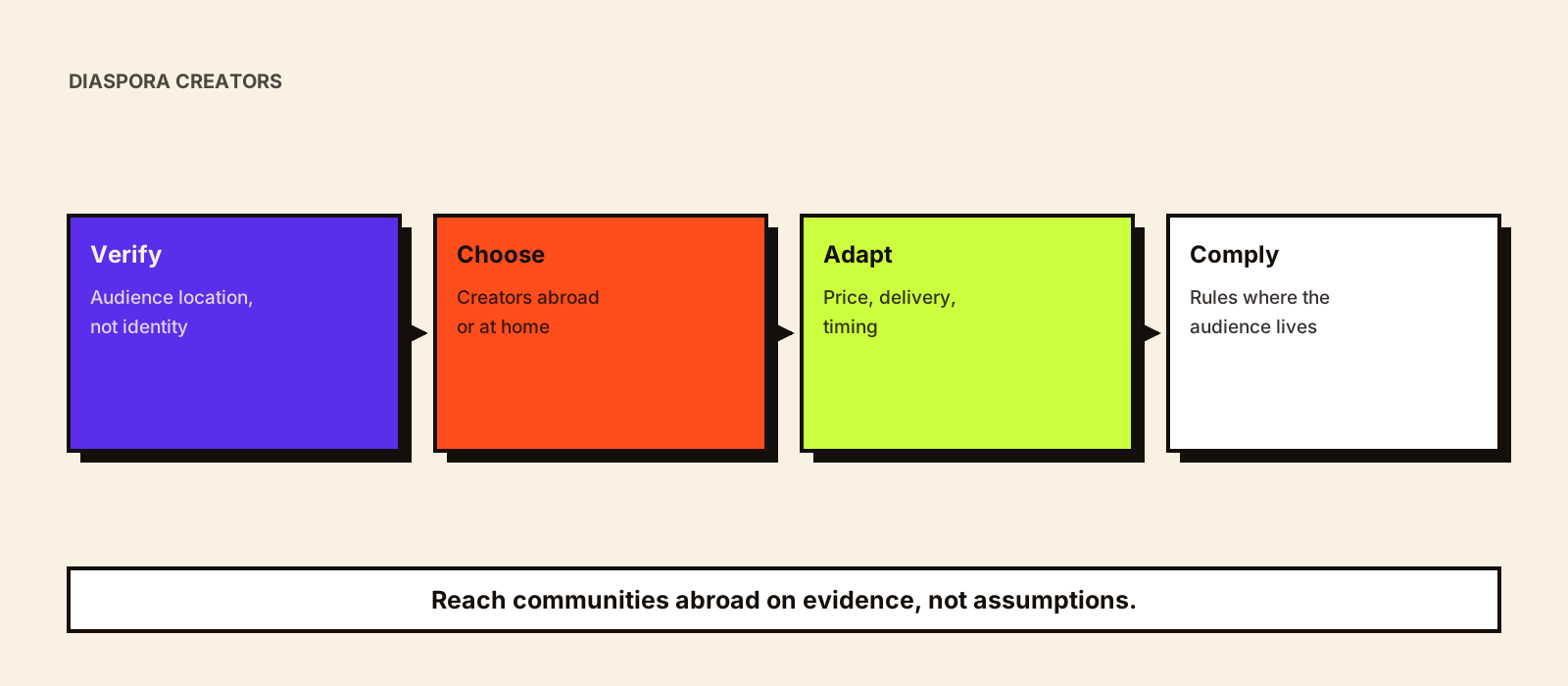
An Indian snack brand that wants customers in London, a fashion label selling to families in Dubai and Sydney, a fintech app serving people who send money home: each is trying to reach people who live in one country and feel connected to another. Creators from those communities can be the bridge. They can also be an expensive mistake if the brand assumes, from a creator's background, where their followers live or what they buy.
Quick answer
Diaspora creators are creators whose content and audience connect a community living abroad with its home culture. They work when your product is genuinely available and delivered where the audience lives, and when you can verify, from the creator's own insights, the share of their audience in that country. Choose between creators based in the market and creators at home with a following abroad by checking audience location, not identity. Price and deliver in local currency, time content to community moments, and follow the advertising rules of the country where the audience is.
When diaspora creators make sense
| Fits well | Fits poorly |
|---|---|
| Products with a familiar home-country brand or taste, now available abroad | Products that can't be shipped, sold or serviced in the audience's country |
| Services used across borders (remittances, travel, education, property) | Offers priced or worded only for the home market |
| Festive and family moments the community celebrates | Campaigns where the creator's audience is mostly in the home country |
| Brands entering a market through a community they already know | Assumptions about what 'the community' wants, without research |
Verify the audience, not the identity
A creator's background tells you nothing reliable about where their followers live, what language they prefer or what they can afford. Many creators abroad have large followings in their home country; many home-country creators have a meaningful audience abroad. Verify with data before booking.
- Audience location by country and city from the creator's own insights, as a screen recording on an agreed date.
- The share of audience in your target country, against a threshold you set before shortlisting.
- Language of comments and of the creator's best-performing posts.
- Evidence that their audience buys abroad: past brand partnerships available in that country, questions in comments about delivery or price there.
- Audience quality checks as for any creator: real, active and engaged followers.
How to judge audience fit and quality is covered in influencer audience quality.
Creators abroad or creators at home?
| Creator living in the target country | Home-country creator with an audience abroad | |
|---|---|---|
| Strength | Shares the local context: prices, delivery, weather, schools, workplaces | Strong connection to the home culture, trends and language |
| Audience | Usually more concentrated in the target country; verify it | Often mostly in the home country; check the share abroad |
| Local rules | Local disclosure rules and any creator licensing apply directly | The rules of the audience's country still apply to content aimed at it |
| Best for | Conversion in the target market; practical demonstrations | Familiarity and cultural moments; pair with local creators for action |
Adapting the offer and the content
- Price in the local currency, with local delivery times and returns stated clearly.
- Show the product in the audience's real life abroad (a home in Sydney, a commute in London), not only in the home-country setting.
- Time posts to the community's moments and to local seasons, which can differ from the home country's.
- Let creators choose the language mix their audience actually uses; many communities mix languages.
- Avoid stereotypes; brief for the specific audience you researched, and let creators lead on cultural detail.
Adapting creative across markets is covered in how to localize creator campaigns across markets, and reaching specific communities in the UAE in reaching UAE expat communities.
Rules: follow the audience's market
Content aimed at people in a country needs to meet that country's advertising rules, whichever country the creator lives in: clear 'Ad' labelling for UK audiences, ASAS disclosure for Singapore, and advertiser permits where the UAE requires them for creators advertising there. Sector rules for finance, health and food claims apply too. Influencer disclosure rules by platform and country compares the markets, and the international playbook covers cross-border contracts and payments.
Measurement
- Tag links and codes by creator and by target country.
- Report results only from the target country; home-country sales from the same post are a separate result.
- Compare cost per result with other creators in the same market, not with home-market campaigns.
- Track repeat purchase: community word of mouth often shows up over months rather than days.
Hypothetical example
Hypothetical. An Indian ethnic-wear brand that ships to the UK shortlists twenty creators with South Asian audiences. Audience data shows that eight have more than half their followers in the UK; the rest are mostly in India. It books five UK-based creators to show outfits at UK weddings and festive events, with prices in GBP and UK delivery times, and two India-based creators with a strong UK following for festive styling. All posts carry a clear 'Ad' label for UK audiences, and results are reported for UK orders only.
Common mistakes
- Assuming a creator's audience lives where the creator does, or shares their background.
- Running home-market offers and prices for an audience abroad.
- Treating a diaspora as one group with one language and one set of preferences.
- Forgetting the advertising rules of the audience's country.
- Counting home-country sales as success abroad.
Conclusion
Diaspora creators can bring a brand closer to communities abroad, provided the decision rests on evidence: where the audience lives, what it buys and what it needs to see. Verify audience location, pair creators abroad with home-country creators where it helps, adapt prices, delivery and timing, and follow the rules of the market the audience is in.