How to Build a Creator Community: From Followers to an Engaged Audience
Followers watch. A community talks back, and to each other. Here's how creators can turn an audience into a community: choosing a home, rituals, moderation, and when (and whether) to charge.
An audience is a group of people who watch you. A community is a group of people who know each other because of you. The difference matters: communities are more resilient to algorithm changes, generate ideas and feedback, and are far more likely to support what you build.
Quick answer
To build a creator community: define who it's for and why they'd want to meet each other, start where your audience already is (comments, broadcast channels, WhatsApp, Discord or Telegram), create simple recurring rituals (weekly prompts, live Q&As, challenges), set clear rules and moderate them, give members ways to contribute, and measure participation rather than size. Start free and small; consider paid tiers only when members are getting consistent value.
Audience vs community
| Audience | Community | |
|---|---|---|
| Direction | Creator → followers | Creator ↔ members ↔ members |
| Main activity | Watching, liking | Discussing, helping, sharing |
| Value comes from | Your content | Your content plus other members |
| Size | Can be very large | Usually smaller, more active |
| Resilience | Depends on platform reach | Survives platform changes better |
An engaged audience still matters, especially for brand deals; see how to build an audience brands want to reach. This guide is about the next step.
Step 1: Define the community's purpose
A place for [specific people] to [shared goal or interest] together, with [what I provide].

Examples (illustrative):
• A place for first-time investors to ask "stupid" money questions without judgement, with a weekly live Q&A from me.
• A place for Gujarat weekend travellers to swap itineraries and stays, with my monthly route drops.
• A place for beginner home bakers to share bakes and troubleshoot, with weekly challenges.
Step 2: Choose where it lives
| Home | Strengths | Limits |
|---|---|---|
| Comments and Lives | Already where your audience is | Conversation is with you, less between members |
| Instagram broadcast channels | One-to-many updates to followers, polls, reactions | Mostly broadcast; limited member-to-member discussion |
| WhatsApp Channels and Communities | Very familiar to Indian audiences; high reach on phones | Group size limits; moderation effort; privacy considerations |
| Telegram groups and channels | Large groups, bots, topics | Less familiar to some audiences |
| Discord | Structured channels, roles, events | Learning curve for non-gamers |
| Community platforms or your own site | Ownership, courses and paid tiers built in | Members need a new app or login |
Start where your audience already spends time. For Indian creators that is often WhatsApp; see WhatsApp community for creators. Instagram's help centre describes how broadcast channels work.
Step 3: Create rituals
- Weekly prompt: "Share your Sunday bake", "What did you invest in this month?"
- Recurring live session: Q&A, co-working, review of member submissions.
- Challenges: 7-day or 30-day, with check-ins.
- Member spotlights: celebrate progress and contributions.
- Monthly drops: a resource, route, template or recap only the community gets.
Step 4: Set rules and moderate
- Write five or six clear rules: be respectful, no spam or self-promotion without permission, no medical or financial advice presented as fact, no sharing members' personal data.
- Pin the rules and repeat them to new members.
- Appoint trusted members as moderators as it grows.
- Remove spam and scams quickly; communities are a target for fake offers.
- Protect privacy: large groups can expose phone numbers; choose settings and platforms accordingly.
Step 5: Let members contribute
The strongest communities don't depend on the creator for every post. Ask members to answer each other, share resources, host sessions or run challenges. Credit them publicly.
Measuring community health
| Metric | What it shows |
|---|---|
| Active members (weekly) | How many people participate, not just join |
| Member-to-member replies | Whether it's a community or a broadcast |
| Retention after 30/90 days | Whether people keep finding value |
| Ritual participation | Which formats work |
| Qualitative feedback | What members want more or less of |
When to charge
Charging can improve commitment and fund your time, but only once members get consistent value. See how to build a paid community and creator memberships.
Community and brand partnerships
An active community makes you more valuable to relevant brands, but members didn't join to be sold to. If you bring a brand into the community (a sponsored session, a member discount), disclose it clearly, keep it relevant, and don't share member data with brands.
The community ladder
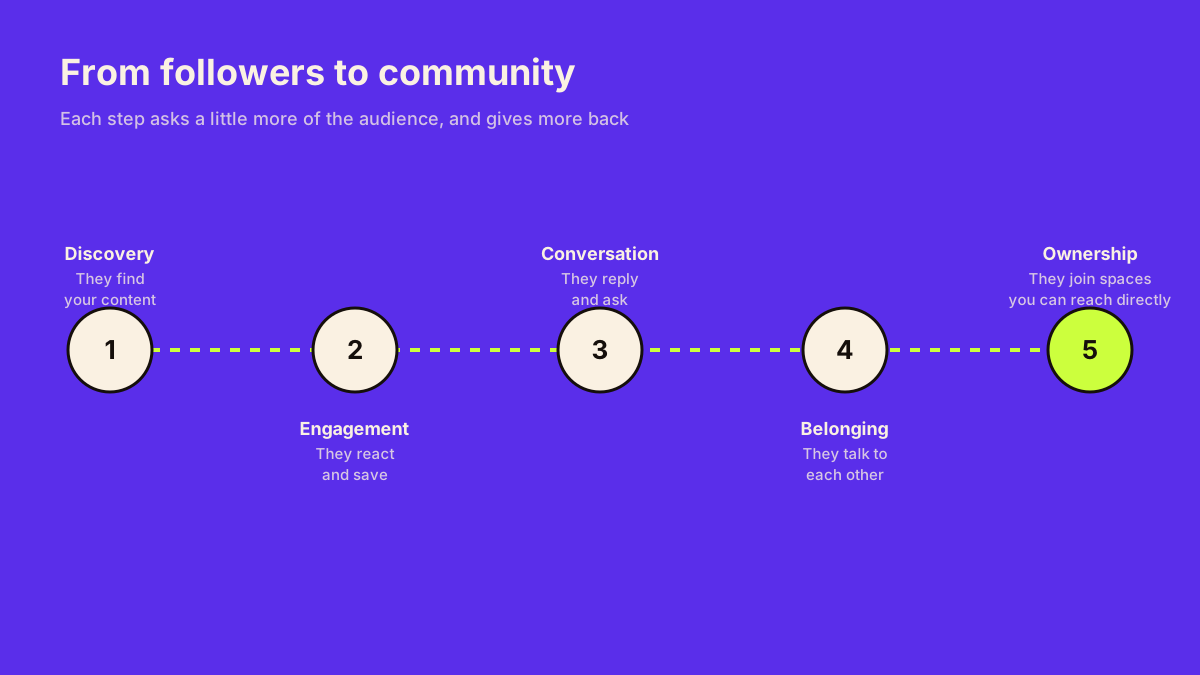
| Step | What happens | Your job |
|---|---|---|
| Discovery | People find your content | Be findable and clear |
| Engagement | They react, save and share | Make content worth keeping |
| Conversation | They reply and ask | Invite and answer; see community engagement |
| Belonging | They talk to each other | Create rituals and spaces |
| Ownership | They join spaces you can reach directly | Email, WhatsApp, community platforms |
Designing conversations is covered in creator community engagement; paid spaces in how to build a paid community; owned channels in creator audience ownership.
Mistakes to avoid
- Launching a big group with no purpose or rituals.
- Posting only announcements, so it becomes a broadcast.
- No rules or moderation until something goes wrong.
- Charging before the free version works.
- Using the community mainly as a sales channel.
- Ignoring privacy settings in large groups.
Communities grow faster alongside other creators; see creator cross-promotion.
If your audience is mostly on Instagram, broadcast channels are an easy place to start; see Instagram broadcast channels.
Conclusion
Start with a clear purpose and a small group of your most engaged followers. Build one or two rituals, moderate from day one, and measure how many members talk to each other. A healthy community supports everything else you do, from newsletters to products to brand partnerships.