Influencer Marketing Agency vs Freelancer: What Should Your Brand Choose?
When a freelance influencer marketer is enough and when a brand needs an agency: what each actually covers, cost structure, capacity, risk, contracts and payments, a decision matrix by campaign size, and how to make either arrangement work.
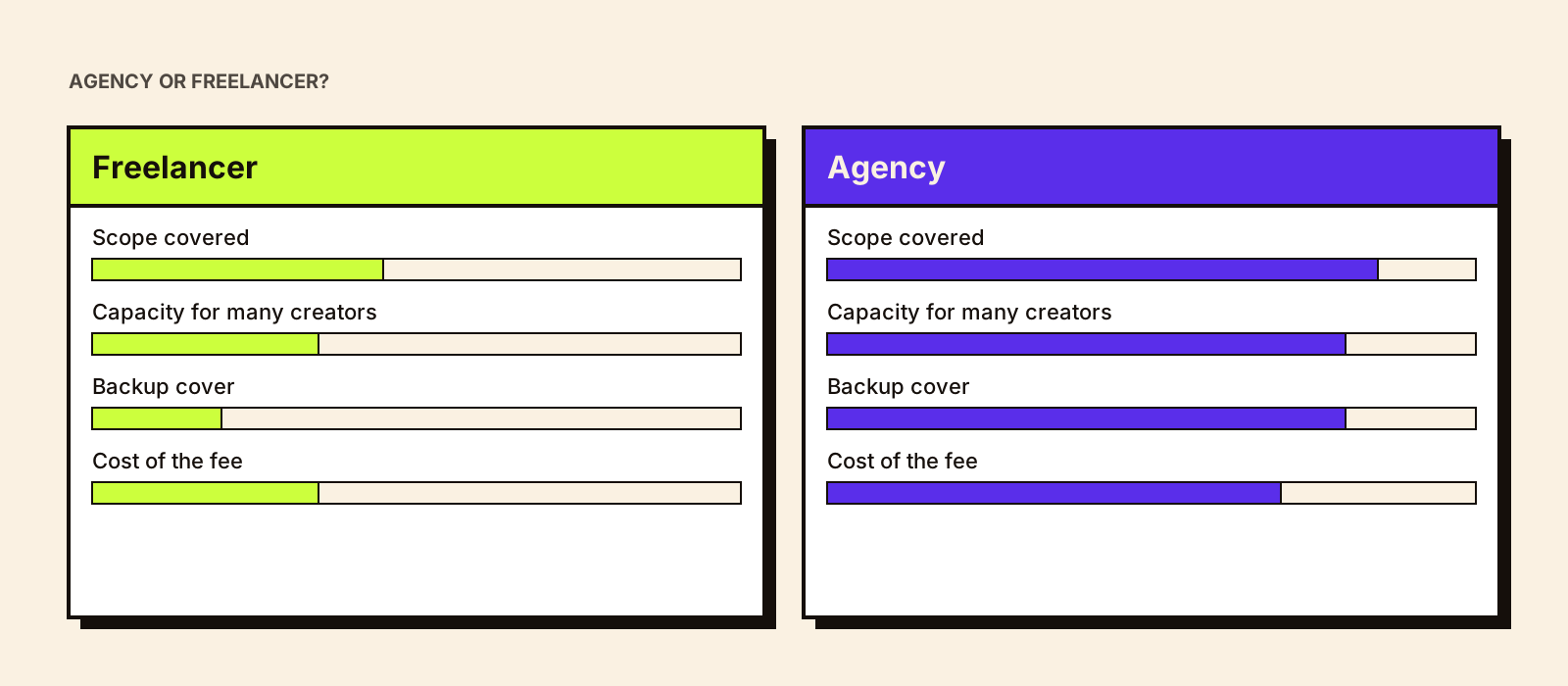
Many Indian brands reach the same fork after their first few creator collaborations: the founder or marketing manager can't keep doing outreach at night, so should they bring in a freelance influencer marketer or hire an agency? Both can work well. They fail in different ways, which is the useful thing to understand before choosing.
Quick answer
A freelancer suits brands running a small number of creators at a time, with a clear brief, someone in-house who approves content and handles contracts and payments, and a budget that doesn't justify agency fees. An agency suits brands running several campaigns or many creators at once, needing strategy as well as execution, working across regions and languages, or needing a team that can absorb deadlines, replacements and reporting without depending on one person. The deciding factors are volume, the scope you need covered, and how much risk you can carry if one person becomes unavailable.
What each actually covers
| Work | Typical freelancer | Typical agency |
|---|---|---|
| Creator discovery and shortlisting | Yes, often from their own network | Yes, with a defined vetting process |
| Outreach and negotiation | Yes | Yes |
| Strategy and campaign planning | Sometimes, depends on seniority | Usually part of the offer |
| Contracts and usage rights | Often left to the brand | Usually handled, with templates |
| Creator payments | Usually the brand pays creators directly | Varies: some agencies collect and pay, some don't |
| Content review and QA | Yes, one reviewer | Yes, often with a second check |
| Multi-city or multilingual execution | Limited by one person's reach | Usually the reason brands hire agencies |
| Reporting | Basic, often spreadsheet-based | Structured reports and reviews |
| Cover when someone is unavailable | Rarely | Team backup |
These are typical patterns, not rules. A senior freelancer can out-think a junior agency team, and some agencies only do outreach. Check scope in writing either way; what an agency normally includes is laid out in what an influencer marketing agency actually does.
Cost structure, not just cost
Freelancers usually charge a monthly fee, a per-campaign fee or an hourly or daily rate. Agencies charge retainers, campaign management fees or a share of creator spend. The fee is rarely the whole comparison. With a freelancer, your team usually absorbs contracts, payments, compliance checks and reporting. With an agency, more of that is inside the fee. Compare the total cost of getting the campaign done, including your own team's hours. Agency pricing structures are explained in how much an influencer marketing agency charges in India.
Decision matrix
| Your situation | Leans towards | Why |
|---|---|---|
| Testing creators for the first time with a small budget | Freelancer, or in-house with advice | Low volume; learning matters more than scale |
| Steady monthly work with a handful of micro-creators | Freelancer | Repeatable, manageable by one experienced person |
| Product launch with a fixed date and many creators | Agency | Deadline risk and coordination load |
| Campaigns across several cities or languages | Agency | Needs regional creator knowledge and more hands |
| Regulated category (finance, health, education) | Agency or senior specialist | Claims review and compliance experience |
| Always-on program with reporting to leadership | Agency, or in-house lead plus agency | Continuity, structured reporting, backup |
| Mostly UGC for ads | Either, or a UGC-focused partner | Depends on volume and production needs |
Risks to plan for
| Risk | Freelancer | Agency |
|---|---|---|
| Single point of failure | High: illness or a better offer stalls the campaign | Lower, if the account has more than one person |
| Relationship ownership | Creator relationships may leave with the freelancer | Agree who owns creator contacts and content |
| Quality consistency | Depends on one person's judgment | Depends on process; ask to see it |
| Cost of management | Lower fee, more internal time | Higher fee, less internal time |
| Account attention | Usually high | Can drop if you're a small client |
How to make a freelancer arrangement work
- Write a scope: creators per month, deliverables, what they negotiate, what you approve.
- Keep contracts, creator contacts and content files in your company's accounts, not theirs.
- Pay creators from your company directly, with invoices and TDS handled by your finance team.
- Agree a simple weekly update and a report format at the start.
- Have a backup plan for launch dates: who takes over if they're unavailable.
How to make an agency arrangement work
- Send a proper brief; see how to write an influencer marketing agency brief.
- Ask who actually works on your account and how much of their time you get.
- Agree what the fee includes and how creator fees are shown.
- Agree reporting against your objective before launch.
- Review the relationship after the first campaign, not only at renewal.
Briefing: how to write an influencer marketing agency brief. If you're also weighing building a team internally, influencer marketing agency vs in-house covers that decision.
Common mistakes
- Comparing a freelancer's fee with an agency's fee without counting your own team's time.
- Letting creator relationships and files live in a freelancer's personal accounts.
- Hiring an agency for strategy and giving it no access to sales or customer data.
- Choosing on price for a launch where missing the date is the bigger cost.
- No written scope, so expectations drift after the first month.
Conclusion
Freelancers are efficient for smaller, steady, well-defined work where your team can own contracts, payments and approvals. Agencies earn their fee when volume, deadlines, regional coverage, compliance or reporting make one person a risk. Decide by the work you need covered and the risk you can carry, then set either arrangement up with clear scope and ownership.