How to Detect Audience Overlap When Selecting Multiple Influencers
How to tell whether several creators reach the same people before you pay them all: why overlap matters, three ways to estimate it from tools, follower samples and campaign data, how to calculate unique reach, when overlap is useful, and why it is higher in small markets such as the GCC.
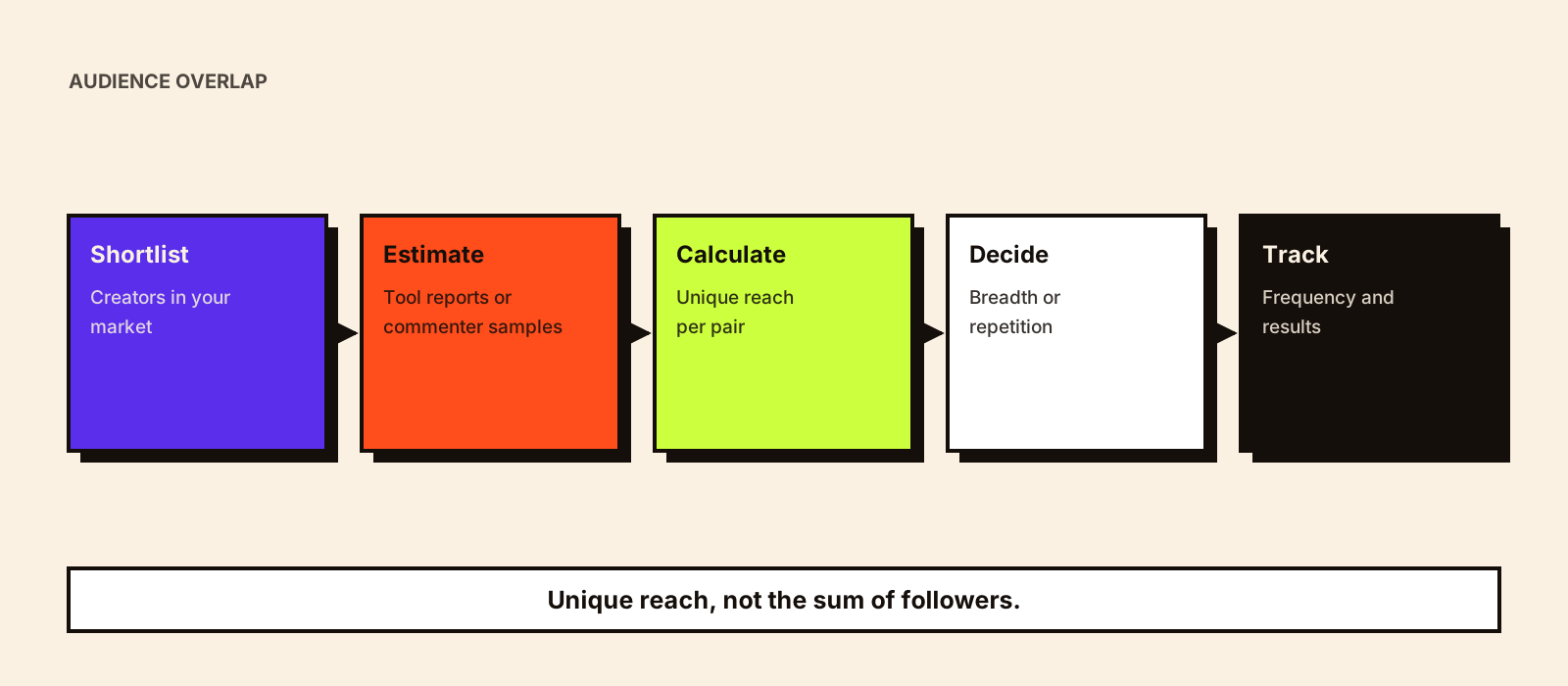
Booking five creators with 200,000 followers each doesn't mean reaching a million people. If they share a niche, a city or a language, many of their followers are the same people. That can be fine when you want repetition, and wasteful when you want reach. This guide explains how to estimate overlap before you commit budget, for teams building a shortlist of several creators.
Quick answer
To detect audience overlap, compare creators' audiences before booking using an influencer tool's overlap report where available, a sample of followers or engaged commenters checked across accounts, or reach and frequency data from previous campaigns. Estimate unique reach rather than adding follower counts, decide whether you want breadth (low overlap) or repetition (some overlap), and choose the creator mix accordingly. Expect more overlap in small or narrow markets.
Why overlap matters
| Objective | Overlap is | Because |
|---|---|---|
| Awareness and new reach | Usually a cost | You pay several times to reach the same people |
| Launch moments | Sometimes useful | Seeing a product from several trusted creators in a few days builds momentum |
| Conversion | Can help | Repeated exposure from different voices can move people to act |
| Testing creators | A problem | Overlap makes it hard to tell which creator drove a result |
Three ways to estimate overlap
1. Influencer tool overlap reports
Some influencer analytics tools estimate the share of followers two or more accounts have in common. They are quick but based on samples and modelled data; treat the figure as an estimate and check how the tool calculates it.
2. Follower or commenter samples
Without a tool, take a sample of each creator's recent engaged commenters (for example, the people commenting on their last ten posts) and check how many appear across creators. Engaged commenters are a better proxy than all followers because they are the people who actually see the content. It's rough, but it shows whether overlap is negligible or large.
3. Past campaign data
If creators' content has run as ads from your account, platform reach and frequency figures show how many unique people saw them. For organic posts, ask creators for reach figures and compare total reach with the sum of individual reach in your own campaign reporting.
Calculating unique reach
For two creators, unique reach is A's reach plus B's reach minus the people reached by both. If you estimate overlap as a share of the smaller audience, the shared audience is that share multiplied by the smaller reach.
Unique reach = Reach A + Reach B − Shared audience
Shared audience ≈ Overlap % × the smaller of Reach A and Reach B

Hypothetical example:
Reach A = 120,000; Reach B = 80,000; estimated overlap 30% of B
Shared ≈ 0.30 × 80,000 = 24,000
Unique reach ≈ 120,000 + 80,000 − 24,000 = 176,000 (not 200,000)
With more than two creators, overlaps compound; estimate pairwise and treat the total as approximate. The difference between reach and impressions is explained in influencer reach vs impressions.
Building a mix with the overlap you want
- For breadth: creators in adjacent niches (cooking, parenting and fitness rather than three cooking creators)
- For breadth: different cities, languages or communities
- For repetition: a small group of creators in the same niche posting within the same week
- For testing: creators with low overlap, so results can be attributed
- Always: check audience location; overlap only matters among the people in your target market
Audience location and quality checks are covered in influencer audience quality, and assembling the final list in how to build an influencer shortlist.
Small markets: the GCC
In smaller markets such as Bahrain, Kuwait, Qatar or a single emirate, the audience in a given niche and language is limited, so popular creators often share followers. Expect higher overlap, plan fewer creators per niche for reach campaigns, and use language and community to diversify. Frequency builds faster too, which affects creative fatigue; see how to detect influencer ad fatigue.
Common mistakes
- Adding follower counts and calling it reach
- Booking the top five creators in one niche for an awareness campaign
- Treating a tool's overlap figure as exact
- Measuring overlap across all followers instead of followers in your market
- Testing creators who share most of their audience
Conclusion
Overlap is neither good nor bad; it depends on what you want. Estimate it before booking, calculate unique reach honestly, and choose creators for breadth or repetition on purpose. In small markets, assume overlap is higher than it looks.