Reach vs Impressions vs Views in Influencer Marketing: What Brands Should Track
What reach, impressions and views mean in creator campaigns, how Instagram's switch to views changes reports, how to calculate frequency, which metric fits which objective, and how to collect the numbers from creators.
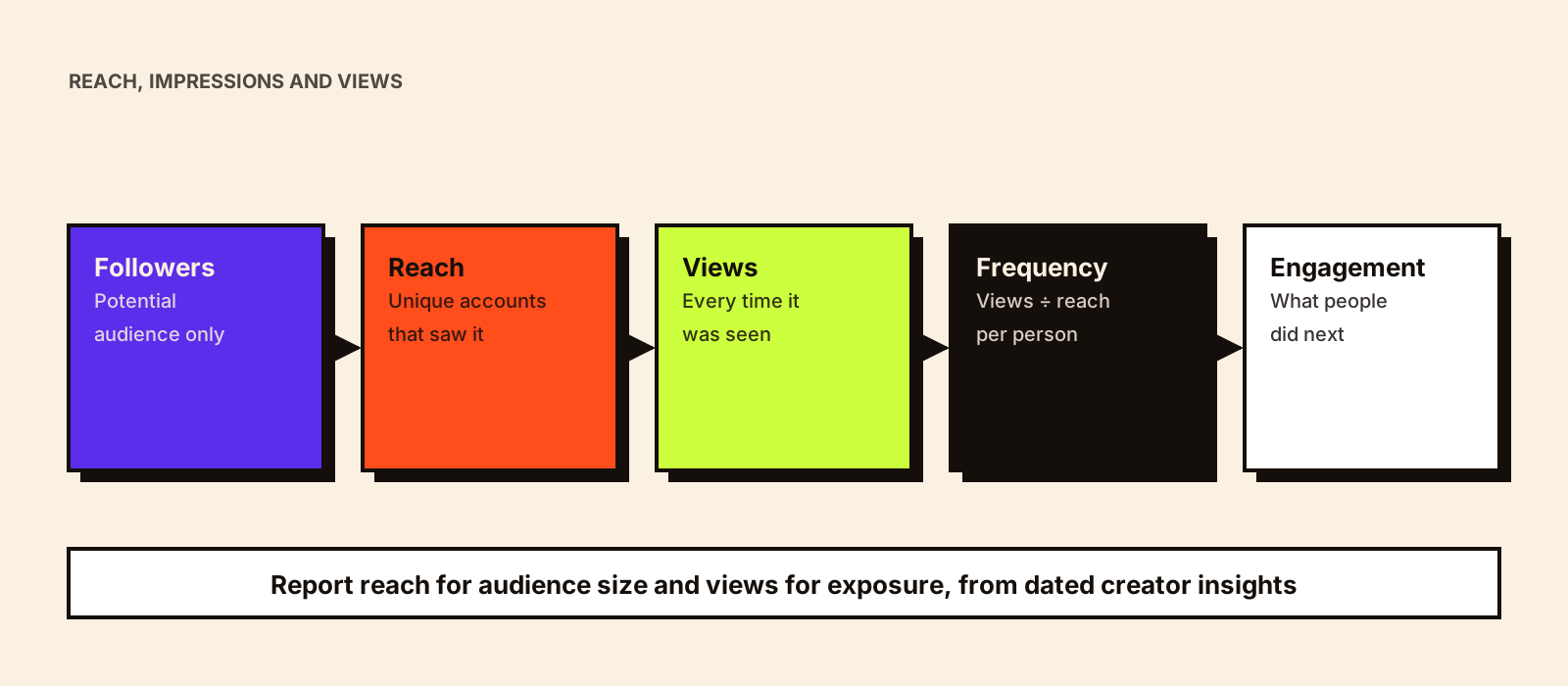
Creator reports often mix three different numbers under one heading. A creator says a Reel 'reached 2 lakh', the screenshot says 2 lakh views, and the campaign summary adds both to a total. Knowing which is which changes how you judge awareness campaigns and how you calculate cost.
Quick answer
Reach is the number of unique accounts that saw a piece of content. Impressions, which Instagram now reports as views, count every time it was seen, including repeat views by the same person. Views are therefore always equal to or higher than reach. Track reach to know how many people you reached, views to know total exposure, and views divided by reach to see how often each person saw it.
Definitions
| Metric | Counts | Repeat viewing | Use it for |
|---|---|---|---|
| Followers | Accounts following the creator | Not applicable | Potential audience only; not a result |
| Reach (accounts reached) | Unique accounts that saw the content | Counted once | Audience size of a campaign |
| Impressions / views | Every time the content was shown or played | Counted each time | Total exposure, CPM |
| YouTube views | Plays counted by YouTube's own view rules | Can include repeats | Exposure on long-form video |
| Frequency | Views ÷ reach | Average per person | Whether the message was repeated enough |
Instagram's switch from impressions to views
Instagram replaced impressions and Reel plays with a single views metric across Reels, posts, Stories and Live, completed in April 2025. Views count every time content is seen, including repeats, so treat them like impressions in older reports. If a campaign compares this year's Instagram views with last year's impressions, label the change rather than presenting it as growth or decline.
Which metric fits which objective
| Objective | Lead metric | Supporting metrics |
|---|---|---|
| Awareness in a new audience | Reach | Views, frequency, share of reach in target cities |
| Repeated message (sale, launch day) | Views and frequency | Reach, saves |
| Consideration | Engagements | Watch time, saves, comment quality |
| Traffic or sales | Clicks and conversions | Reach only to explain volume |
For awareness campaigns, reach in the right audience matters more than total views. A creator whose views come mostly from outside your selling regions adds exposure you can't convert. Influencer marketing for brand awareness covers planning for reach and recall, and influencer marketing KPIs maps metrics to every objective.
A simple example
Illustrative numbers: three creators post about a launch. Their Reels record 3,00,000 views in total, and each post's reach adds up to 2,00,000 accounts. That gives a frequency of about 1.5 views per account. But platforms report reach per post, and some people follow more than one of the creators, so the campaign's true number of unique people reached is somewhat below 2,00,000. Treat summed reach across creators as an upper limit, not a precise count.
How to collect the numbers from creators
- Ask for insights screenshots or screen recordings of each post, captured on an agreed day (for example 7 days after posting) and again at campaign end.
- Request reach, views, saves, shares, comments and, for video, average watch time and retention.
- Ask for audience location and age from the creator's account insights, so you can judge reach in your target market.
- For Partnership Ads or creator ads, use the ad account's reporting, which separates paid from organic delivery.
- Write the reporting requirements into the brief and contract so they are a deliverable, not a favour.
Common mistakes
- Reporting follower counts as reach
- Adding reach across creators and posts as if audiences never overlap
- Comparing Instagram views with older impressions without noting the metric change
- Calculating CPM on reach in one report and on views in another
- Celebrating total views when most of them came from outside the regions you sell in
Once reach and views are defined, influencer CPM, CPE, CPC and CPA turns them into cost comparisons, and how to create an influencer marketing report shows how to present them.
How Kudozz handles this: Campaign Reporting & Performance Tracking.