Influencer Marketing Attribution Models Explained: First Click, Last Click and Beyond
How first-click, last-click, linear, position-based and data-driven attribution share credit for a sale, what GA4 still offers, why creator content is under-credited by click-based models, and how to see the creator's role across the customer journey.
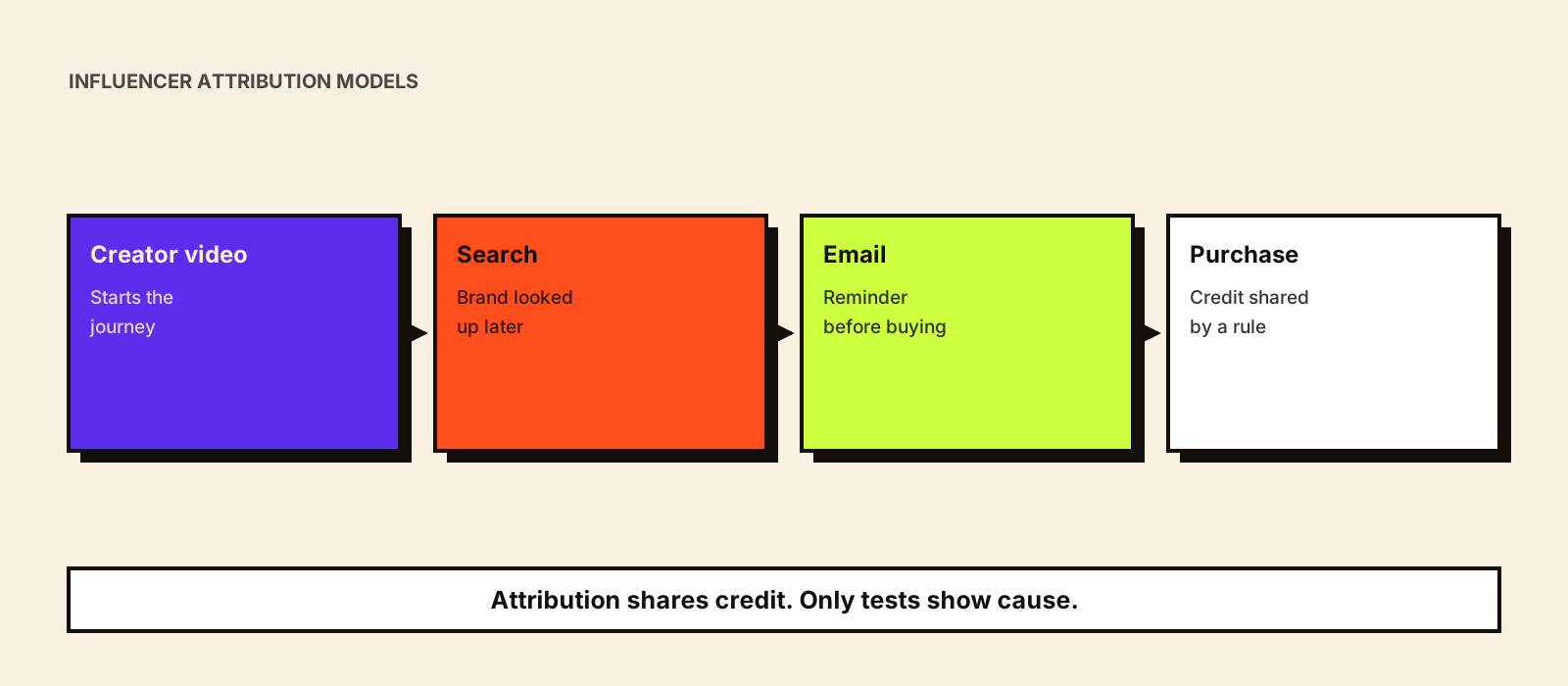
A customer watches a creator's Reel on Monday, looks at your Instagram profile, searches your brand on Thursday, opens an email on Saturday and buys. Which channel earned the sale? An attribution model is the rule you pick to answer that question. Different rules give the creator very different amounts of credit, and none of them proves the creator caused the sale.
Quick answer
Attribution models divide credit for a conversion among the tracked touchpoints before it. Last-click gives it all to the final touch, first-click to the first, linear splits it equally, position-based favors the first and last, and data-driven models assign it from patterns in your own data. Creator content usually starts journeys and is often seen without a click, so click-based models tend to under-credit it. GA4 now offers data-driven and two last-click models. Use attribution to compare creators and channels on the same basis, and use incrementality tests to find out what creators actually added.
Attribution is not incrementality
Every model, however sophisticated, shares out credit among touches that were recorded. It cannot tell you whether the sale would have happened without the campaign. That needs a comparison group that didn't see the activity. Influencer marketing incrementality covers those tests; this guide covers how credit is shared.
The models compared
| Model | How it shares credit | Effect on creator content | Still in GA4? |
|---|---|---|---|
| Last click (paid and organic) | All credit to the last non-direct touch | Under-credits creators who start journeys | Yes |
| Google paid channels last click | All credit to the last Google Ads click, if any | Creators get none unless nothing paid was clicked | Yes |
| First click | All credit to the first touch | Favors creators who introduce the brand | No |
| Linear | Equal credit to every touch | Gives creators a share, but a fixed one | No |
| Time decay | More credit to touches closer to the sale | Under-credits early creator touches | No |
| Position-based | Most credit to first and last, the rest split | Rewards creators that start journeys | No |
| Data-driven | Credit from patterns in your account's converting and non-converting paths | Depends on data volume and on creator touches being tracked at all | Yes (the default) |
Google says the first click, linear, time decay and position-based models stopped being available in GA4 as of November 2023. The remaining models are data-driven, paid and organic last click, and Google paid channels last click. Lookback windows are 30 days by default for acquisition key events (7 days is the alternative) and 90 days by default for other key events (30 or 60 are the alternatives).
One journey, five answers
Hypothetical example. A ₹3,000 order follows four tracked touches: a creator's link (day 1), an organic Google search (day 4), an email (day 6) and a direct visit where the purchase happens (day 7).
| Model | Creator link | Organic search | Direct | |
|---|---|---|---|---|
| Last click (non-direct) | ₹0 | ₹0 | ₹3,000 | ₹0 |
| First click | ₹3,000 | ₹0 | ₹0 | ₹0 |
| Linear (across the three non-direct touches) | ₹1,000 | ₹1,000 | ₹1,000 | ₹0 |
| Position-based (40% first, 40% last, 20% middle) | ₹1,200 | ₹600 | ₹1,200 | ₹0 |
| Data-driven | Depends on your data |
Hypothetical figures; the linear and position-based rows ignore the direct visit, as last non-direct models do. The point is the range: the same creator is worth nothing or the whole order depending on the rule. And if the customer had only watched the Reel without clicking, every model would give the creator nothing, because no touch was recorded.
Platform-reported conversions
Ad platforms report conversions using their own attribution settings, which can include people who saw an ad without clicking it. When creator content runs as partnership ads or other creator ads, the platform's number and your analytics will differ, and adding them together double counts. Report platform conversions as the platform's view, label the attribution setting, and use your own analytics or order data as the common basis for comparing channels.
Self-reported attribution
A 'how did you hear about us?' question at checkout catches influence that left no click at all, which is exactly where creators are most under-credited. List creators and platforms by name, include 'a friend or family member' and 'other', and compare the share naming creators with what your click-based reports say. Self-reports depend on memory, so treat them as a second opinion, not a replacement.
Measuring the creator's role across the customer journey
Creators rarely do one job. They introduce the brand, answer questions people have before buying, nudge a purchase and sometimes bring customers back. To see that role, look at evidence at each stage rather than a single attribution number.
| Journey stage | What creators do | Evidence to look at |
|---|---|---|
| Discovery | Introduce the brand to new people | Reach in the target market, new profile visitors, first-time site visitors from creator links |
| Consideration | Demonstrate, compare and answer questions | Saves, product questions in comments, branded search and direct traffic against a baseline |
| Conversion | Give a reason to act now | Code and link orders, deduplicated; conversion rate from creator traffic |
| Assisting | Appear earlier in paths that end elsewhere | GA4's attribution paths report: creator traffic in early and middle touches |
| Retention | Help customers use the product and come back | Repeat purchase rate of creator-acquired customers |
GA4's Advertising section includes an attribution paths report (formerly called conversion paths) showing which channels start, assist and close key events. It only sees tagged, consented visits, so it shows part of the creator's role, not all of it. The influencer marketing funnel explains the stages, and customer quality from influencer campaigns covers the retention end.
Choosing an approach
| Situation | Practical approach |
|---|---|
| Comparing creators inside one campaign | One consistent rule (codes plus links, deduplicated); the model matters less than consistency |
| Comparing creators with other channels | The same analytics model for every channel, plus a self-reported question |
| Deciding whether to keep funding creators | A holdout or geographic test, not a different attribution model |
| Several years of multi-channel spend | Marketing mix modeling, calibrated with tests |
Marketing mix modeling is covered in influencer marketing and marketing mix modeling.
Common mistakes
- Switching models between reports, so creators look better or worse for reasons that have nothing to do with them.
- Adding platform-reported and analytics conversions together.
- Judging awareness creators on last-click sales.
- Treating a data-driven model's output as proof of cause.
- Ignoring buyers who never clicked, because no model can see them.
Conclusion
Attribution models are accounting rules for sharing credit, and click-based ones see only part of what creators do. Pick one rule, apply it to every channel, add a self-reported question, look at the creator's role stage by stage, and use controlled tests when the question is whether creators are worth the money.