How to Create a Creator Campaign Proposal for Brands
When a brand sends a brief and asks "what would you do?", a clear proposal wins the deal and prevents disputes later. Here's the structure, with assumptions and exclusions most creators forget.
A proposal is your answer to a brief. Done well, it does three jobs at once: it sells your idea, it sets the price, and it quietly defines what's in and out of scope so that nothing is assumed later.
Quick answer
A creator campaign proposal is a short document responding to a brand's brief. It restates the objective, proposes a creative idea, lists exact deliverables and a timeline, gives the fee with usage rights and add-ons itemised, explains how results will be reported, and states assumptions and exclusions. Keep it to two or three pages, follow the brand's brief order where possible, and send it within the brand's deadline.
Proposal vs pitch deck
A pitch deck is proactive: you approach a brand with ideas. A proposal is reactive: the brand has a brief, a budget and a timeline, and wants your plan and price. Proposals should be more precise about scope and money. See the creator pitch deck guide for the proactive version.
Before you write: understand the brief
Read the brief twice and list anything unclear: usage, exclusivity, approvals, posting dates, mandatory claims. Ask before writing. The creator brand brief guide has a full question checklist.
The proposal structure
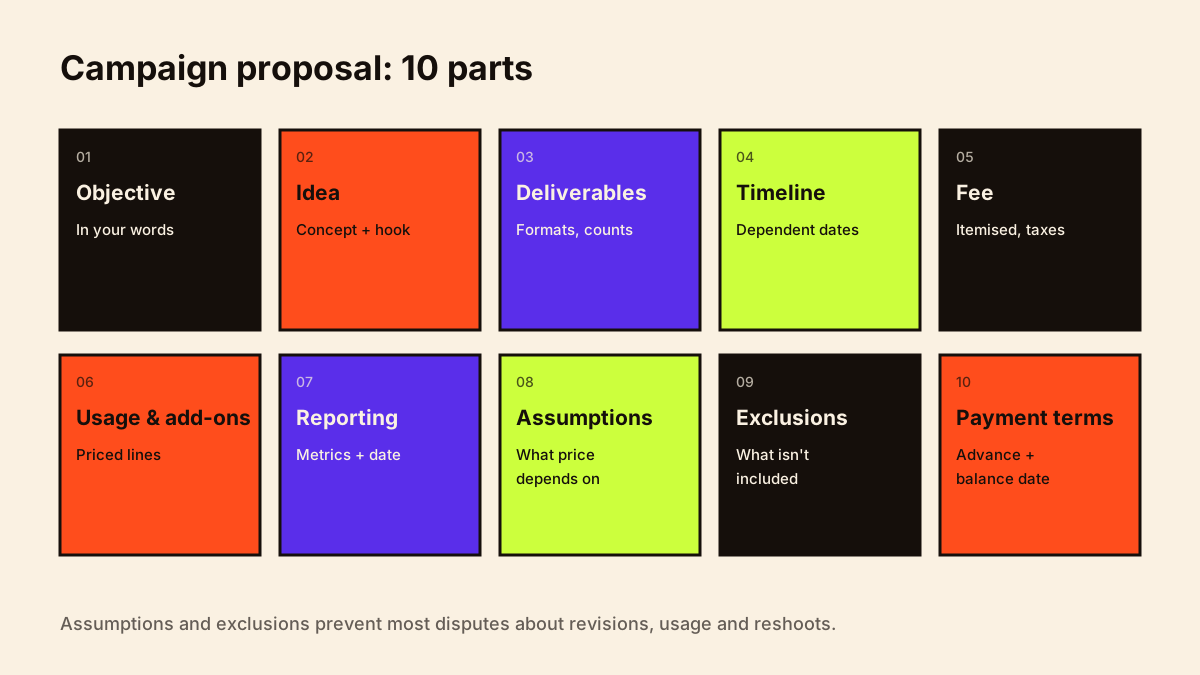
1. Objective (in your words)
One or two sentences restating what the brand wants: "Introduce the new gel sunscreen to first-time buyers aged 18 to 27 and drive traffic to the Nykaa listing during launch week." This proves you read the brief and gives you something to measure against.
2. Creative idea
The concept, the hook, how the product appears, and why it suits your audience. Include a short script outline or storyboard for the main deliverable.
3. Deliverables
Exact formats, quantities, lengths and platforms. See creator deliverables for how to define each one.
4. Timeline
Dates for product receipt, script, draft, feedback, posting and reporting. Make every date depend on the one before it.
5. Pricing
A line per deliverable, then add-ons, then total, stating whether taxes are extra. If the brand gave a budget, show what fits within it and what would cost more. See how much creators should charge.
6. Usage rights and add-ons
Organic reposting period, paid usage (media, duration, territory), whitelisting, raw footage and exclusivity, each priced. See creator usage rights and creator whitelisting.
7. Reporting
Which metrics you'll share, from which source, and when. Promise only what your platform actually reports.
8. Assumptions
What your price and timeline depend on. For example: product arrives by a date; one round of script feedback and one round of draft feedback; feedback within two working days; no location fees; no additional talent.
9. Exclusions
What isn't included unless added: paid usage, whitelisting, raw footage, extra revision rounds, exclusivity, travel, reshoots due to brief changes, guaranteed views or sales.
A proposal template you can adapt
PROPOSAL: [Brand] × [@handle] — [Campaign name]
Prepared for: [Name, role] · Date: [date] · Valid for: 14 days

1. OBJECTIVE
[One to two sentences in your words]

2. IDEA
"[Working title]" — [2–3 sentence concept]
Hook: [first 3 seconds]
Product moment: [where and how it appears]

3. DELIVERABLES
• 1 Instagram Reel, 30–45 sec, Collab post with @brand, paid partnership label
• 1 Story set, 4 frames, link sticker, posted same day

4. TIMELINE
Product by [date] → script [date] → draft [date] → feedback within 2 working days → post [date window] → report [date]

5. FEE (INR, taxes extra as applicable)
Reel ................................ ₹____
Story set ........................... ₹____
Included: 90 days organic reposting with credit
Total ............................... ₹____

6. OPTIONAL ADD-ONS
Paid usage, Meta ads, India, 60 days ....... ₹____
Whitelisting / partnership ads, 60 days .... ₹____
Raw footage ................................ ₹____

7. REPORTING
Native-insights screenshots 7 days after posting: views, reach, saves, shares, comments, link taps

8. ASSUMPTIONS
One script round, one draft round; feedback within 2 working days; no travel or extra talent

9. EXCLUSIONS
Paid usage and whitelisting unless added; exclusivity; guaranteed views or sales; reshoots from brief changes

PAYMENT: [__]% on confirmation, balance within [__] days of posting
Tips that improve acceptance
- Follow the brief's structure and terminology so the brand can compare proposals easily.
- Offer two options when the budget is tight: a core package and an extended one.
- Keep one strong idea rather than five weak ones.
- Add a validity period so an old quote can't be accepted months later.
- Put payment terms in the proposal, not only in the invoice. See creator payment terms.
Payment terms are covered in detail in creator payment terms. Brands write the brief your proposal answers; our brand-side guide on how to create an influencer campaign brief shows how they structure it.
Proposals for consulting and coaching clients
If you sell services as well as brand content, the same principles apply to client proposals: restate the client's goal, propose the approach, list deliverables and timeline, show the price with options, and state what's included and excluded.
1. Your goal (in the client's words from the discovery call)
2. Recommended approach
3. Deliverables and timeline
4. Investment: recommended option + one smaller option
5. What I need from you
6. What's not included
7. Next step: sign and deposit by [date]
The call before the proposal is covered in creator discovery call, and what happens after a yes in creator client onboarding.