How to Create a Creator Pitch Deck for Brand Collaborations
A pitch deck is built for one brand and one idea, unlike a media kit. Here's when to use one, what goes on each slide, and a sample structure you can adapt.
A media kit says "here's who I am." A pitch deck says "here's what I'd do for you." When you're approaching a brand you really want, or answering a bigger opportunity like a launch or a long-term partnership, that second message is the one that gets meetings.
Quick answer
A creator pitch deck is a short, brand-specific presentation (usually 6 to 10 slides) that proposes one or more campaign ideas for a particular brand, backed by your positioning, audience fit, platform data and relevant past work. Use it for high-value or long-term opportunities. It differs from a media kit (general, reusable), a portfolio (your body of work) and a rate card (prices). Structure it as cover, positioning, audience fit, performance, campaign concepts, proof, what's included, and next steps, with rates optional.
Pitch deck vs media kit vs portfolio vs rate card
| Document | Purpose | Tailored per brand? | Use it when |
|---|---|---|---|
| Media kit | Summary of you, your audience and performance | No (general) | First pitches and replies to inbound enquiries |
| Pitch deck | Proposes specific ideas for one brand | Yes | High-value brands, launches, long-term partnerships, agency pitches |
| Portfolio | Shows your work and results | Sometimes curated | When a brand is evaluating your quality |
| Rate card | Lists prices and inclusions | No (general) | After you understand the brief |
| Campaign proposal | Formal scope, timeline and fee responding to a brief | Yes | When a brand has sent a brief and asked for a quote |
A pitch deck is proactive: you bring the idea. A campaign proposal is reactive: you respond to a brand's brief. See the creator campaign proposal guide for that case, and the creator media kit guide for the general document.
What goes on each slide
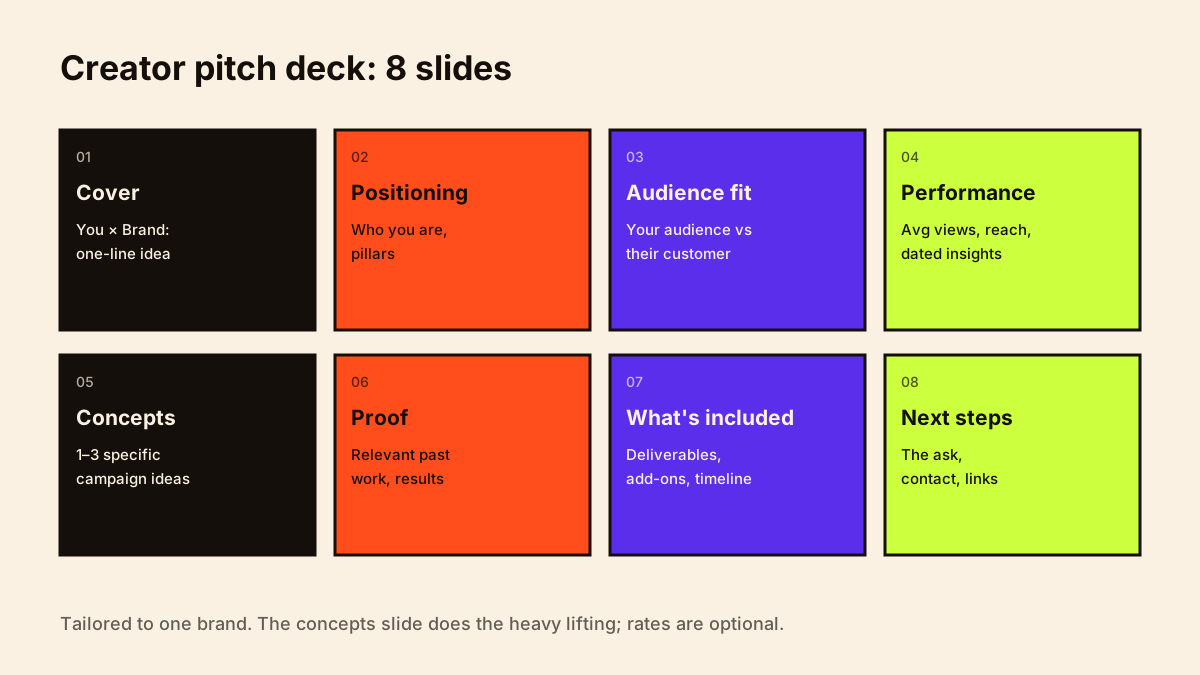
1. Cover
"[Your name] × [Brand]: [one-line idea]". Your photo, handle and the month. The cover should already tell them this deck was made for them.
2. Creator positioning
Your one-line positioning, content pillars and why you're relevant to this brand in particular. See how to build a creator brand if you haven't written your positioning yet.
3. Audience fit
Put your audience next to the brand's target customer: age, cities, language, interests. Only include data from your native insights, with the date.
4. Platform data
Average views per format, reach, and the engagement signals that match the brand's goal (saves for consideration, shares for awareness, link taps for traffic). Label the metrics and date range. Engagement rate vs reach explains which to lead with.
5. Campaign concepts
One to three specific ideas. For each: a working title, the format, the story or hook, where the product appears, and why it suits your audience. This is the slide that makes a deck worth more than a media kit.
6. Proof
Two or three relevant past pieces or short case studies, ideally in the same category. See creator case studies for how to present results without leaning on vanity metrics.
7. What's included (services)
The deliverables behind each concept, the timeline, and optional add-ons like paid usage or whitelisting. Rates are optional here; many creators say "investment on request" and send a proposal once the brand is interested.
8. Next steps and contact
A clear ask ("a 15-minute call next week?"), your business email and phone, and a link to your full media kit and portfolio.
Sample structure you can copy
SLIDE 1 — COVER
Priya × [Brand]: "Sunscreen Myth or Fact" launch series · Oct 2026

SLIDE 2 — WHO I AM
Budget skincare explainers in Hindi for first-time buyers · Pillars: Myth or fact · Under ₹500 routines · Honest reviews

SLIDE 3 — AUDIENCE FIT
My audience: 18–27, Lucknow / Jaipur / Delhi / Indore, Hindi-first
Your target (from your launch posts): first-time SPF buyers, Tier 1–2 cities

SLIDE 4 — PERFORMANCE (native insights, last 90 days)
Avg Reel views · avg saves · top cities · Story link taps

SLIDE 5 — CONCEPTS
1. "Myth or Fact" Reel: white cast test on camera
2. 7-day wear test Story series with link sticker
3. Optional: Collab Reel with your brand account

SLIDE 6 — PROOF
Two past skincare collaborations with one-line results each

SLIDE 7 — WHAT'S INCLUDED
Deliverables per concept · timeline · add-ons (paid usage, whitelisting)

SLIDE 8 — NEXT STEPS
15-minute call? · email · phone · media kit link
Design and format tips
- Keep it short: 6 to 10 slides. Brand teams skim.
- Use the brand's name and product visuals only as references to their public materials, not as if they endorsed your deck.
- Use your own photos and screenshots; don't use other creators' images.
- Export as a small PDF and also keep a shareable link version.
- Name the file clearly: yourname-x-brand-pitch-oct-2026.pdf
When not to send a pitch deck
- For a quick gifting enquiry or a simple one-post request; a short email and media kit is enough.
- When a brand has sent a formal brief: respond with a proposal that follows their structure.
- To brands you haven't researched. A generic deck is worse than a short personal email.
Send the deck with a short personal email. Our brand collaboration email templates and the how to pitch brands as a creator guide cover the message around it.