How to Build a Personal Brand as a Creator (That Brands Want to Work With)
Your personal brand is what people, and brand managers, understand about you in the first ten seconds. Here's how to define your positioning, pillars, story, voice and credibility, and keep them consistent across platforms.
Brands rarely hire "a creator." They hire the creator who makes budget skincare make sense to first-time buyers in Hindi, or the one whose weekend-trip Reels make people book a homestay. The clearer that sentence is about you, the easier you are to hire. That sentence is your creator brand.
Quick answer
A creator brand is the consistent set of things people associate with you: what you make, who it's for, how it looks and sounds, and why they trust you. To build one that attracts brands, define a one-line positioning, choose three or four content pillars, keep a recognisable visual style and voice, show real expertise or lived experience, post consistently, and make the fit with specific product categories obvious. Audience size helps, but a clear, credible brand is what makes a small or mid-sized creator easy to choose.
What brands actually need to understand about you
- Who you speak to: age, city or region, language, life stage, interests.
- What problem or desire your content serves: saving money, learning a skill, looking good, finding places to go.
- Where their product fits naturally in your content, without a jarring ad break.
- Whether your audience trusts your recommendations.
- Whether you're reliable and professional to work with.
If a brand manager can answer those five points from your profile and media kit in under a minute, your creator brand is doing its job. For how brands run this check from their side, see how brands choose the right influencer.
The ten building blocks of a creator brand
| Building block | What it means | Quick test |
|---|---|---|
| Positioning | The one sentence that says what you make, for whom, and why you | Could a stranger repeat it after seeing your bio? |
| Niche | The topic area and audience you focus on | Can you name 20 brands that sell to this audience? |
| Content pillars | Three or four recurring themes or series | Would a new follower know what to expect next week? |
| Visual identity | Colours, framing, fonts, thumbnails, cover style | Can people recognise your post before seeing your name? |
| Voice | How you talk: calm expert, funny friend, blunt reviewer | Would your captions sound like you if unsigned? |
| Audience | The specific people who follow and trust you | Can you describe them beyond 'young people'? |
| Expertise | Qualifications, experience or lived experience | Why should anyone believe you on this topic? |
| Consistency | Regular posting in a predictable style | Could a brand predict what a sponsored post would look like? |
| Credibility | Honest reviews, disclosure, accurate claims | Do you ever say a product isn't for everyone? |
| Differentiation | What makes you different from creators in the same niche | What would your audience miss if you stopped? |
Step 1: Write your positioning line
I make [content type] for [specific audience] who want [outcome], in [language/format/style that makes me different].

Examples (illustrative):
• I make 60-second budget skincare explainers for first-time buyers in Hindi who want to stop wasting money on the wrong products.
• I make weekend-trip Reels for working professionals in Ahmedabad who want short getaways they can plan on a Thursday night.
• I make honest phone reviews for buyers under ₹20,000 who want to know what they're giving up at that price.
Put a short version in your bio, the full version at the top of your media kit, and use it to decide what you post. If a content idea doesn't serve the positioning, it can still be posted, but it shouldn't be the majority.
Step 2: Pick your content pillars
Pillars are the recurring themes that make up most of your feed. Three or four is enough. Each pillar should serve your audience and create natural slots for brands.
| Example creator (illustrative) | Pillars | Natural brand fits |
|---|---|---|
| Budget skincare, Hindi | Myth or fact · Under ₹500 routines · Ingredient explainers · Honest reviews | Sunscreen, cleansers, D2C skincare, pharmacy chains |
| Gujarat weekend travel | Two-day itineraries · Food stops · Stays under ₹3,000 · Monsoon trips | Homestays, travel apps, state tourism, car rentals |
| Budget smartphones | First impressions · Camera tests · Long-term reviews · Buying guides | Phone brands, accessories, e-commerce sale events |
Step 3: Make your visual identity and voice recognisable
- Pick two or three brand colours and use them in covers, text overlays and your media kit.
- Use a consistent thumbnail or cover template so your grid or channel looks intentional.
- Keep a recurring intro line, format or series name that people associate with you.
- Write captions the way you speak. If your audience talks in Hinglish, so can you.
- Keep sponsored content in your normal style. Brands hire you for your look and voice; don't switch to a generic ad voice.
Your creator brand needs a home you control; see how to build a creator website, and for keeping your voice while using AI tools, AI tools for creators.
Step 4: Show your expertise honestly
Expertise can be formal (a dermatology degree, a CA qualification, years as a chef) or lived (ten years of managing acne, three hundred weekend trips). Say which it is. In India, ASCI expects influencers giving specialised advice in areas such as health, nutrition and finance to hold appropriate qualifications, so creators without them should frame content as personal experience and avoid prescriptive claims.
Step 5: Build credibility brands can borrow
- Disclose every paid, gifted or affiliate partnership clearly.
- Say when a product didn't work for you, and who it might suit instead.
- Don't promote competing products back to back.
- Correct mistakes publicly when you get something wrong.
- Turn down brands that don't fit, even when the money is good.
Brands pay creators for trust they can't buy directly. Every honest review adds to the value of your recommendations, including the paid ones.
Step 6: Differentiate
Look at five creators in your niche and list what they all do. Then pick one or two things you'll do differently: a language, a price bracket, a format, a depth of testing, a region, a sense of humour. Differentiation doesn't need to be dramatic. "Same topic, but in Marathi" or "same topic, but only products under ₹999" is enough.
Step 7: Tell your story and show your values
A personal brand is more than a topic. It's why you care about it and what you stand for. Share the origin story (why you started), the standards you hold ("I only review products I've bought or tested for a month"), and the things you won't do. These become the reasons people trust you, and the filter brands use to judge fit.
WHY I STARTED: [one or two sentences]
WHAT I BELIEVE ABOUT MY TOPIC: [a point of view]
MY STANDARDS: [e.g. honest reviews, disclose every partnership, no finance tips without sources]
WHAT I WON'T DO: [e.g. promote crash diets, betting apps]
HOW I WANT PEOPLE TO FEEL AFTER MY CONTENT: [e.g. confident, less confused]
Step 8: Stay consistent across platforms
| Element | Keep the same | Adapt per platform |
|---|---|---|
| Name and photo | Yes | No |
| Positioning line | Yes | Length |
| Visual style | Colours, fonts, cover style | Aspect ratios |
| Voice | Personality and values | Formality (LinkedIn vs Instagram) |
| Series | Core series names | Formats and lengths |
Consistent identity also helps search engines and AI tools understand who you are; see creator SEO. For becoming known for one specific topic, see creator positioning, and for building credibility over time, how to build authority as a creator.
You don't need a huge following
A clear creator brand matters more at smaller sizes, not less. A brand choosing between two micro creators will usually pick the one whose positioning matches its customer. Size affects price and reach; positioning affects whether you're considered at all. See how to build an audience brands want to reach for the audience side.
Creator brand checklist
- One-line positioning in your bio and media kit
- Three or four named content pillars
- Consistent covers, thumbnails and colours
- A voice that's recognisably yours
- A clear statement of your expertise or experience
- A track record of honest reviews and proper disclosure
- One or two clear points of difference
- A list of product categories that fit naturally
Next steps: narrow your focus with creator niche selection, then package your brand in a creator media kit and a creator pitch deck.
The personal brand system, and how it differs from positioning and authority
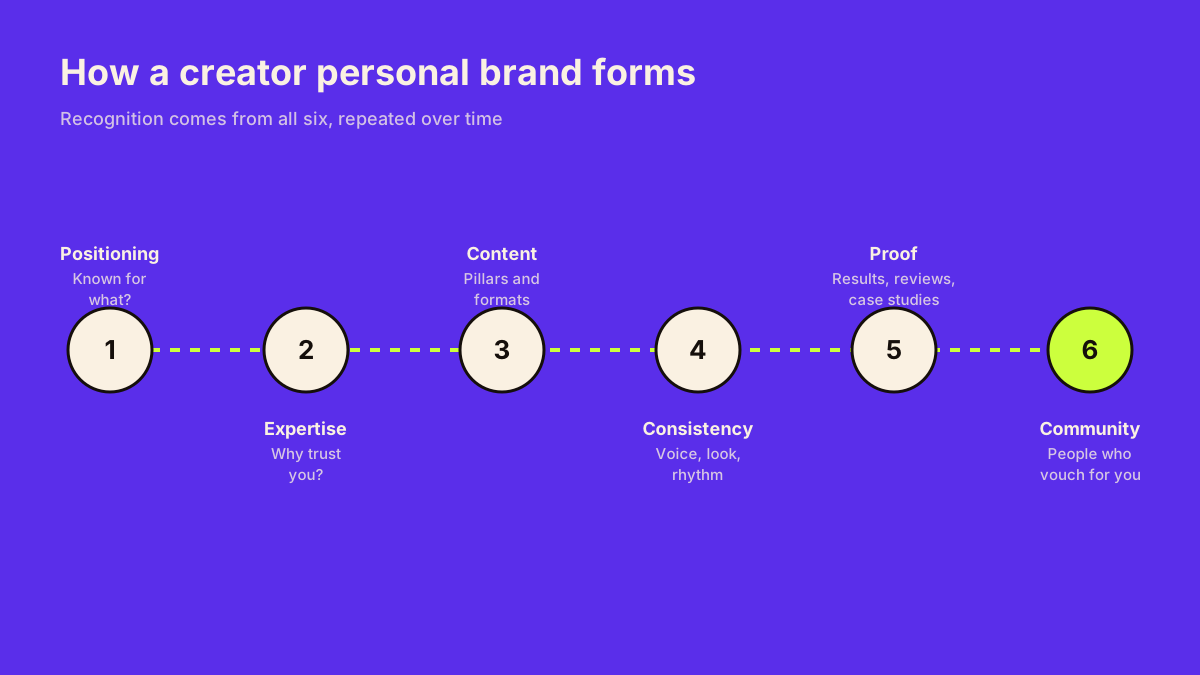
| Concept | Means | Guide |
|---|---|---|
| Personal brand | How people perceive you overall | This guide |
| Positioning | What you want to be known for | Creator positioning |
| Authority | Why people trust your expertise | How to build authority |
| Thought leadership | How your ideas shape your field | Creator thought leadership |
| Founder creator brand | A founder's audience supporting a company | Founder creator brand |
| Employee creators | Employees creating content about their work | Employee influencer marketing |
Guides: creator positioning, how to build authority as a creator, creator thought leadership, founder creator brand and employee influencer marketing.